


The Coded Instruction for Liquidity
The execution of a large block trade is a definitive statement of intent within the market. Success in this arena is measured by a single metric ▴ the fidelity of the executed price to the intended price. The Request for Quote (RFQ) system provides the operational framework for achieving this fidelity. It is a communications system that allows a trader to privately solicit competitive, firm bids from a curated group of liquidity providers simultaneously.
This process codifies the act of price discovery, transforming it from a public spectacle on a central limit order book into a discreet, controlled negotiation. By doing so, it directly addresses the core variable of large-scale execution which is the minimization of slippage. Slippage, the deviation between expected and executed price, is a function of market impact and information leakage, both of which are systematically contained within the RFQ structure.
Understanding the RFQ mechanism is to understand the professional’s approach to liquidity. A public order book displays only a fraction of the available liquidity at any given moment. The true depth resides with institutional market makers. An RFQ system gives a trader direct access to this off-book liquidity pool.
The process is straightforward and powerful. A trader specifies the instrument, size, and side of the trade. This request is broadcast to a select group of competing market makers. These participants respond with their best price, creating a competitive auction for the order.
The trader can then select the most favorable quote and execute the trade, with the entire process occurring away from the public eye. This privacy is paramount, preventing other market participants from front-running the order or reacting to the price pressure of a large trade hitting the open market. The result is a single, clean execution at a known price, effectively engineering slippage out of the equation.
This method becomes particularly potent in the crypto markets, where liquidity can be fragmented across numerous exchanges and decentralized venues. The 24/7 nature and inherent volatility of digital assets amplify the costs of poor execution. An RFQ system aggregates liquidity, allowing fund managers and large-scale traders to poll multiple liquidity sources through a single request. This is especially critical for multi-leg options strategies or trades in less liquid altcoin pairs, where constructing a large position on a public order book would be prohibitively expensive and disruptive.
The ability to secure a firm price for a complex, multi-account block trade before committing capital is a profound operational advantage. It shifts the trader’s focus from the mechanics of execution to the purity of the strategy itself. The system is designed for precision, control, and the elimination of costly frictions that erode performance.


The Strategic Application of Price Certainty
Deploying capital with institutional weight requires a corresponding level of execution certainty. The RFQ process provides this certainty, creating a foundation upon which sophisticated, large-scale strategies can be built. These are methods that depend on precise cost-basis management and the ability to enter and exit significant positions without alerting the broader market. Mastering these applications is a direct translation of operational advantage into measurable alpha.

Systematic Volatility Harvesting through Options Structures
Professional traders capitalize on market volatility through structured products. The effectiveness of these strategies hinges on the cost of execution for multi-leg options trades. An RFQ system is the superior mechanism for pricing and executing these complex structures as a single, atomic transaction. This eliminates leg-in risk, where the price of one part of the structure moves adversely while another is being executed.
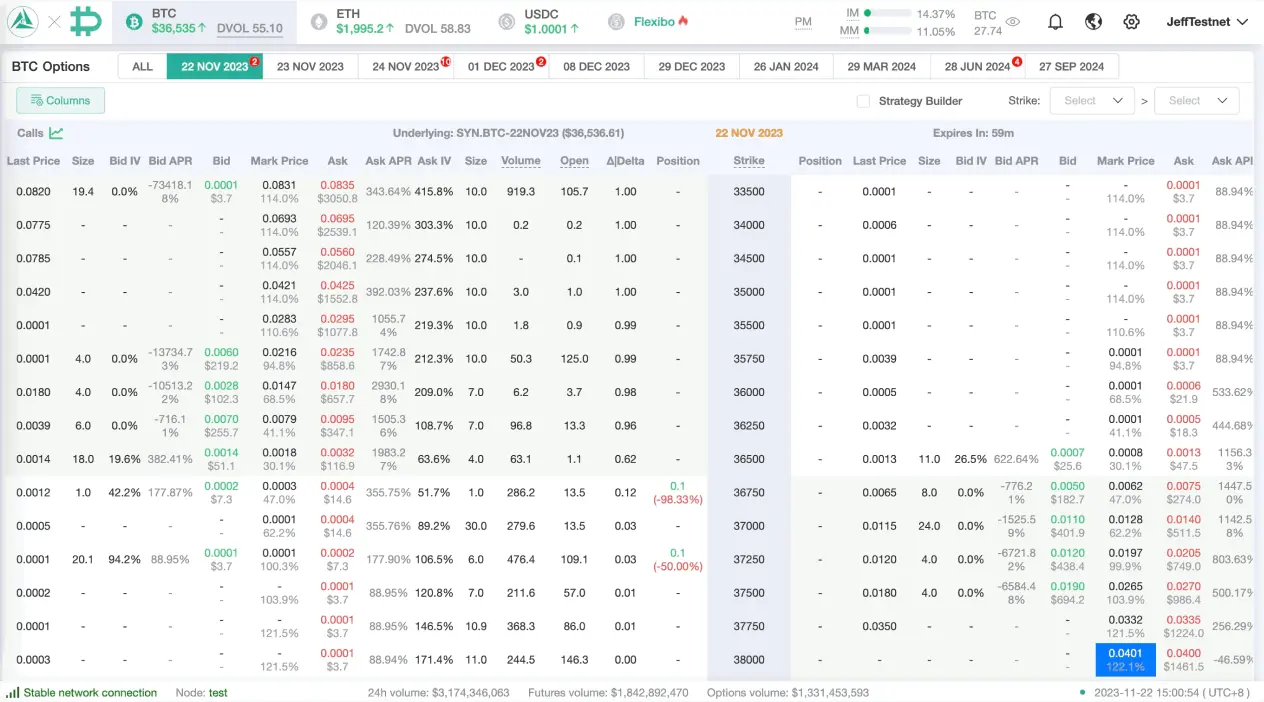
Consider the Iron Condor, a strategy designed to profit from low volatility. It involves the simultaneous sale of an out-of-the-money put spread and an out-of-the-money call spread. Executing these four legs individually on an open market is inefficient and risks significant slippage on each component. Using an RFQ, a trader can request a single, net price for the entire condor from multiple market makers.
This guarantees the premium received and establishes a precise, known profit and loss boundary from the outset. The same principle applies to calendar spreads, collars, and other multi-leg strategies that are foundational to professional risk management and income generation.
A recent analysis of crypto options markets highlights that concentrated liquidity providers, like those accessed via RFQ, use advanced portfolio margin systems that can reduce capital requirements for complex positions by up to 70%.

High-Volume Portfolio Rebalancing
Large funds and Separately Managed Accounts (SMAs) face a significant challenge during portfolio rebalancing ▴ executing large trades across multiple assets and accounts without causing market impact or creating price discrepancies between clients. An Aggregated RFQ system is the designated tool for this task. It allows a manager to bundle orders from numerous accounts into a single, large block request.
A fund manager needing to sell 500 BTC and buy 10,000 ETH across twenty different client accounts can use an Aggregated RFQ to solicit a single bid for the entire block. This has two primary benefits:
- Uniform Pricing ▴ All accounts receive the exact same execution price, ensuring fairness and consistent performance reporting. This removes the risk of one client getting a worse fill than another due to market movements during a lengthy execution process.
- Reduced Market Impact ▴ A single, privately negotiated trade is invisible to the public market. This prevents the price of BTC from falling and ETH from rising as the market absorbs the rebalancing activity, preserving the value of the portfolio during the transition. The ability to secure tighter spreads on large volumes is a direct efficiency gain.

Executing On-Chain with Off-Chain Pricing
The rise of decentralized finance has introduced powerful on-chain trading capabilities, but public automated market makers (AMMs) remain highly susceptible to slippage, especially for large orders. Advanced RFQ systems now bridge this gap, offering guaranteed pricing for on-chain settlement. A trader can secure a firm, no-slippage quote from an off-chain professional market maker and have the corresponding transaction settled directly on a blockchain like Ethereum or Polygon.
This hybrid approach delivers the best of both worlds ▴ the competitive, private pricing of the institutional market combined with the transparent, trustless settlement of a public blockchain. This is particularly valuable for executing large swaps between volatile assets where the price impact on a liquidity pool like Uniswap or Curve would result in substantial value leakage. The RFQ acts as a price-protection layer for on-chain activity.
- Strategy ▴ Swapping $5 million USDC for ETH.
- Public AMM Execution ▴ A large swap order on a public AMM would walk up the pricing curve, consuming liquidity at progressively worse prices and resulting in significant slippage.
- RFQ-Powered Execution ▴ A trader requests a quote for the full $5 million block. A market maker provides a single, firm price. The trade is executed at that guaranteed price, with the settlement occurring seamlessly on-chain. The trader avoids the price impact entirely.


The Integration of Execution as a Core Competency
Elevating trading from a series of discrete actions to a coherent, professional operation involves internalizing execution quality as a central pillar of performance. The consistent use of RFQ systems for significant trades is a hallmark of this transition. It re-frames execution from a reactive cost center into a proactive source of competitive advantage. This mastery extends beyond single trades and informs the entire lifecycle of portfolio management, from strategy construction to risk control and alpha generation.

Calibrating Risk Exposure with Precision
Advanced risk management is an active process of adjusting portfolio exposures in response to changing market conditions or strategic outlooks. The ability to execute large hedges or directional trades quickly and at a known cost is fundamental to this discipline. An RFQ system allows a portfolio manager to respond to a sudden increase in market volatility by executing a large protective put position or a collar strategy without introducing further uncertainty through execution slippage.
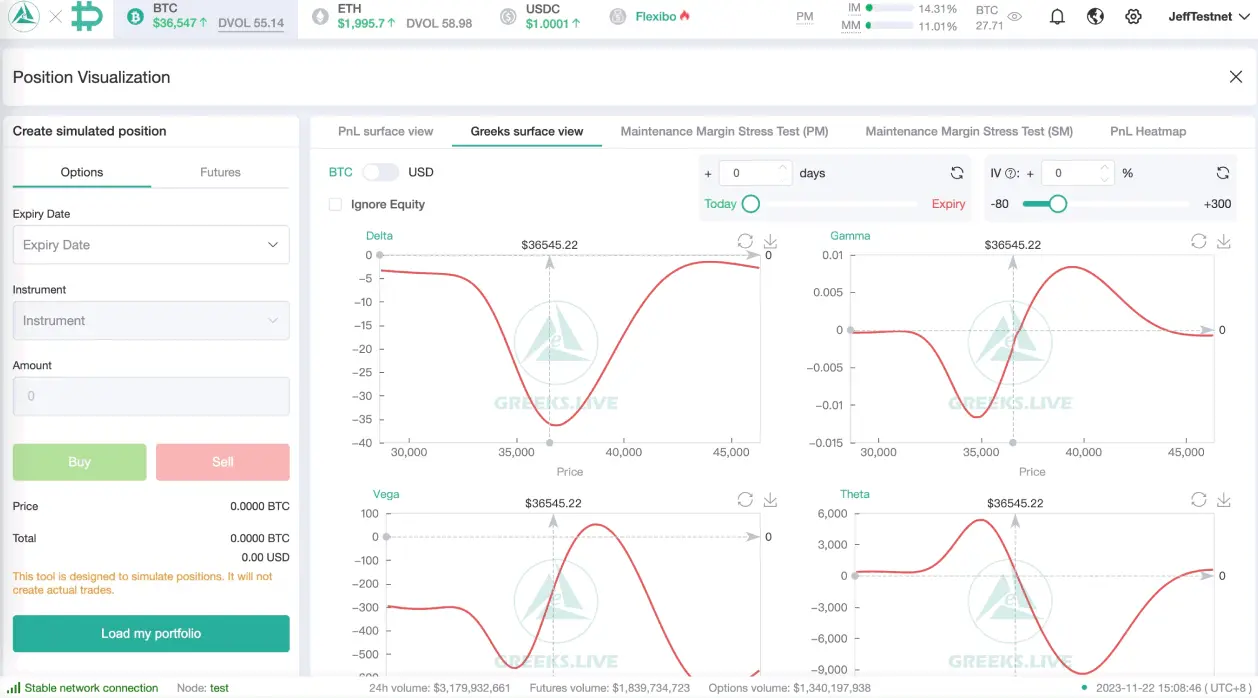
This speed and precision are critical. When a portfolio’s delta or vega exposure needs to be adjusted immediately, waiting for a large order to fill on a public market is an unacceptable operational risk. The RFQ provides a direct line to immediate, guaranteed execution, enabling the kind of dynamic hedging that separates institutional risk management from retail speculation.
A manager can confidently model the impact of a hedge on the portfolio’s overall risk profile, knowing that the cost of implementing that hedge is fixed and predictable. This is the essence of building a resilient, all-weather portfolio.

Unlocking Illiquid Markets and Complex Derivatives
Many of the most significant opportunities exist in markets or instruments with lower ambient liquidity. This can include options on less common crypto assets, long-dated futures, or complex, multi-leg structured products. Attempting to build a large position in these markets through a public order book is often impossible. The price impact would be catastrophic, and the visible attempt would attract adverse liquidity.
The RFQ process is the key that unlocks these opportunities. By directly tapping into the specialized market makers who are willing to price and warehouse the risk of these esoteric instruments, a trader can gain exposure that is unavailable to the wider market. A request for a quote on a large block of a long-dated ETH volatility swap, for example, might receive only one or two responses. That, however, is the entire market.
The RFQ system facilitates this bespoke discovery and execution, transforming a theoretically interesting trade into an actionable position. This is how professional desks create unique return streams that are uncorrelated with broad market movements.

Visible Intellectual Grappling
One must contend with the structural evolution of markets. The crypto space, in its current state, is a fragmented landscape of liquidity pools, a condition that historically produces persistent arbitrage opportunities. Yet, the very tools designed to navigate this fragmentation, such as aggregated RFQ systems, also contribute to its eventual consolidation. As institutional capital flows more efficiently through these private channels, the price discrepancies between venues are likely to compress.
The very act of exploiting the inefficiency contributes to its demise. This creates a dynamic where the edge derived from superior execution technology is in a constant state of evolution. The advantage, therefore, belongs to those who not only master the current tools but also anticipate the next iteration of market structure. The focus shifts from simply finding the best price today to engineering the most robust and adaptive execution framework for tomorrow.
This is the long-term strategic impact of mastering institutional-grade execution. It provides a durable edge that compounds over time. Each basis point saved from slippage is a basis point added directly to the bottom line. Each successful execution of a complex hedge strengthens the portfolio’s resilience.
Each foray into a less liquid market opens up new avenues for alpha. The cumulative effect of this operational excellence is the construction of a trading apparatus that is fundamentally more efficient, more robust, and more capable of translating strategic vision into financial reality.

The Mandate of Zero Slippage
The pursuit of zero slippage is the adoption of a professional ethos. It is the recognition that every basis point lost to friction is an unnecessary concession to the market. The tools and strategies outlined here are components of a system designed for intentionality. They provide a framework for translating a market hypothesis into a precise portfolio position, with minimal deviation between concept and reality.
This operational discipline is not an esoteric art. It is an engineering problem that has been solved. The path forward is defined by the deliberate application of these systems, transforming the chaotic noise of the market into a field of strategic opportunity, ready to be acted upon with clarity and conviction.

Glossary

Request for Quote

Block Trade

Price Discovery

Order Book

Public Order Book

Market Makers