


A New Standard for Liquidity Command
Executing substantial positions in the financial markets introduces a fundamental challenge. The very act of placing a large order into a public order book can trigger adverse price movements, a phenomenon known as market impact. This process, where the price moves away from the trader as their order is filled, directly translates into higher execution costs, a condition commonly referred to as slippage. A Request for Quote (RFQ) system provides a direct mechanism for engaging with designated liquidity providers in a private, competitive auction.
This structure is engineered to secure a firm price for a significant block of assets before the trade is executed, granting the trader precision and control over their entry and exit points. It functions as a formal invitation for market makers to offer their best bid and offer for a specified quantity of an asset, be it equities, futures, or complex options spreads.
The operational premise of an RFQ is directness and discretion. A trader initiates a request, specifying the instrument and size, to a select group of liquidity providers. These providers respond with their firm quotes, and the trader can then choose the most favorable price. This entire process occurs off the central limit order book (CLOB), ensuring the trader’s intention is shielded from the broader market.
This confidentiality is a core component of its design, as it prevents other market participants from detecting the impending large trade and trading against it. The transaction becomes a bilateral or multilateral agreement executed at a single, consolidated price, bringing certainty to an otherwise volatile undertaking. This is particularly valuable in markets for less liquid assets, such as certain municipal bonds or nascent futures contracts, where public order books may be thin and incapable of absorbing a large order without significant price dislocation.
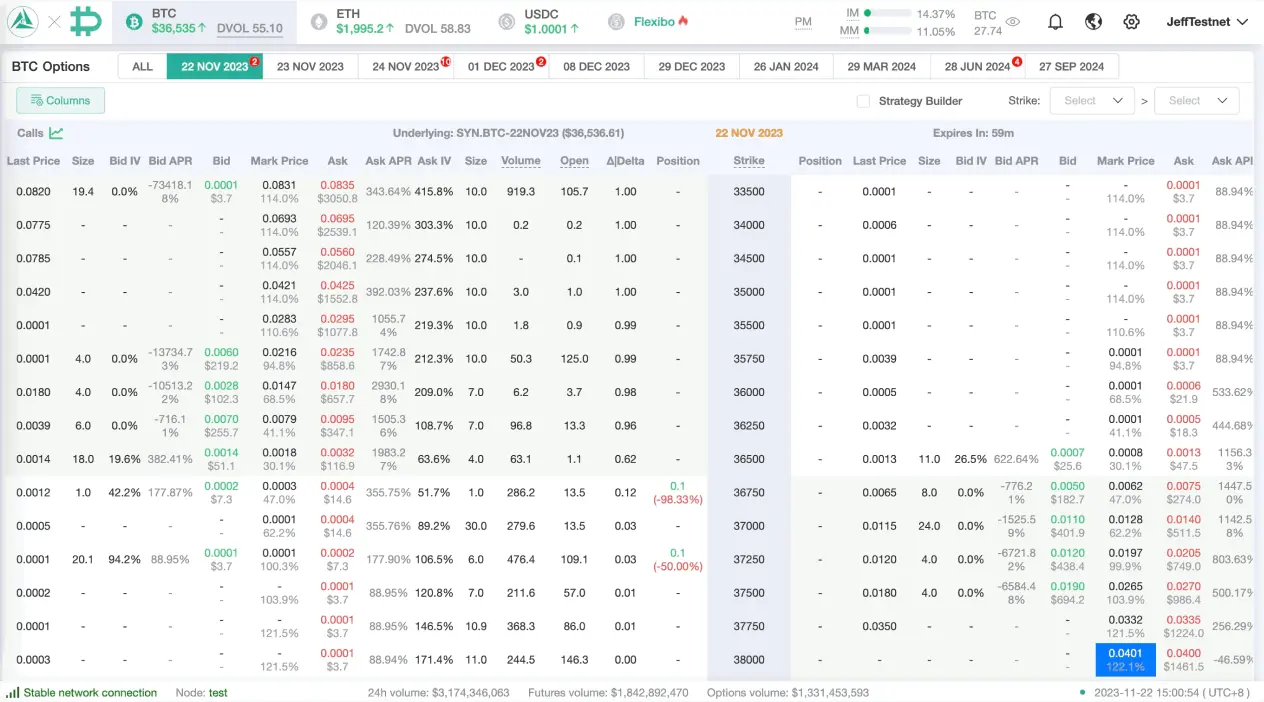
The transition of options markets to electronic platforms has been substantially facilitated by the adoption of RFQ functionalities. Over two-thirds of options are now traded electronically, and RFQ has been instrumental in this shift by enabling the efficient execution of multi-leg strategies. A trader seeking to establish a complex position, like a bull call spread, can use an RFQ to solicit a single price for the entire spread. This method eliminates “leg risk,” the danger that the prices of the individual options legs will move adversely while the trader is trying to build the position piece by piece in the open market.
The RFQ creates a unique, tradable instrument for the spread itself, allowing market makers to price it as a single package. This creates a competitive pricing environment for even the most customized strategies.
Executing large trades through an RFQ system reduces market impact because the trade is negotiated privately between the trader and a select group of liquidity providers, shielding the order from the public eye.
This system fundamentally reorients the trader’s relationship with liquidity. Instead of passively accepting prices available on a public exchange, the trader actively summons liquidity on their own terms. The RFQ process is an indication of interest, not a firm commitment to trade, which gives the initiator complete control. After receiving quotes, the trader can execute, counter with their own price, or do nothing at all.
This dynamic introduces a layer of strategic price discovery that is unavailable in standard order book trading. It empowers traders to test the waters for a large position, gather real-time pricing from the most significant market makers, and act only when the terms align perfectly with their strategic objectives. The anonymity of the process, a key feature of platforms like CME Globex, ensures that this intelligence gathering leaves no footprint in the market.


The Zero Impact Execution Method
Deploying capital with precision requires a methodology that aligns intent with outcome. The RFQ system is the professional-grade tool for translating a strategic decision into a perfectly executed trade, securing a target price for a substantial position without disturbing the market. This process is about actively managing your execution costs and transforming a potential liability ▴ size ▴ into a strategic asset.
By engaging directly with liquidity providers, you engineer a private market for your trade, ensuring the price you are quoted is the price you receive. This section provides the operational guide to deploying RFQ for superior trade execution, focusing on practical application in both equities and complex derivatives.

Sourcing Block Liquidity with Surgical Precision
The primary application of RFQ is for executing block trades. A block trade is a large order that, if placed on the central order book, would almost certainly cause significant slippage. The square-root law of price impact, a concept validated by extensive market data, posits that the market impact of a trade is proportional to the square root of its volume.
For institutional-sized trades, this impact represents a direct and quantifiable cost. The RFQ process is the primary mechanism for neutralizing this cost.

A Step-by-Step Guide to RFQ Execution
The procedure for initiating an RFQ is straightforward and built for efficiency. It is a structured dialogue between the trader and the market’s deepest liquidity pools.
- Define the Order ▴ The first step is to specify the exact parameters of the trade. This includes the instrument (e.g. a specific stock, ETF, or futures contract), the precise quantity, and your desired side (buy or sell). On many platforms, you can initiate an RFQ without revealing your direction, further protecting your intention.
- Select the Liquidity Providers ▴ Modern RFQ platforms provide access to a network of market makers and institutional liquidity providers. The trader can select which of these entities will receive the request. This allows for the curation of a competitive auction among the most relevant players for that specific asset.
- Initiate the Request and Await Quotes ▴ Once the RFQ is sent, the selected liquidity providers are alerted and invited to submit a firm bid and ask price for the specified size. This process typically occurs within a very short, defined timeframe, often just a few minutes.
- Analyze Responses and Execute ▴ The platform aggregates the responses, presenting the trader with a list of firm, executable quotes. The trader can then select the single best price. The result is a completed large-scale transaction at a price that often improves upon the national best bid or offer (NBBO) and for a size far greater than what is publicly displayed.

Mastering Multi-Leg Options Spreads
The RFQ system displays its true power in the derivatives market, particularly with multi-leg options strategies. For strategies such as vertical spreads, straddles, or complex calendar spreads, attempting to execute each leg individually in the open market is fraught with risk. The price of one leg can move while you are executing another, destroying the profitability of the intended structure. The RFQ system solves this by treating the entire spread as a single, tradable instrument.

Case Study a Vertical Spread on an ETF
Consider a trader looking to execute a large vertical spread on a popular ETF. Instead of “legging into” the trade by buying one option and then selling the other, the trader can use an RFQ platform to solicit a single net price for the entire spread. The request is sent to multiple options liquidity providers, who then compete to offer the best price for the package. This process offers several distinct advantages:
- Elimination of Leg Risk ▴ The spread is executed as a single transaction. There is no risk of an adverse price movement between the execution of the different legs.
- Superior Pricing ▴ Market makers can price the spread as a complete package, often resulting in a tighter bid-ask spread and a better net price than could be achieved by executing the legs separately.
- Guaranteed Size ▴ The quotes received are for the full size of the intended trade, providing certainty of execution for institutional volume.
A study by the TABB Group highlights how RFQ systems for options allow a trader to complete an order at a price that improves on the national best bid/best offer and at a size much greater than what is shown on the quote screen.

Building a Framework for Risk and Counterparty Selection
While RFQ systems provide immense benefits, their effective use depends on a disciplined approach to risk and counterparty management. The quality of your execution is directly tied to the quality of the liquidity providers you engage.

Key Considerations for Your RFQ Strategy
A professional approach to RFQ involves more than just sending out requests. It requires a strategic framework.
Counterparty Curation ▴ Building a list of trusted liquidity providers is essential. Over time, traders will learn which market makers consistently offer the most competitive quotes in their preferred instruments. Some platforms offer insights into the historical performance of different providers.
Information Management ▴ While RFQ is a discreet process, it is not entirely without information leakage. The selected liquidity providers are aware of your interest. Therefore, it is a sound practice to be deliberate about when and how often you go out for a quote. Repeatedly requesting quotes without executing can signal desperation or indecision.
Understanding Market Conditions ▴ The competitiveness of the quotes you receive will depend on prevailing market conditions. During times of high volatility, bid-ask spreads will naturally widen. An effective trader uses RFQ as a tool to navigate these conditions, not ignore them. The ability to lock in a firm price is even more valuable when markets are moving quickly.
Central Clearing Benefits ▴ On exchange-based RFQ systems, such as those offered by the London Stock Exchange Group or CME Group, trades are often centrally cleared. This removes counterparty risk, as the clearing house becomes the ultimate guarantor of the trade. It also frees up balance sheet for both the trader and the market maker, as they do not need to have separate bilateral credit agreements in place. This streamlined process encourages more liquidity providers to participate, leading to more competitive auctions.


Systemic Alpha Generation
Mastery of the RFQ mechanism transcends the execution of a single trade. It becomes a foundational component of a sophisticated, long-term portfolio strategy. By integrating this tool into your core process, you move from simply participating in the market to actively engineering your financial outcomes.
This is about building a durable edge through superior execution, enabling strategies that are otherwise untenable and compounding small gains into significant alpha over time. The focus shifts from the tactical ▴ getting a good price on one trade ▴ to the strategic integration of execution quality as a primary driver of portfolio performance.

Integrating RFQ into Algorithmic and Quantitative Strategies
For systematic traders and quantitative funds, execution costs are a critical variable in the profitability equation. Many algorithmic strategies rely on capturing small, fleeting alpha signals. High transaction costs can easily erode or completely negate the profits from these signals. RFQ systems can be integrated into algorithmic frameworks to provide a powerful execution overlay.
An algorithm designed to rebalance a large portfolio, for instance, can be programmed to use RFQ for its largest trades. When the algorithm determines a need to buy or sell a significant block of an asset, it can automatically initiate an RFQ to a curated list of liquidity providers. This allows the fund to transfer a large chunk of risk at a firm, known price, minimizing the market impact that would be incurred by feeding the order into the market through a standard TWAP (Time-Weighted Average Price) or VWAP (Volume-Weighted Average Price) algorithm. This hybrid approach combines the intelligence of an execution algorithm with the certainty of a block liquidity tool.

Unlocking Advanced Derivatives and Hedging Programs
The true potential of RFQ is realized when it is used to facilitate complex, multi-asset class strategies. Institutional investors and hedge funds must manage complex risk exposures that span across equities, futures, and options. RFQ provides a unified mechanism for executing the multi-leg, multi-asset class hedges that are essential for sophisticated risk management.

Constructing Financial Firewalls with Precision
Imagine a portfolio manager holding a large, concentrated position in a single stock. To hedge against a potential downturn, the manager might decide to implement a collar strategy, which involves selling a call option and buying a put option against the stock position. Executing this three-legged trade (stock, put, and call) in the open market can be complex and inefficient. An RFQ system allows the manager to request a single, unified quote for the entire package.
Market makers can price the risk of the entire structure holistically, often providing a more competitive price than if the components were traded separately. This enables the precise and cost-effective construction of financial firewalls around core portfolio holdings.
Research into market microstructure reveals that institutional investors, who account for the bulk of trading volume, require mechanisms for executing large quantities, and RFQ directly serves this need.

The Long-Term Edge of Execution Alpha
The consistent reduction of transaction costs is a form of alpha in itself. “Execution alpha” is the value a trader adds by executing trades at prices better than a given benchmark (like the arrival price or the VWAP). While a single basis point saved on one trade may seem small, the cumulative effect across a large portfolio and over hundreds or thousands of trades is substantial. RFQ is a primary engine for generating this execution alpha.
By making RFQ a standard part of the trading workflow, a portfolio manager instills a discipline of cost management that directly contributes to the bottom line. This focus on execution excellence becomes a core competency of the investment process. It allows the manager to be more aggressive in pursuing alpha from their core investment ideas, knowing that the implementation costs are being rigorously controlled. This creates a virtuous cycle where good ideas are translated into profitable positions with maximum efficiency, leading to superior risk-adjusted returns over the long term.
Furthermore, mastering RFQ provides a significant information advantage. The quotes received from liquidity providers are a real-time signal of the market’s appetite for risk in a specific instrument. This flow of information, available only to those who actively solicit it, provides a deeper, more nuanced view of market sentiment than public order books alone can offer. It is a proprietary data stream that can inform other trading decisions, turning the execution process itself into a source of market intelligence.

The Mandate for Market Command
The architecture of modern finance offers distinct pathways for market participation. One path involves accepting the visible liquidity and pricing displayed on public screens, a process defined by reaction. Another path is forged through direct engagement, where liquidity is summoned and prices are negotiated. Adopting the Request for Quote system is a definitive step onto this second path.
It represents a fundamental shift in mindset from being a price taker to becoming a price maker. The knowledge and application of this tool reframe the challenges of size and volatility into opportunities for strategic execution. The consistent, disciplined use of this mechanism equips a trader with a structural advantage, embedding a professional process into the core of their investment operations and setting a new standard for what is possible in portfolio performance.

Glossary

Liquidity Providers

Request for Quote

Options Spreads

Market Makers

Central Limit Order Book

Multi-Leg Strategies

Price Discovery

Cme Globex

Rfq System

Market Impact

Order Book

Rfq Systems

Counterparty Risk