


The Mandate for Precision Execution
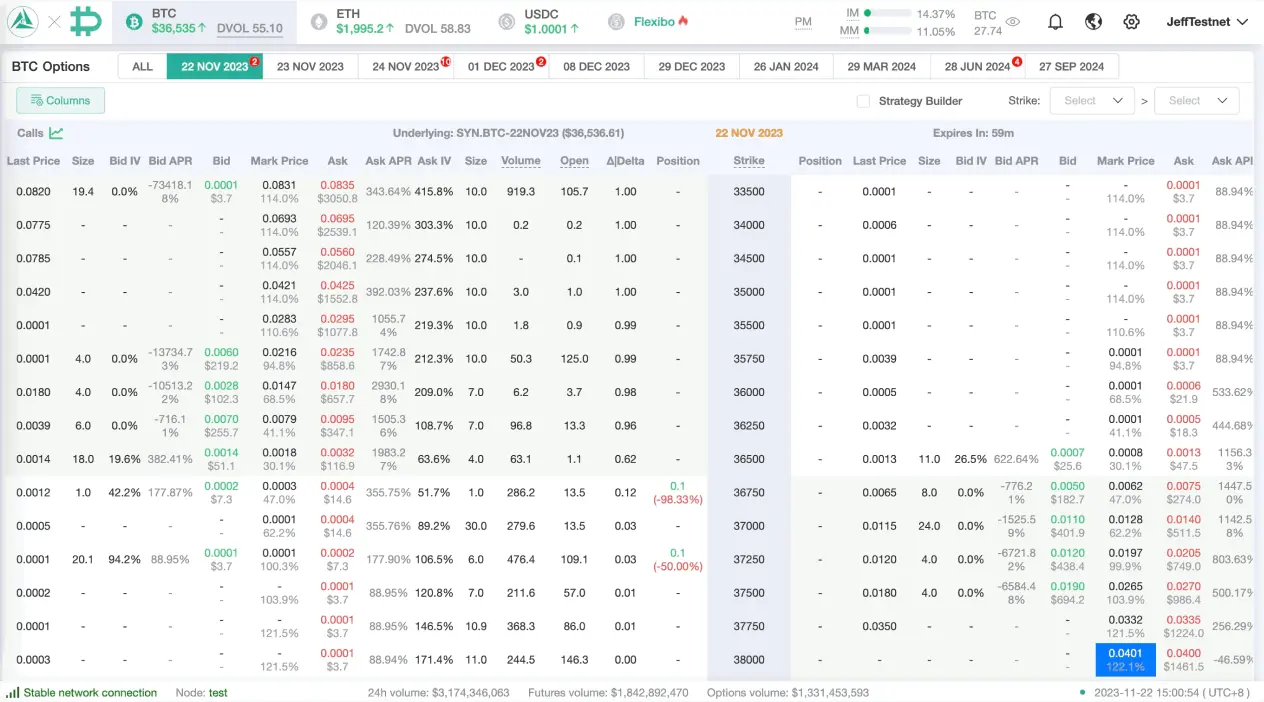
Achieving superior pricing in options trading is a function of commanding liquidity on your own terms. The institutional mechanism for this is the Request for Quote (RFQ) system, a process that moves beyond passively accepting screen-based prices. An RFQ is a direct, competitive auction for your specific trade. You broadcast your order details privately to a select group of market makers and liquidity providers.
These participants then compete against one another, sending back firm, executable quotes for your desired size. This method creates a bespoke pricing environment for your order, one engineered to secure a transaction at a cost basis superior to the publicly displayed National Best Bid and Offer (NBBO).
The contemporary options market is a complex network of fifteen or more exchanges, each with its own liquidity pool and order book. This fragmentation can obscure the true depth and availability of liquidity for a given instrument. An order placed on a single exchange might only interact with a fraction of the total available interest, leading to price slippage and partial fills, especially for larger or more complex orders. The RFQ process consolidates this fragmented landscape.
By soliciting quotes directly from the most significant liquidity providers, you are effectively creating a centralized point of competition. This system compels market makers to price your order with the knowledge that other professionals are bidding for the same execution, fostering an environment where price improvement is the primary objective.
A request for quote system allows a trader to complete an order at a price that improves on the national best bid and offer, often at a size much greater than what is displayed on screen.
This process is particularly effective for multi-leg option strategies and block trades. Constructing a complex spread by executing each leg individually in the open market introduces significant execution risk; price movements in one leg can adversely affect the net price of the entire position before it is fully established. An RFQ allows the entire spread to be quoted and executed as a single package. This ensures the integrity of the strategy’s intended cost basis.
For block trades, an RFQ provides a discreet method for discovering liquidity without signaling your intent to the broader market, which can cause adverse price movements. The anonymity and direct access inherent in the RFQ process are foundational tools for any trader seeking professional-grade execution and tangible price improvement on every transaction.


A System for Sourcing Superior Prices
Integrating a Request for Quote methodology into your trading operation is a systematic upgrade to your execution quality. This is a shift from being a price taker, subject to the visible bid-ask spread, to becoming a price maker, compelling market participants to compete for your order flow. The process is a clear sequence of actions designed to produce a quantifiable improvement in your execution cost basis. Adopting this framework requires a disciplined approach to every stage of the trade lifecycle, from pre-trade analysis to post-trade settlement.

The Anatomy of a High-Performance RFQ
The effectiveness of an RFQ is determined by the precision of its construction and the strategic selection of counterparties. A well-designed RFQ minimizes information leakage while maximizing competitive tension among liquidity providers. The goal is to provide enough detail to elicit aggressive, firm quotes without revealing the full scope of your trading strategy or market view. This is a calculated balance of transparency and discretion.

Structuring the Request
Your request must be clear and complete. It specifies the underlying security, the exact option series (expiration, strike, and type), the quantity, and the side of the transaction (buy or sell). For multi-leg strategies, each component is detailed within the single request, ensuring that market makers are quoting on the entire package.
This integrated approach is what allows for the execution of complex positions at a single net price, a distinct advantage over legging into a trade on the open market. The result is a transaction that more accurately reflects your strategic intent.

Selecting the Counterparties
The selection of liquidity providers to include in the RFQ is a critical decision. The system allows you to direct your request to a specific list of market makers. An optimal list includes a diverse set of participants with different trading mandates. This could involve large, established market-making firms, specialized derivative funds, and other institutional players known for providing liquidity in your target asset class.
Diversifying your counterparty list increases the probability of finding the participant with the most natural offsetting interest for your trade, which is the key to unlocking the most competitive price. Over time, you can refine this list based on historical response quality, response times, and fill rates, creating a curated group of your most reliable liquidity sources.

A Tactical Guide to RFQ Execution
Deploying an RFQ is a structured process. Following a consistent procedure for every trade ensures that you are systematically seeking out price improvement and managing your execution risk with professional discipline. This is the operational tempo of an institutional trader. The process can be broken down into five distinct phases, each contributing to the final quality of the execution.
- Pre-Trade Benchmark Analysis Before initiating any RFQ, you must establish a clear benchmark price. You begin by observing the current National Best Bid and Offer (NBBO) for the option or spread you intend to trade. This public quote serves as your baseline. For a 5,000-lot IWM call spread, the market might show a bid of 1.85 and an offer of 1.92. Your objective is to execute your trade at a price meaningfully better than this public benchmark. This initial step grounds your expectations and provides a clear metric for evaluating the success of the RFQ.
- Initiating The Competitive Auction You then launch the RFQ through your trading platform. The system privately transmits your order details to your selected list of liquidity providers. This initiates a timed auction, typically lasting for a short period, such as 30 to 60 seconds. During this window, the market makers analyze your request and their own risk positions to formulate their best possible bid or offer. The process is designed to be swift and efficient, reflecting the dynamic nature of derivatives markets.
- Evaluating Competitive Responses As the responses arrive, your screen will populate with a list of firm, executable quotes from the competing dealers. Each quote will specify a price and the maximum size the dealer is willing to transact. You will often see responses that are better than the prevailing NBBO. For instance, in the IWM call spread example, while the public market bid was 1.85, an RFQ might yield a top bid of 1.87 from one dealer. This represents a tangible price improvement of 0.02 per share, or $2 per contract.
- Executing With The Winning Quote With the auction complete, you have full discretion to select the best quote. You execute the trade by clicking on the winning bid or offer. The transaction is then completed, often crossing on one of the licensed options exchanges but at the privately negotiated price. This immediate execution at a superior price for the full desired size is the primary outcome of the RFQ process. You have successfully sourced liquidity on demand and translated competitive tension directly into a better cost basis for your position.
- Post-Trade Verification And Analysis After execution, you must document the outcome. You record the execution price against your initial pre-trade benchmark (the NBBO). The difference between the two is your price improvement, a quantifiable measure of the value generated by the RFQ process. For example, a 0.02 improvement on a 5,000-lot spread translates to a $10,000 enhancement to the trade’s entry point. This data should be tracked over time to refine your counterparty lists and continuously optimize your execution strategy.

Application in Block Trading
The RFQ system is the standard for executing institutional-size block trades in the options market. Attempting to execute a large order directly on the public order book will almost certainly result in significant market impact, alerting other participants to your intentions and causing the price to move against you. Breaking a large order into many small pieces is a common tactic to mitigate this, but it is inefficient and carries its own risks, including the possibility that the full order will not be filled at a favorable price.
An RFQ for a block trade operates as a private negotiation. It allows a large transaction to be priced and executed away from public view, preserving the market’s integrity and protecting the trader from information leakage. The process can attract significant liquidity from providers who are compensated for taking on large positions through the bid-ask spread they quote.
While the execution costs for blocks might be higher in absolute terms to compensate dealers for search and inventory costs, the ability to transact a large volume at a single, known price without adverse market impact is a considerable strategic advantage. This mechanism is what enables institutional investors to move significant positions without disrupting the very market they are trading in.


The Transition to Portfolio Level Execution Alpha
Mastering the Request for Quote mechanism is the gateway to a more sophisticated, portfolio-level approach to trading. Each successfully executed RFQ contributes to a cumulative advantage, a concept professionals refer to as execution alpha. This is the value generated purely from the skill and process of how you enter and exit positions, independent of your overarching market thesis.
It is a durable edge that compounds over time, directly enhancing your portfolio’s net performance. Moving from a trade-by-trade mindset to a holistic execution strategy is the final step in professionalizing your market operations.

Engineering a Resilient Execution Framework
A resilient execution framework anticipates and mitigates the structural challenges of modern markets. The primary challenge is liquidity fragmentation. With dozens of potential trading venues for any given option, liquidity is rarely concentrated in one place. A sophisticated trader views this fragmentation as an opportunity.
Your execution system, with RFQ at its core, becomes a tool for re-consolidating that distributed liquidity on your own terms. You are building a private, unified order book for each of your trades.
The dispersion of trades across multiple venues can complicate liquidity measurement and price discovery, potentially increasing market complexity and execution costs for the unprepared.
This framework also addresses the risk of information leakage. Every order placed on a public exchange is data. High-frequency trading firms and other opportunistic participants use algorithms to detect the presence of large institutional orders, trading ahead of them to profit from the anticipated price impact. RFQ systems, by their private and targeted nature, act as a shield against these strategies.
You control who sees your order, transforming the execution process from a public broadcast into a confidential negotiation. This control is a critical component of managing your transaction costs and protecting your strategic intentions.

Advanced Applications and Strategic Integration
With a robust RFQ process in place, you can begin to deploy more advanced portfolio management techniques. The certainty of execution for complex, multi-leg positions allows for the systematic implementation of sophisticated risk management overlays and income-generating strategies across your entire portfolio. You can confidently execute complex structures like collars, butterflies, and condors at a single net price, knowing that the execution risk is contained.

Dynamic Hedging and Risk Overlays
Consider a portfolio with significant exposure to a single stock. You may want to implement a protective collar, which involves selling a call option and buying a put option against the stock position. Executing this two-legged options structure via an RFQ ensures a clean, single-transaction entry at a known net cost or credit.
This allows for the precise and efficient application of risk management “firewalls” around your core holdings. The ability to execute these structures reliably means you can dynamically adjust your portfolio’s risk profile in response to changing market conditions with a high degree of confidence.

Systematic Alpha Generation from Complex Spreads
Many professional trading strategies rely on capturing small pricing discrepancies between related options contracts. These strategies often involve complex, multi-leg structures with four or more legs. The profitability of such trades is entirely dependent on entering the position at a very specific net price. The RFQ mechanism is the only viable way to execute these trades at an institutional scale.
It allows the quantitative trader to submit the entire multi-leg order as a single package to a network of liquidity providers, ensuring that the trade is only executed if the required net price can be achieved. This transforms complex arbitrage and relative value strategies from theoretical models into practical, scalable sources of portfolio alpha.
Ultimately, the consistent application of a superior execution methodology becomes a core component of your investment identity. It instills a level of operational discipline that permeates all aspects of your market activity. You begin to view the market not as a chaotic sea of fluctuating prices, but as a system of liquidity and risk that can be navigated with precision and intent. The mastery of execution is the foundation upon which all durable trading success is built.

The Trader as the Price Setter
The journey from accepting market prices to dictating your execution terms is a fundamental shift in perspective. It is the recognition that the mechanics of the trade are as meaningful as the strategic idea behind it. By adopting the tools and disciplines of institutional execution, you are no longer merely a participant in the market; you become an active agent in the price discovery process for your own trades. This newfound control over your cost basis is a permanent asset, a skill that provides a strategic advantage on every position you take, today and for the remainder of your trading career.

Glossary

Liquidity Providers

Request for Quote

Cost Basis

Rfq Process

Order Book

Price Improvement

Market Makers

Execution Risk

Block Trade

Execution Alpha