


The Mandate for Execution Precision
In the theater of digital assets, where volatility is a constant, the defining characteristic of a professional operator is an unwavering commitment to precision. This commitment extends beyond predicting market direction; it resides in the very mechanics of trade execution. For sophisticated participants, the public order book, with its inherent transparency and potential for price slippage, presents structural limitations, especially when dealing in size. Executing large orders on a public book can signal intent to the broader market, leading to adverse price movements before a position is fully established.
This is a costly form of information leakage. The transition to a more deliberate, private negotiation model is a logical step for any trader whose goals are capital preservation and best execution.
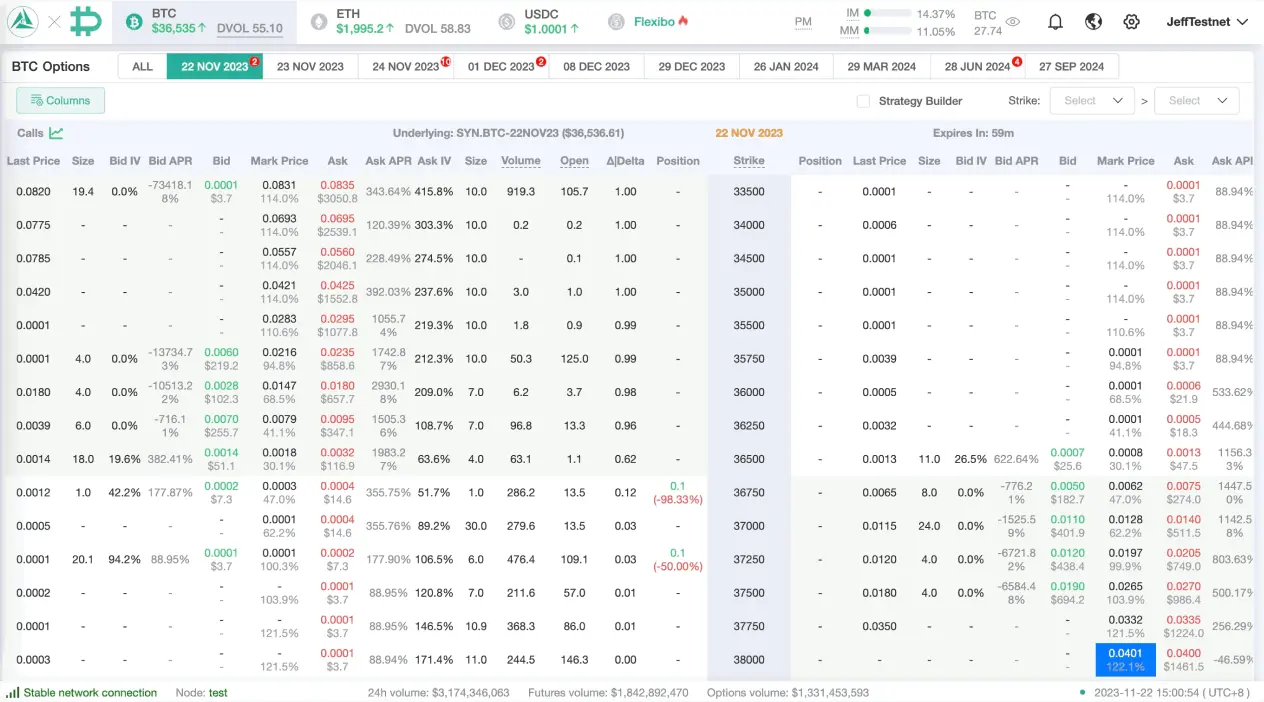
This is where the Request for Quote (RFQ) system emerges as a primary instrument for strategic execution. An RFQ is a communications channel allowing a trader to privately solicit firm, executable prices from a select group of professional liquidity providers for a specific, often large or complex, options structure. The process is direct ▴ a trader specifies the instrument, size, and desired structure, and multiple market makers respond with competitive bids and offers.
The trader can then select the best price and execute the entire block in a single, private transaction, insulated from the disruptive signaling risk of the open market. This mechanism transforms trade execution from a passive acceptance of available prices into an active command of liquidity on the trader’s own terms.
The structural integrity of this method offers quantifiable advantages. Chief among them is the mitigation of slippage ▴ the difference between the expected price of a trade and the price at which it is actually executed. In the RFQ model, the quoted price is a firm commitment for the full size of the trade, effectively eliminating slippage for that transaction. This is particularly vital in the options market, where the value of multi-leg strategies is highly sensitive to the execution price of each component.
Attempting to piece together a complex spread on a public order book introduces “legging risk,” where price fluctuations between the execution of each leg can erode or destroy the profitability of the entire position. An RFQ that facilitates multi-leg structures allows for the entire strategy to be priced and executed as a single, atomic unit, preserving its intended structure and risk profile. Deribit’s Block RFQ, for example, permits structures of up to 20 legs, enabling the creation of highly customized trading strategies.


The Operator’s Framework for Alpha Generation
Mastering the crypto options market requires a systemic approach to capturing opportunities. The RFQ system is the operational centerpiece of this approach, providing the stability and pricing power necessary to deploy sophisticated strategies with confidence. Moving from theoretical knowledge to practical application involves engineering trades that align a specific market view with a precisely executed structure.
This is where the operator’s mindset ▴ focused on process, risk control, and quantifiable outcomes ▴ becomes paramount. The following frameworks are designed as actionable guides for translating market intelligence into alpha.

The Engineered Yield Covered Call
The covered call is a foundational income-generating strategy. Its conventional application involves selling a call option against an existing spot holding. The professional application refines this process, using the RFQ mechanism to optimize the entry price and, therefore, the yield.
For a portfolio manager holding a significant Bitcoin position, the objective is to generate consistent income while managing risk. Instead of placing a limit sell order on a single call option and waiting for a fill, the manager can use an RFQ to solicit quotes for a large block of calls at a specific strike price and expiration.

Sourcing Institutional Liquidity
A primary function of the RFQ is to tap into deep, often un-displayed, liquidity. When looking to sell 100 BTC worth of monthly calls, placing that order on the public book would be inefficient. It would likely require multiple partial fills at deteriorating prices.
An RFQ, however, sends the request to multiple, competing market makers who are equipped to price and absorb the entire block at once. This competitive dynamic frequently results in price improvement over the visible bid on the central order book.
The median trade size on the CME for Bitcoin futures can exceed $18,000, while spot market median sizes are often under $1,300, highlighting the institutional scale of derivatives markets.

Pricing for Optimal Premium Capture
The goal is to maximize the premium received for the options sold. By receiving multiple firm quotes, the operator can identify the best possible price. This might seem like a marginal gain, but over a program of systematic call selling, these basis points accumulate into a significant enhancement of portfolio returns.
The certainty of execution at a known price allows for precise calculation of the annualized yield, transforming a speculative action into a predictable income stream. The entire operation becomes a component of a larger financial machine, engineered for a specific output.

Volatility Instruments the Straddle and Strangle
Periods of market consolidation are often precursors to significant price expansion. The straddle (buying a call and a put at the same strike price) and the strangle (buying an out-of-the-money call and put) are classic tools for positioning for a breakout in either direction. The profitability of these strategies hinges almost entirely on the cost of entry. Executing them for size on a public exchange is fraught with peril due to legging risk and the potential for wide bid-ask spreads on two separate instruments.

Executing Spreads with Zero Legging Risk
The RFQ system is purpose-built for such challenges. An operator can request a quote for the entire two-legged structure as a single package. For instance, a trader anticipating a major move in Ether following a network upgrade could request a quote for a 500 ETH at-the-money straddle.
Market makers respond with a single price for the entire package. This has two profound effects:
- Cost Efficiency ▴ The net debit paid is often tighter than the sum of the individual bid-ask spreads on the public book. Market makers can price the net risk of the package more efficiently than two independent legs.
- Execution Guarantee ▴ Both legs are executed simultaneously at the agreed-upon price. This completely removes the risk that the price of one leg will move adversely while the other is being filled. This guarantee is the bedrock upon which institutional volatility trading is built.

The Protective Collar for Strategic Hedging
For investors with a large, appreciated position in a digital asset, a collar is a powerful tool for risk management. It involves selling an out-of-the-money call option and using the premium received to finance the purchase of an out-of-the-money put option. This creates a “collar” around the asset’s price, defining a maximum potential gain and a maximum potential loss within a specific timeframe. It is a zero-cost or low-cost method of hedging downside risk.

A Comparative Execution Analysis
Consider an investor holding 1,000 ETH who wishes to protect against a market downturn over the next quarter. The RFQ process provides a clear advantage over a public order book execution.
- Public Order Book Approach ▴ The investor would first need to sell the call option, likely in smaller increments to avoid depressing the price. After securing the premium, they would then need to buy the put option, again potentially in smaller increments. The time elapsed between the two series of transactions exposes the investor to market fluctuations, and the total transaction costs are the sum of two separate, potentially wide, bid-ask spreads.
- RFQ Approach ▴ The investor requests a single quote for the entire collar structure. For example ▴ “Sell 1,000 ETH March Calls / Buy 1,000 ETH March Puts.” Market makers compete to offer the most attractive net cost for the entire structure, often a small net credit or a zero cost. The execution is atomic, simultaneous, and discreet. The entire hedge is established in a single, efficient transaction.
This visible intellectual grappling with execution methods reveals a core principle ▴ the tool dictates the strategy’s viability. A sophisticated hedging program is only as effective as the mechanism used to implement it. The RFQ process provides the structural integrity required for these strategies to function as designed, transforming them from theoretical concepts into reliable components of a professional risk management system.


Portfolio Integration and the Sustained Edge
Mastery of precision execution is the foundational skill. The strategic horizon opens when this skill is integrated into a holistic portfolio management philosophy. It is the shift from analyzing individual trades to engineering a portfolio’s return stream and risk profile. The consistent use of RFQ for block-sized option trades generates a cumulative advantage, a quantifiable edge that compounds over time.
This edge is composed of reduced transaction costs, minimized market impact, and the ability to deploy complex structures that are otherwise unfeasible. These efficiencies directly translate into a higher Sharpe ratio, the measure of risk-adjusted return that is the lingua franca of professional asset management.
The ability to execute large, multi-leg options strategies anonymously and efficiently allows a portfolio manager to treat volatility as an asset class to be harvested. Systematic programs of selling volatility through structures like iron condors or strangles become a reliable source of income, supplementing directional bets. These strategies, which would be prohibitively costly and risky to implement at scale on a public order book, become viable through the RFQ mechanism.
The portfolio is no longer merely exposed to market beta; it is actively generating alpha through the structural exploitation of derivative pricing inefficiencies. This is a profound shift in operational capability.

Advanced Risk Reversals and Skew Trading
Deeper applications involve positioning for changes in the volatility surface itself. The “skew” in options pricing ▴ whereby equidistant out-of-the-money puts and calls have different implied volatilities ▴ reflects market sentiment and expectations of tail risk. A sophisticated operator can use RFQ to execute large risk-reversal packages (e.g. selling an OTM put and buying an OTM call) to take a position on the direction of this skew. This is a meta-game, trading the market’s perception of risk.
Executing such a trade requires the absolute precision of a single-transaction, multi-leg RFQ to lock in the exact spread between the implied volatilities of the two legs. It is a strategy that exists almost exclusively in the domain of those who have mastered institutional execution tools.

The Long Term Strategic Impact
Adopting a precision-first execution model has long-term consequences for a trading operation. It instills a discipline of process and quantification. Every strategy’s performance can be more accurately measured when the variable of execution cost is minimized and controlled. This creates a cleaner feedback loop for strategy refinement.
Furthermore, as the digital asset market continues to mature, its structure will increasingly resemble that of traditional finance, with liquidity fragmenting across various venues. The capacity to source liquidity directly and efficiently through mechanisms like RFQ will become a prerequisite for survival and success. The skills being honed today are an investment in future relevance. The operator who masters the art of commanding liquidity on their terms is building a durable, all-weather competitive advantage. This is the final objective.

The Arena of Your Own Design
The journey into precision crypto options is a re-calibration of one’s relationship with the market. It is a departure from the reactive posture of a price-taker toward the proactive stance of a market operator. The tools and frameworks presented here are components of a system, and the ultimate purpose of this system is to grant you control over the variables that can be controlled. Price direction is an unknown, but execution quality, risk definition, and strategic integrity are matters of deliberate design.
By engineering your trades with the same rigor that an architect designs a skyscraper, you construct a framework robust enough to withstand the market’s inherent chaos and positioned to capitalize on its opportunities. The market is the arena; your operational discipline defines the terms of engagement.

Glossary

Public Order Book

Slippage

Best Execution

Market Makers

Public Order

Deribit

Covered Call

Call Option

Order Book

Straddle