


The Silent Arena of Institutional Liquidity
The public order book is a transparent and vital mechanism for price discovery in financial markets. It meticulously displays the collective will of buyers and sellers, matching standard-sized orders with remarkable efficiency. This visible ledger functions as the bedrock of everyday trading activity. A different set of tools becomes essential when institutional capital needs to enter or exit a position.
Placing a large order directly onto the central limit order book introduces a fundamental imbalance between supply and demand. Such an action creates a significant price impact, a direct cost absorbed by the initiator as the market reacts to the sudden influx of volume. The very transparency of the order book becomes a strategic liability.
This exposure of a large order is known as information leakage. Revealing the full size and intent of a substantial trade provides critical data to the rest of the market. Other participants can act on this information, adjusting their own positions and creating adverse price movements before the institutional order can be fully filled. This dynamic systematically disadvantages the trader initiating the large block.
Professional traders operate within a framework where the primary objective is to achieve a desired execution price with minimal market distortion and complete discretion. Their world is one of private negotiations and sophisticated execution logic designed to access liquidity without signaling their hand. The methods they employ are engineered specifically to manage the dual challenges of price impact and information leakage, ensuring that significant capital can be deployed with precision and control.
Block trades of 10,000 shares or more constituted just 3 percent of New York Stock Exchange volume in 1965, a figure that grew to nearly 51 percent by 1992, highlighting the increasing importance of off-exchange liquidity mechanisms for large transactions.
The challenge for any significant market participant is sourcing deep liquidity. This term refers to the ability to execute a large transaction with little to no impact on the security’s price. Public exchanges, for all their strengths, often present a shallow pool of immediately available liquidity at the best bid and offer. Attempting to push a massive order through this visible, finite depth is akin to forcing a river through a narrow channel; the pressure builds, and the landscape inevitably shifts.
This is why the professional toolkit is built around accessing liquidity that is not publicly displayed. These alternative venues and methods provide access to counterparties willing to transact in size without the disruptive effects of public execution. Understanding these mechanisms is the first step toward operating with the same level of strategic foresight and control as the market’s most sophisticated players.


The Institutional Execution Toolkit
A trader’s success is contingent on the quality of their execution. For substantial positions, this means moving beyond the visible marketplace and utilizing a suite of powerful, discreet tools. These methods are designed not just to find a counterparty, but to control the terms of engagement, manage information flow, and secure a price that reflects the true value of an asset.
Mastering these tools transforms the act of trading from simple order placement into a strategic process of liquidity sourcing and cost management. Each method offers a distinct advantage, tailored to specific market conditions, order sizes, and strategic objectives.

Commanding Liquidity with Request for Quote
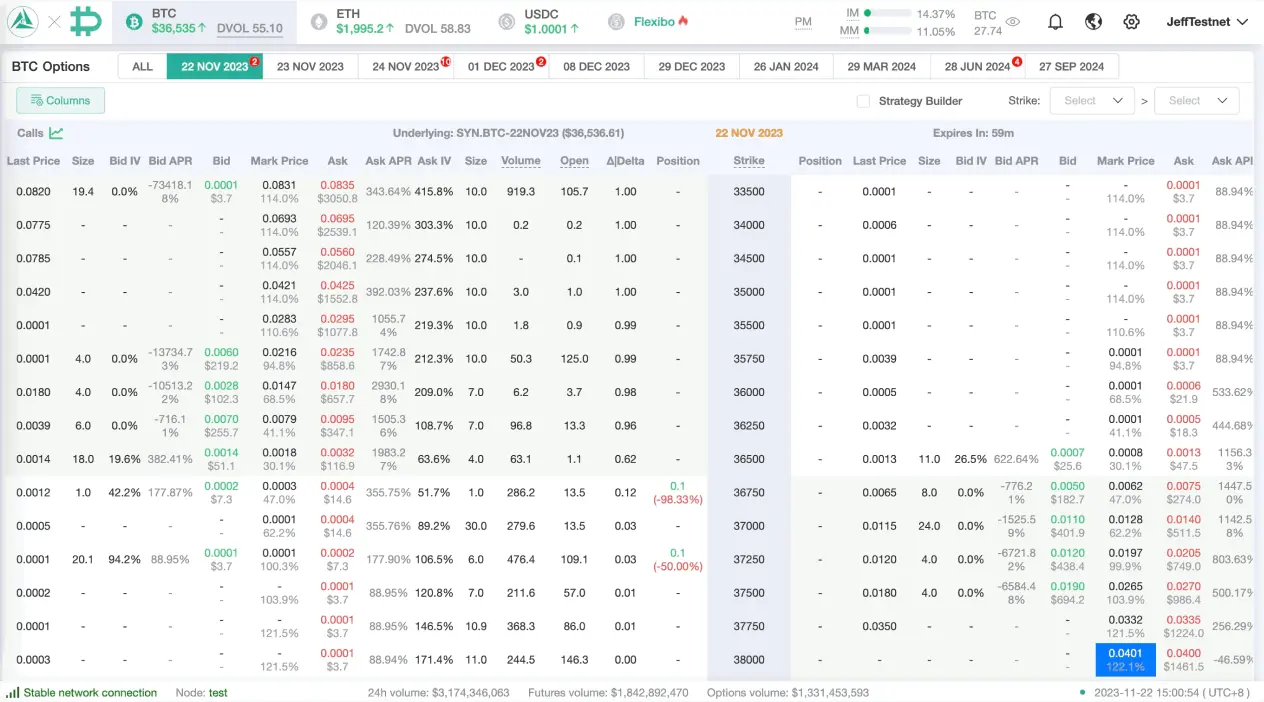
The Request for Quote (RFQ) system provides a direct and private channel for price discovery. It functions as a controlled auction, where a trader can solicit competitive bids or offers from a select group of market makers and liquidity providers for a specific instrument and size. This process is particularly potent for complex instruments like multi-leg options spreads or for assets that trade in less liquid environments. The RFQ mechanism grants the initiator complete discretion over who is invited to quote, containing the information to a trusted circle of counterparties.
This targeted communication drastically curtails the risk of broader information leakage. Market makers, in turn, can price the trade with greater certainty, knowing they are competing in a limited field for a confirmed order size. The result is often tighter pricing and a guaranteed fill for the entire block, eliminating the leg risk and execution uncertainty inherent in piecing together a large trade on a public exchange.

Structuring a Strategic RFQ for Options
Executing a complex options strategy, such as a multi-leg collar or calendar spread, on the public market can be fraught with peril. The trader faces the risk of getting a fill on one leg but not the others, or seeing the price move unfavorably between executions. An RFQ solves this by treating the entire strategy as a single, indivisible transaction. The trader specifies all legs of the spread in the request, and market makers respond with a single net price for the entire package.
This provides price certainty and clean execution. The process allows for the efficient transfer of large, nuanced risk positions with a degree of precision unavailable in the lit market. It is the professional standard for executing sophisticated derivatives strategies at scale.

The Power of Negotiated Block Trades
Block trades are the quintessential method for moving significant size with minimal market friction. These are large, privately negotiated transactions arranged away from the public exchanges, typically with the help of a specialized block trading desk at an investment bank or brokerage. These desks act as intermediaries, using their network to find a natural counterparty for the other side of a large trade. The negotiation is a discreet process, where price and size are agreed upon privately.
Once the terms are set, the trade is reported to the exchange, a process known as printing the trade. This method allows for the transfer of massive positions without ever exposing the order to the public book, thereby neutralizing the risk of price impact. For the largest and most sensitive orders, a block trade offers unparalleled control and confidentiality.
In low-volume stocks, a single large block trade can cause a significant price swing, as the order can exceed the typical daily demand and consume all available liquidity on one side of the order book.

Algorithmic Execution a Scalpel for Order Flow
Algorithmic execution offers a sophisticated, automated approach to breaking down a single large order into a multitude of smaller, strategically placed child orders. These systems are designed to feed liquidity into the market over time, minimizing their own footprint. Instead of a single, disruptive market order, an algorithm works the order intelligently, guided by a set of rules designed to achieve a specific execution benchmark.
This method is ideal for traders who need to build or unwind a position over the course of a trading day or even longer, without alerting other market participants to their activity. The core principle is to mimic the natural ebb and flow of market volume, making the institutional order flow indistinguishable from routine trading activity.
Different algorithms are tailored for different strategic goals, giving traders a high degree of control over their execution style.
- Time-Weighted Average Price (TWAP) A TWAP algorithm slices a large order into equal pieces and executes them at regular intervals over a specified period. Its objective is to achieve an average execution price close to the time-weighted average for that period. This approach is methodical and patient, prioritizing stealth over speed.
- Volume-Weighted Average Price (VWAP) The VWAP algorithm is more dynamic, distributing its child orders according to the security’s historical or real-time volume profile. It aims to participate more heavily when market volume is high and less when it is low. This allows the order to be absorbed more naturally by the market, with the goal of achieving the volume-weighted average price.
- Implementation Shortfall (IS) Also known as arrival price algorithms, IS strategies are more aggressive. They aim to minimize the difference between the execution price and the market price at the moment the decision to trade was made. These algorithms will trade more quickly when market conditions are favorable and slow down when they are adverse, balancing the urgency of execution against the cost of market impact.
- Percentage of Volume (POV) A POV algorithm maintains a target participation rate relative to the total traded volume in the market. This is a highly adaptive strategy that automatically becomes more or less aggressive as market activity fluctuates, ensuring the trader’s footprint remains a consistent, and often small, percentage of the overall flow.

Accessing Non-Displayed Liquidity in Dark Pools
Dark pools are private, off-exchange trading venues that offer a source of non-displayed liquidity. Unlike public exchanges, they do not show pre-trade bid and ask quotes. This complete lack of transparency is their core feature. Institutions can place large orders in a dark pool with the confidence that their intentions will remain hidden.
Trades are typically executed at the midpoint of the national best bid and offer (NBBO) from the lit markets, ensuring a fair price. This mechanism allows for the matching of large buyers and sellers without any price impact, as the trade itself does not contribute to the public price discovery process until after it is executed and reported. Dark pools are a critical piece of market infrastructure for institutions seeking to minimize their footprint and source liquidity for substantial blocks of shares.


The Integrated Alpha Framework
Mastery of institutional execution methods is more than a tactical skill; it is a strategic imperative that forms the foundation of a durable alpha framework. The choice of how to execute a trade is as critical as the decision of what to trade. Each basis point saved through superior execution is a basis point added directly to performance. Over time, this disciplined focus on minimizing transaction costs ▴ both explicit commissions and implicit costs like slippage ▴ becomes a significant and compounding source of return.
A professional portfolio manager views execution not as a logistical afterthought but as an integral part of the investment process, a system to be engineered and optimized for maximum efficiency. This perspective shifts the focus from managing single trades to designing a holistic execution strategy that aligns with the portfolio’s overall objectives.

From Tactical Execution to Portfolio Strategy
An advanced approach involves blending different execution methods to suit the specific context of a trade and the broader portfolio goals. A manager might initiate a new position using a patient VWAP algorithm over several days to build a core holding without disturbing the market. Later, to hedge that position ahead of a major economic announcement, the same manager might use a targeted RFQ to execute a large, multi-leg options structure instantly and at a guaranteed price. If a sudden opportunity arises to increase the position size significantly, a privately negotiated block trade could be employed to acquire the shares in a single, off-market transaction.
This fluid combination of tools demonstrates a higher level of strategic thinking. The execution method is selected based on a careful calculation of urgency, market conditions, desired confidentiality, and the specific risk being managed. It is a dynamic process of selecting the right tool for the right job, every time.

Execution as a Persistent Competitive Edge
The ultimate goal of this integrated approach is the creation of a persistent, structural edge. While specific investment ideas may have a limited shelf life, the ability to consistently execute those ideas at a lower cost is a durable advantage. This operational excellence becomes a core competency of the investment process. It instills discipline and a relentless focus on preserving capital.
Traders who master this domain operate with a quiet confidence, knowing they can deploy and manage capital at scale without being penalized by the very market they operate in. They have engineered a system that mitigates information leakage, minimizes price impact, and provides access to the deep, silent pools of liquidity where institutional business is done. This mastery is a defining characteristic of a truly professional trading operation, transforming market friction from a headwind into a source of competitive strength.

Your New Market Lens
The financial markets possess a visible surface and a deep, institutional core. Understanding the tools used to navigate this deeper level provides a new lens through which to view every transaction. The principles of minimizing impact, controlling information, and strategically sourcing liquidity are not just techniques for large players; they are universal concepts of strategic capital management.
This knowledge equips you with a framework for thinking about market structure and execution with greater sophistication. It moves your perspective from that of a price taker to a strategic participant, forever changing the way you approach the art of the trade.

Glossary

Price Discovery

Order Book

Price Impact

Large Order

Information Leakage

Execution Price

Public Exchanges

Market Conditions

Request for Quote

Market Makers

Rfq

Block Trading

Block Trades

Block Trade

Algorithmic Execution

Average Price

Twap

Volume-Weighted Average Price

Vwap

Implementation Shortfall

Dark Pools