


The Principle of Price Command
Executing significant positions in financial markets presents a fundamental challenge of certainty. The price displayed on a screen represents a fleeting opportunity, a snapshot of liquidity available for a standard unit of size at a single moment. For the professional operating at institutional scale, that quoted price is an invitation to a much more complex negotiation with the market itself.
Moving substantial assets, whether a block of spot holdings or a multi-leg derivatives structure, requires a method that secures a firm price for the entire position without degrading the price in the process. This is the operational environment where the Request for Quote, or RFQ, system functions as the definitive tool for price certainty.
The RFQ mechanism is a disciplined, private conversation with a curated group of liquidity providers. An initiator broadcasts a request to buy or sell a specific quantity of an asset to select market makers, who then return competitive, executable quotes valid for the full size. This process transforms the execution from a public hunt for fragmented liquidity into a private auction. Its utility is rooted in the very structure of modern markets, which are composed of many disparate pools of liquidity.
Attempting to execute a large order by sweeping public order books almost guarantees slippage, the costly differential between the expected price and the final, averaged execution price. The RFQ process circumvents this by engaging market makers who have the balance sheet and risk appetite to internalize a large trade at a single, firm price.
Understanding this dynamic is the first step toward a professional trading mindset. The objective moves from merely ‘getting a fill’ to engineering the most advantageous terms of execution. An RFQ system provides the operational control to achieve this. It facilitates access to deeper liquidity than is visible on any single exchange, minimizes the information leakage that alerts other market participants to your intentions, and, most critically, delivers a binding price for your entire order.
This establishes a foundation of cost certainty before capital is committed, a non-negotiable requirement for any serious portfolio strategy. The ability to define the terms of engagement with the market is the first principle of sophisticated execution.


A Framework for Deliberate Execution
Transitioning from theoretical understanding to practical application requires a systematic approach. The RFQ system is the machinery; your trading strategy is the intelligence that guides it. Deploying RFQ effectively is a function of preparation, network, and analytical rigor.
It is the method through which a trader imposes their strategy upon the market with precision, securing a desired outcome while neutralizing the variable of execution cost. This process is particularly potent when applied to complex instruments like multi-leg options spreads, where the risk of slippage is magnified across each component of the structure.

The Anatomy of an Institutional Options Trade
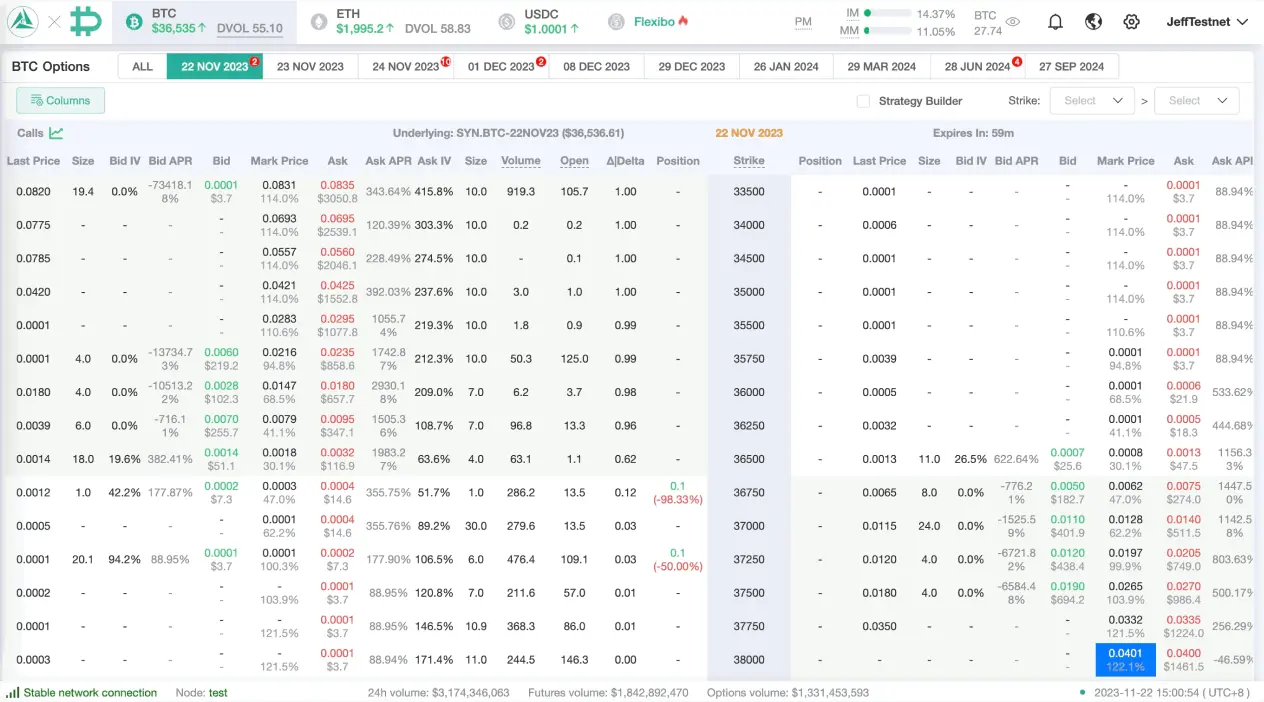
Consider the strategic objective of hedging a substantial holding of 500 BTC ahead of a major economic data release. A common structure would be a cost-neutral collar, which involves selling a call option to finance the purchase of a put option. This establishes a protective floor for the position while capping potential upside. Executing this two-legged trade for a 500 BTC notional size on a public order book is fraught with operational risk.
Each leg must be filled separately, exposing the trader to price movements between executions. The very act of placing the large put order can signal defensive positioning, causing market makers to widen spreads and raise the cost of the hedge. The entire operation becomes a race against market impact.
An RFQ converts this chaotic process into a single, controlled event. The entire collar structure ▴ the sale of the 500 BTC equivalent call and the purchase of the 500 BTC equivalent put ▴ is packaged into one request. This request is then sent to a select group of five to seven trusted derivatives liquidity providers. These counterparties are not simply viewing the public order book; they are pricing the net risk of the entire spread based on their own internal valuation models and inventory positions.
They compete to offer the most favorable net price for the combined structure. The trader receives multiple firm, all-in quotes for the collar and can select the best one, executing the entire hedge in a single transaction with zero slippage between the legs.
Research into transaction cost analysis frequently reveals that cumulative slippage on high-volume strategies can erode net annual performance by a range of 1 to 3 percentage points.

Operationalizing the Trade
A successful RFQ execution follows a clear sequence of operations. This procedure ensures that the strategic goals of the trade are met with maximum efficiency and minimal cost bleed. It is a repeatable process that instills discipline into the execution workflow.
- Structure Definition ▴ The first step is the precise definition of the financial instrument. For our BTC collar, this includes the underlying asset (BTC), the notional amount (500), the option types (buy put, sell call), the specific strike prices for each leg, and the expiration date. Clarity at this stage is paramount.
- Counterparty Curation ▴ The next action involves selecting the liquidity providers who will receive the request. A well-maintained list of counterparties is a strategic asset. This selection should be based on their historical competitiveness in pricing similar structures, their specialization in the relevant asset class (crypto options), and their demonstrated reliability.
- Request Dissemination ▴ With the structure defined and the dealers selected, the RFQ is sent out through the trading platform. The request should specify a timeout, typically a short window of 30 to 60 seconds, during which the quotes are live. This creates a competitive and time-bound auction environment.
- Quote Analysis and Execution ▴ As the binding quotes are returned, they are displayed on a single screen for immediate comparison. The trader assesses the net debit or credit offered by each dealer. The decision is straightforward ▴ select the most advantageous price. Upon selection, the trade is confirmed with that single counterparty, and the entire two-legged structure is executed simultaneously.
- Post-Trade Verification ▴ The final step is the confirmation and settlement. The platform provides a complete audit trail of the transaction, including all competing quotes and the timestamp of the execution. This data is invaluable for regulatory compliance and for refining the counterparty list for future trades.
This is professional execution.

Execution Method Comparison
The advantages of a structured RFQ process become evident when compared directly with standard market order execution for a significant, multi-leg options trade.
| Metric | Standard Market Order Execution | RFQ Execution |
|---|---|---|
| Price Certainty | Low. Final price is an average of multiple fills and subject to market movement between legs. | High. A single, firm price is locked in for the entire structure before execution. |
| Slippage Risk | High. Both visible and invisible costs from price impact and spread crossing are likely. | Minimal. The price is agreed upon for the full size, eliminating slippage between legs. |
| Information Leakage | High. Large orders on public books signal intent to the entire market. | Low. The request is only visible to a select group of liquidity providers. |
| Execution Complexity | High. Requires ‘legging in’ to the position, managing multiple orders and timings. | Low. A single request results in a single, all-in transaction. |
| Audit Trail | Fragmented. Requires consolidation of multiple trade confirmations. | Consolidated. A comprehensive record of the competitive auction is created automatically. |


Systemic Integration of Price Certainty
Mastery of the RFQ system extends beyond single-trade execution into the domain of portfolio management. Its principles become integral to the overall operational alpha of a trading desk. The capacity to secure price certainty for large transactions is a strategic lever that influences risk management, portfolio rebalancing, and the ability to capitalize on specific market phenomena.
This higher-level application requires a shift in perspective, viewing the RFQ not just as a trade execution tool, but as a core component of the portfolio’s systemic infrastructure. It becomes the primary interface for translating high-level strategic decisions into efficiently implemented market positions.

Advanced Applications in Portfolio Management
A sophisticated trading operation utilizes RFQ systems for functions that are foundational to consistent performance. During periods of portfolio rebalancing, for instance, large blocks of various assets may need to be bought and sold simultaneously. Executing these trades via RFQ allows a manager to receive firm quotes for the entire basket of assets, ensuring the rebalancing is achieved at a predictable net cost.
This transforms a potentially chaotic and costly series of open-market trades into a single, controlled maneuver. The certainty of the execution price allows the manager to focus on the strategic rationale for the rebalance, confident that the implementation will be precise.

Volatility Events and Strategic Hedging
In the context of derivatives, the RFQ system is indispensable for managing exposure during volatile periods. Imagine a scenario where implied volatility in ETH options is rising sharply. A portfolio manager may decide to sell a large, complex options structure like an iron condor to capitalize on the elevated premium. Placing such a four-legged trade on the open market in a fast-moving environment would be exceptionally difficult.
Using an RFQ, the manager can source competitive bids for the entire structure from specialized volatility arbitrage firms. This allows for the precise, instantaneous deployment of a sophisticated strategy designed to profit from a specific market condition. The RFQ provides the conduit to engage with the most appropriate liquidity for that specific strategy.
Analysis of institutional trade data shows that for block-sized ETF trades, liquidity accessed via RFQ can be over 300% greater than what is available at the top-of-book on public exchanges.

Visible Intellectual Grappling
One must contend with the inherent tension between speed of information and the quality of execution. The RFQ process is, by design, more deliberate than a simple market order. It introduces a brief but finite period of auction. In exceptionally fast-moving, momentum-driven markets, could this delay, however brief, result in a missed opportunity?
The architecture of the system itself presents the counterargument. In such volatile conditions, the visible bid-ask spread on a public screen is often illusory for any significant size. An attempt at immediate execution with a large market order would likely result in such severe slippage that the supposed speed advantage is completely negated by a dramatically worse price. The RFQ, therefore, acts as a filter.
It determines the true, executable price for institutional size in that moment of volatility, a price that is often materially different from the ephemeral top-of-book quote. The intellectual challenge is to trust the disciplined process over the illusion of speed.

The Network Effect of Professional Liquidity
Consistent and intelligent use of RFQ systems cultivates a valuable, intangible asset ▴ a symbiotic relationship with liquidity providers. Market makers are in the business of pricing and managing risk. By providing them with clear, well-structured order flow, a trader becomes a valued client. This relationship can lead to more competitive quotes over time, better access to liquidity during stressed market conditions, and valuable market color from the dealers themselves.
The RFQ system, therefore, is also a relationship management tool. It formalizes the interaction between liquidity consumers and liquidity providers, creating a professionalized ecosystem where large trades can be executed efficiently and reliably. This network is a durable competitive advantage, a source of execution quality that cannot be replicated by anonymous interaction with a public order book.

The New Locus of Control
Adopting a professional execution framework is an exercise in redefining your point of control. It moves the focus from reacting to displayed prices to commanding firm, actionable quotes. The methodologies discussed here are not theoretical constructs; they are the operational standards for entities that treat trading as a serious business. The ability to source deep liquidity, minimize market impact, and achieve price certainty is the bedrock upon which all successful trading strategies are built.
The knowledge of these systems provides more than a tactical advantage; it cultivates a new mindset. It is the understanding that in the world of professional trading, you do not simply take the market’s price; you determine it.

Glossary

Request for Quote

Price Certainty

Liquidity Providers

Market Makers

Public Order

Slippage

Rfq System

Options Spreads

Public Order Book

Standard Market Order Execution

Eth Options

Market Order