


The Market’s Unseen Engine
Market volatility is the kinetic energy of financial systems. Periods of price fluctuation represent a powerful source of strategic opportunity. A sophisticated operator views these moments as the ideal conditions for deploying specialized instruments and tactics. Price stability offers one set of possibilities; price dynamism presents a vastly richer field of engagement.
Understanding this distinction is the first step in moving from a reactive market posture to a proactive one. The entire discipline of advanced derivatives trading is built upon the recognition that volatility itself is a measurable, forecastable, and tradable asset class. Professional traders do not simply endure periods of turbulence; they possess the tools to isolate the volatility component of an asset’s price and construct positions that directly benefit from its expansion or contraction.
This perspective requires a shift in perception. The financial headlines may portray volatility as chaos, a destructive force to be feared. For the prepared strategist, it is pure information. It signals a dislocation between an asset’s current price and its perceived future value.
The wider the gyration, the greater the potential energy that can be captured. The key is possessing a framework to analyze this energy and a set of instruments designed to harness it with precision. Options, with their non-linear payoff structures, are the primary vehicle for this purpose. Their pricing is a direct function of anticipated price movement.
An option’s value is composed of intrinsic value and extrinsic value, with the latter being a pure expression of time and, most critically, implied volatility. It is here, within the mathematics of options pricing, that the professional finds a direct mechanism to act upon a view about future instability.
Traders with volatility information can only use nonlinear securities such as options to monetize their informational advantage.
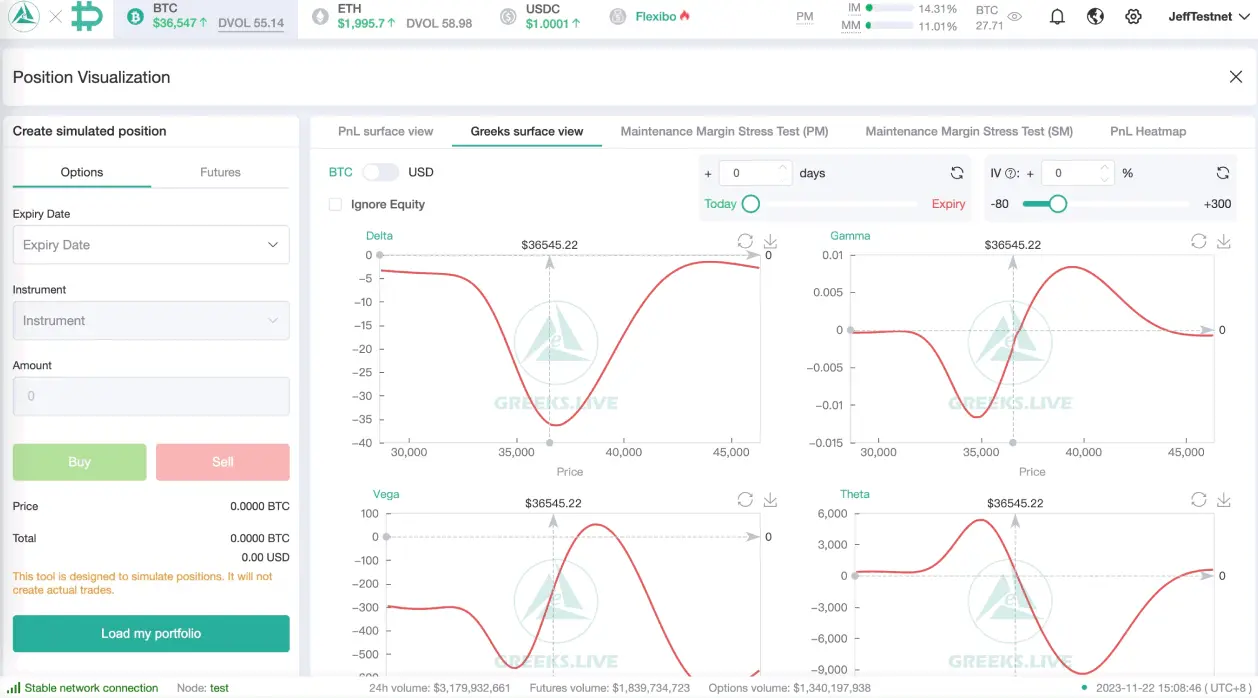
Grasping this concept elevates a trader’s thinking from a two-dimensional world of direction (up or down) to a three-dimensional one that includes the magnitude and velocity of price changes. One can construct a position that is profitable if the underlying asset moves significantly, regardless of the direction. This is accomplished by structuring trades to be “gamma positive” to capitalize on actual price swings, or “vega positive” to benefit from a rise in the market’s expectation of future volatility. The ability to separate a directional bet from a volatility bet is a defining characteristic of institutional-grade trading.
It allows for the creation of positions with meticulously defined risk parameters, engineered to perform in specific, pre-identified market regimes. The following sections will provide a detailed guide to the specific methods used to transform this potent market energy into tangible results.


Calibrating the Volatility Apparatus
Active engagement with market volatility requires a specific toolkit. The instruments and methods detailed here are designed to give a trader systematic control over their exposure to price fluctuations. These are not speculative gambles; they are calculated positions, each with a distinct purpose and risk profile.
Mastering their application is central to building a durable edge in modern markets. From multi-leg options structures to institutional liquidity access, each component contributes to a comprehensive system for navigating and capitalizing on turbulent conditions.

Harnessing Asymmetry with Options
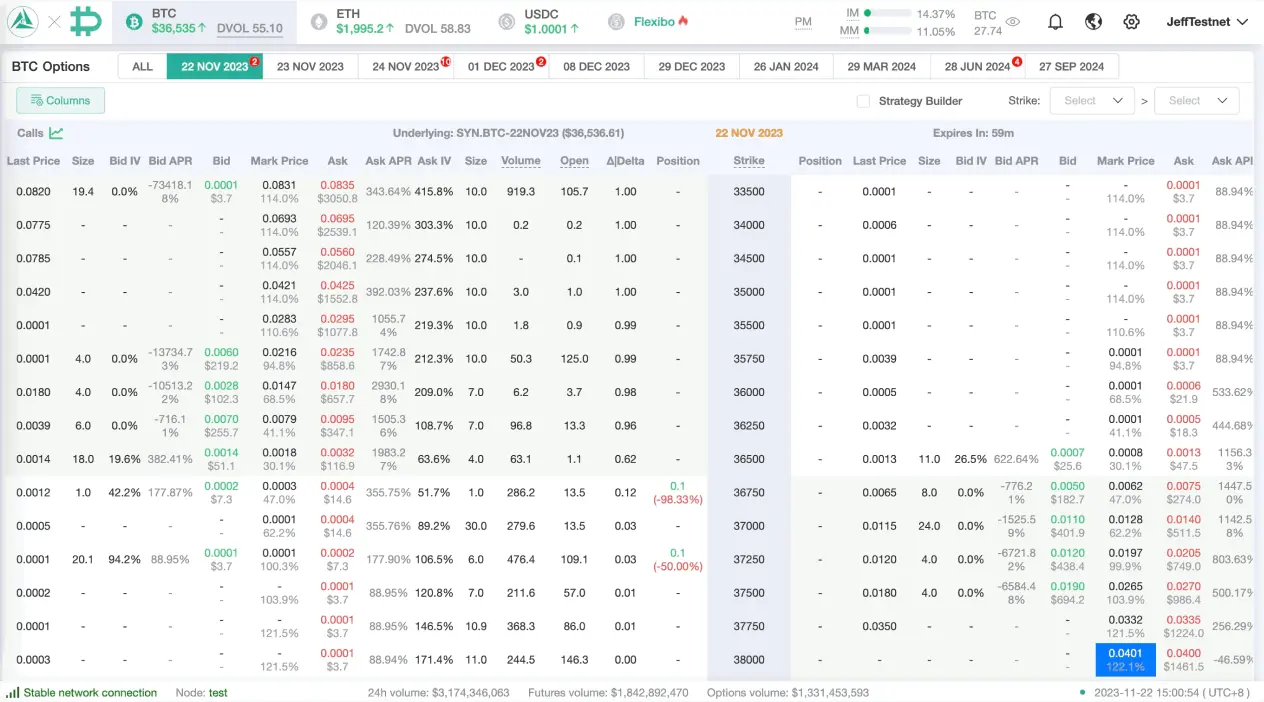
Options are the quintessential instruments for volatility trading. Their unique properties permit the construction of positions that profit from changes in implied volatility, the market’s forecast of future price swings. An increase in implied volatility, all else being equal, will increase the price of both calls and puts, a property measured by the “Greek” known as vega.
This allows for the creation of strategies that are directionally neutral but directly exposed to changes in the market’s temper. These are the tools for pure volatility plays.

The Straddle a Direct Bet on Movement
A long straddle involves simultaneously purchasing an at-the-money call option and an at-the-money put option with the same strike price and expiration date. The position’s design makes it profitable if the underlying asset makes a substantial move in either direction before expiration. The trader’s conviction is not about the direction of the move, but its magnitude. The cost of the position is the combined premiums of the two options.
The profit potential is theoretically unlimited, while the maximum loss is capped at the initial debit paid. This structure is deployed when a trader anticipates a significant volatility event, such as an earnings announcement or a major economic data release, but is uncertain of the market’s reaction.

The Strangle a Wider Net for Volatility
Similar to the straddle, a long strangle also involves buying a call and a put. A key difference exists in its construction. The strangle uses out-of-the-money options, meaning the call has a higher strike price and the put has a lower strike price. This configuration makes the position cheaper to establish compared to a straddle.
The underlying asset must move more significantly to become profitable. This trade-off makes the strangle a suitable strategy when a large price move is expected, but the trader wishes to reduce the initial capital outlay. The core principle remains the same ▴ it is a wager on increased price dispersion.

Executing Size with Precision Block Trading
Volatility complicates the execution of large orders. When prices are moving rapidly, attempting to buy or sell a significant block of an asset on the open market can lead to severe price impact, where the act of trading itself moves the price unfavorably. Institutional traders employ specific techniques to manage these challenges, turning volatile conditions into an opportunity for superior execution. These methods are designed to minimize market footprint and source liquidity efficiently.
Executing a large trade during peak volatility requires a deep understanding of market microstructure. Algorithmic execution is a primary tool. Strategies such as Volume-Weighted Average Price (VWAP) and Time-Weighted Average Price (TWAP) break a large order into smaller pieces, executing them incrementally over a defined period.
This method masks the full size of the order and participates with the market’s natural flow, reducing the signaling risk that can alert other participants and cause adverse price movement. During highly volatile periods, traders might shorten the timeframe of these algorithms or use more dynamic versions that react to intraday liquidity patterns to secure favorable pricing.

Commanding Liquidity the Request for Quote System
In the derivatives market, especially for complex, multi-leg options strategies, liquidity can be fragmented. A Request for Quote (RFQ) system is a professional-grade mechanism for solving this. An RFQ allows a trader to anonymously broadcast a request for a price on a specific, often customized, options structure to a group of designated liquidity providers. This process offers several distinct advantages, particularly in volatile markets.
An RFQ platform will allow an execution trader the ability to solicit quotes from multiple liquidity providers while also maintaining some of the anonymity that is desired when working a large order.
This system transforms the trading process from passively accepting screen prices to actively sourcing competitive, firm quotes for the exact size and structure required. It is the electronic equivalent of a floor broker soliciting the best price in a trading pit, combining the efficiency of electronic trading with the price discovery of direct negotiation. For multi-leg spreads, the RFQ system is invaluable as it allows the entire structure to be priced and executed as a single transaction. This completely eliminates “leg risk,” the danger that the price of one leg of the spread will move adversely while the trader is trying to execute another.
- Anonymity and Reduced Market Impact ▴ The request is sent only to selected liquidity providers, preventing the entire market from seeing the trader’s intention. This is critical when dealing with large sizes that could otherwise move the market.
- Competitive Pricing ▴ By soliciting quotes from multiple market makers simultaneously, the trader creates a competitive auction for their order, often resulting in price improvement over the publicly displayed best bid or offer.
- Access to Deeper Liquidity ▴ The RFQ system can uncover liquidity that is not displayed on the central limit order book. Market makers may be willing to quote larger sizes on a firm basis than they are willing to show passively on screen.
- Customization and Efficiency ▴ Traders can request quotes on highly customized or complex multi-leg strategies that are not standard listed instruments, all while ensuring the package is executed as one entity.


The Synthesis of Advanced Strategy
The true mastery of volatile markets comes from the integration of these tools into a cohesive portfolio strategy. An advanced trader does not view options, block trading techniques, and RFQ systems as isolated components. They are interconnected parts of a dynamic system for managing risk and generating returns. This holistic approach allows for the construction of sophisticated positions that are resilient and can perform across different market regimes.
The focus shifts from executing single trades to engineering a portfolio’s response to changes in the market environment itself. This is where a trader transitions into a true portfolio manager, actively sculpting the risk-return profile of their capital.
Consider a scenario where a portfolio manager holds a large, concentrated position in a single stock and anticipates a period of high volatility due to an upcoming corporate event. A multi-faceted strategy can be deployed. The manager might first use an RFQ system to solicit quotes for a protective collar, which involves buying a put option to define the downside risk and selling a call option to finance the cost of the put. The RFQ ensures they get a competitive price for this two-legged structure without signaling their hedging activity to the broader market.
Simultaneously, they might decide that the implied volatility offered in the RFQ is attractively high. This could prompt them to structure the collar to be “vega negative,” positioning the portfolio to benefit if volatility collapses after the event, a common occurrence. This demonstrates a shift from simple protection to a nuanced position that has a view on both price and volatility.

Building a Volatility-Aware Portfolio
A portfolio’s architecture can be designed to have a specific disposition toward volatility. Some portfolios are constructed to be “long volatility,” meaning they are positioned to profit from market dislocations and sharp price swings. These portfolios might consistently hold long-dated options or employ strategies like straddles and strangles as a structural component. Other portfolios might be designed to be “short volatility,” systematically selling options premium to generate income, a strategy that performs well in calm or range-bound markets.
The sophisticated manager understands how to blend these exposures. They might run a core short-volatility income strategy while using a portion of the portfolio to purchase cheap, out-of-the-money options as a hedge against a sudden market shock. The goal is to create a risk profile that is deliberate and understood. This involves constantly analyzing the relationship between historical volatility (what has happened) and implied volatility (what the market expects to happen) to identify mispricings and opportunities. The ability to source liquidity for these complex structures via RFQ and execute large underlying trades efficiently with algorithmic strategies becomes the operational backbone of this advanced approach.

The Arena of Deliberate Action
The financial markets present a continuous stream of information, expressed through price and time. Viewing volatility as a distinct asset class, with its own behaviors and characteristics, opens a new dimension of strategic engagement. The methodologies of options structuring, disciplined block execution, and professional liquidity sourcing are the means by which a trader imposes their strategic will upon the market’s raw energy.
This journey transforms the market from a place of random outcomes into an arena for deliberate, calculated action. The knowledge acquired is the foundation for a more potent and resilient approach to capital management, where every market condition presents a unique set of possibilities to be analyzed and engaged.

Glossary

Market Volatility

Implied Volatility

Underlying Asset

Price Swings

Vega

Strike Price

Straddle

Strangle

Algorithmic Execution

Twap

Liquidity Providers

Request for Quote

Rfq System

Block Trading