


The Mandate for Precision Liquidity
Modern financial markets operate as a complex, high-velocity system of interconnected venues. The structural evolution of these markets, driven by technological advancement and regulatory shifts, has resulted in a landscape of fragmented liquidity pools. This distribution of order flow across numerous platforms, including traditional exchanges and alternative trading systems, presents distinct opportunities for sophisticated participants. Understanding the mechanics of market microstructure is the first step toward harnessing this environment.
Price discovery, the process by which an asset’s market price is established, occurs within this intricate framework of buyer and seller interactions. For substantial transactions, known as block trades, navigating this environment requires a specific and deliberate methodology.
A fund’s ability to execute large orders without generating adverse price movements is a direct function of its execution strategy. The Request for Quote (RFQ) system provides a direct conduit to deep liquidity pools, specifically for these situations. It is a formal, structured communication method where an initiator requests pricing for a specified quantity of an asset from a select group of liquidity providers. This process centralizes competitive tension among market makers for a specific order.
The initiator receives executable quotes in response, allowing for a direct comparison based on price, size, and other critical parameters. This mechanism is particularly effective for assets that trade in over-the-counter (OTC) markets, such as certain corporate bonds and complex derivatives, where liquidity is not always visible on a central limit order book.
Research into corporate bond trading indicates that even with the rise of all-to-all trading platforms, many investors still prefer dealer intermediation for large trades, with such platforms winning approximately 12% of trades in one major system.
The core function of a disciplined RFQ process is to secure price improvement and minimize the market impact associated with large-scale operations. Market impact represents the cost incurred when a large order unfavorably alters the prevailing price of an asset. An RFQ, by its nature, is a private auction. The request is disseminated to a chosen set of counterparties, shielding the full trade intention from the public market and containing its potential price-disrupting effects.
This controlled disclosure is fundamental to achieving efficient execution for institutional-grade positions. The process transforms the challenge of fragmented liquidity into a strategic advantage, enabling a fund to command liquidity on its own terms.
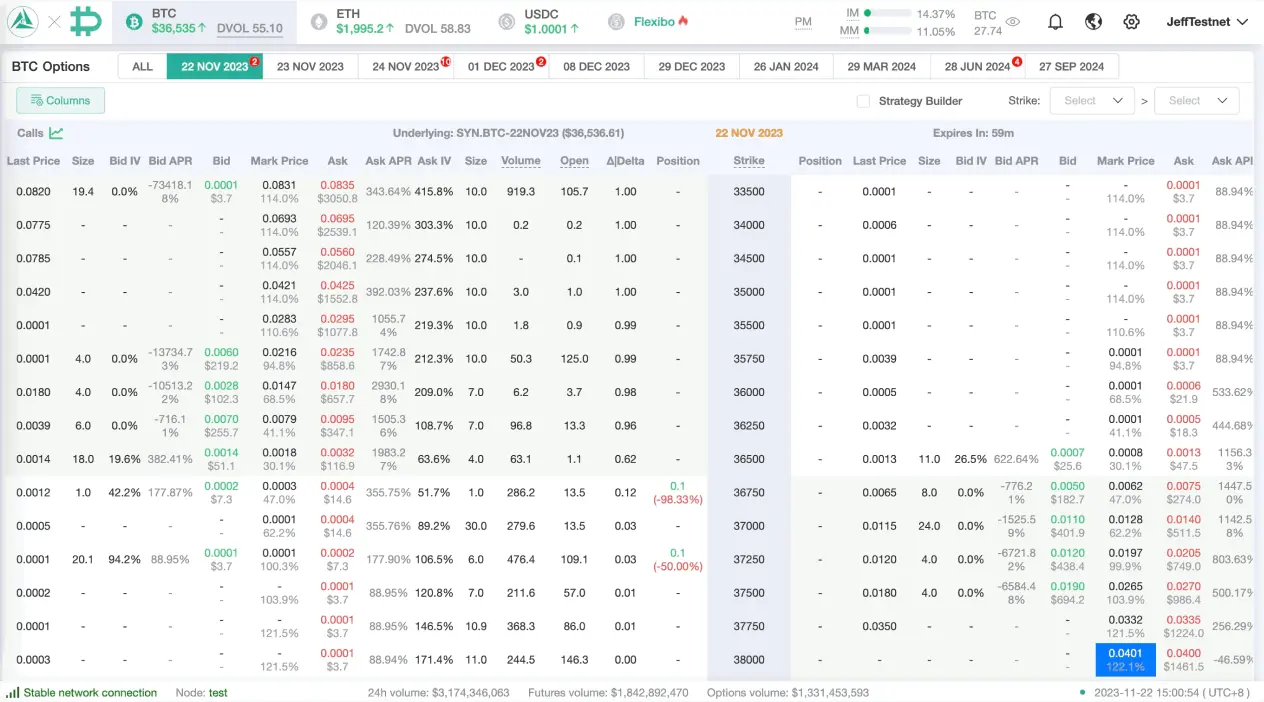
This system stands as a primary tool for institutional participants engaged in options trading. The pricing of multi-leg options strategies, which involve the simultaneous buying and selling of multiple contracts, benefits immensely from the RFQ structure. Requesting a price for the entire package from specialized dealers ensures that the different legs are priced and executed as a single, coherent transaction. This unified pricing minimizes the execution risk, or slippage, that can occur when trying to execute each leg separately in the open market.
A fund that masters this process gains a definitive edge in managing its derivatives portfolio, turning complex execution challenges into a repeatable, efficient operation. The procedure itself becomes a source of alpha, systematically preserving value that would otherwise be lost to market friction.


A System for Sourcing Alpha
Deploying a professional-grade RFQ process requires a systematic approach, transforming a theoretical edge into tangible performance gains. This is a deliberate campaign to engineer superior execution outcomes. The methodology can be organized into a clear sequence of operational stages, each with a distinct purpose and set of actions. Adopting this structure instills a level of discipline that directly contributes to a fund’s profitability and risk management capabilities.
It moves the act of execution from a simple transaction to a strategic function within the investment lifecycle. The following framework details a comprehensive process for institutional RFQ deployment.

Phase One the Strategic Trigger
Every RFQ action begins with a clear internal catalyst. These triggers are predefined conditions within the fund’s operational guidelines that signal the need for a formal liquidity-sourcing event. A portfolio manager’s decision to initiate a large position in a specific corporate bond is a primary trigger. Another common catalyst is the need to execute a multi-leg options strategy for hedging or speculative purposes.
Rebalancing events, where a significant portion of the portfolio must be adjusted, also necessitate the controlled execution that an RFQ provides. The key is to define these triggers with precision, removing ambiguity and making the initiation of the RFQ process a standardized response to specific portfolio management needs. This clarity ensures consistency and repeatability across the entire fund.

Phase Two Defining the Inquiry
Once a trigger is activated, the next phase involves meticulously defining the scope of the request. This stage is about translating the trading intention into a clear, concise, and machine-readable format for potential counterparties. For a bond trade, this includes the security’s identifier (e.g. CUSIP or ISIN), the precise quantity or notional value, and the desired settlement date.
For an options strategy, the definition must be even more granular. It requires specifying each leg of the trade, including the underlying asset, expiration date, strike price, and whether it is a call or a put. The direction of the trade (buy or sell) for each component is also critical. A well-defined scope document forms the bedrock of the entire process, ensuring that all responding dealers are pricing the exact same risk. This precision eliminates confusion and allows for a true apples-to-apples comparison of the quotes received.

Constructing the Complex Request
For multi-leg options, the construction of the request is paramount. Consider a three-leg options collar strategy designed to protect a large equity holding. The RFQ must specify the sale of an out-of-the-money call option, the purchase of an out-of-the-money put option, and the sale of an even further out-of-the-money put to finance the structure. Each of these legs must be detailed with its corresponding strike and expiration.
The request should also specify that the quotes are for the entire package as a net debit or credit. This prompts dealers to price the correlated risks of the legs together, often resulting in a better net price than if each component were sourced individually on the open market. The ability to construct and manage these detailed requests is a hallmark of a sophisticated trading desk.

Phase Three Counterparty Curation and Tactics
The selection of liquidity providers to receive the RFQ is a critical strategic decision. A fund does not broadcast its intentions to the entire market. Instead, it curates a list of counterparties based on their demonstrated expertise in the specific asset class and their historical competitiveness. This selection process is dynamic and data-driven.
The fund’s trading desk should maintain performance metrics on each dealer, tracking their response rates, pricing sharpness, and settlement efficiency. For a high-yield bond RFQ, the list might include dealers known for specializing in that credit quality. For a complex equity derivative, the list would comprise market makers with sophisticated options trading desks. The size of the curated list is also a tactical consideration.
A list that is too small may limit competitive tension, while one that is too large may signal desperation or increase the risk of information leakage. Typically, a selection of three to five highly relevant dealers is optimal for most block trades.
The flow of RFQs can be modeled as a stochastic process, where the intensity of requests provides information about market appetite and can be used to derive a more accurate “micro-price” for an asset.

Phase Four Execution and Evaluation
With the request defined and counterparties selected, the RFQ is executed. Modern trading platforms automate this dissemination, sending the request simultaneously to all chosen dealers and setting a predefined time limit for responses. This time window is typically short, often just a few minutes, to ensure that the quotes received are based on live market conditions. As the responses arrive, they are automatically aggregated and displayed on the trader’s screen.
The evaluation is the critical moment of decision. While the best price is the primary consideration, it is not the only one. The trader must also assess the size of the quote. A dealer might offer the best price but only for a fraction of the desired quantity.
The system allows the trader to fill the order with one or multiple counterparties to achieve the full size. This evaluation and allocation process must be conducted swiftly and decisively to lock in the favorable terms before market conditions change.
The following list outlines a typical workflow for this phase:
- Initiate Request ▴ The trader finalizes the RFQ details in the execution management system and sends it to the curated list of 3-5 dealers. A response timer is set, for example, to two minutes.
- Monitor Responses in Real-Time ▴ The system populates a grid with incoming quotes. Each row represents a dealer, with columns for bid price, ask price, and the quantity they are willing to trade at those prices.
- Identify the Winning Quote ▴ The trader instantly sees which dealer is providing the best bid or offer. The system will highlight the most competitive price for the trader’s direction.
- Assess for Size ▴ The trader confirms that the winning quote covers the full size of the intended trade. If it does not, the trader identifies the next-best quotes to fill the remainder of the order.
- Execute the Trade ▴ With a single click, the trader accepts the winning quote or quotes. This action sends an execution message to the respective dealer(s), creating a binding transaction.
- Confirm and Book ▴ The system receives an electronic confirmation from the dealer(s). The trade is then automatically booked and sent to the fund’s portfolio management and back-office systems for settlement.

Phase Five Post-Trade Analysis and Feedback
The RFQ process does not end with execution. A disciplined fund maintains a rigorous post-trade analysis routine. This involves comparing the executed price against various benchmarks to quantify the value added by the process. Common benchmarks include the volume-weighted average price (VWAP) for the day or the price of the asset at the moment the RFQ was initiated (arrival price).
This analysis generates hard data on execution quality, which is then used to refine future strategies. A feedback loop is also essential. The results of the analysis should be used to update the performance rankings of the dealers. A dealer who consistently provides competitive quotes should see their position on future RFQ lists solidified.
Conversely, a dealer who is consistently off the mark may be rotated out. This data-driven approach to counterparty management ensures that the fund is always directing its order flow to the most competitive and reliable liquidity providers, creating a virtuous cycle of continuous improvement.


Integrating Execution as a Core Competency
Mastery of the RFQ process elevates a fund’s capabilities from simple trade execution to strategic liquidity management. This competency becomes a durable source of competitive advantage. The principles of disciplined RFQ can be extended and integrated into the fund’s broader operational and strategic frameworks. This expansion involves leveraging technology, applying the methodology to new use cases, and developing a more profound, quantitative understanding of market dynamics.
It is about viewing every large trade as an opportunity to apply a system that protects and generates alpha. The journey moves from executing individual trades effectively to architecting a portfolio-wide system for superior execution.

Automating Opportunity through Algorithmic RFQs
The next frontier for many funds is the integration of RFQ systems with their proprietary algorithmic trading engines. An algorithm can be programmed to monitor portfolio drift or specific market signals. When a predefined threshold is met, the algorithm can automatically trigger and construct an RFQ. For instance, an algorithm designed to manage currency risk could automatically initiate an RFQ for a large FX forward contract when a portfolio’s exposure to a foreign currency exceeds a certain limit.
This automated workflow combines the intelligence of the fund’s strategy with the efficiency of the RFQ process. It allows the fund to react to market opportunities with speed and precision, capturing alpha that might be missed in a manual process. This fusion of systematic strategy and disciplined execution represents a significant operational upgrade.

Portfolio-Level Liquidity Sourcing
The RFQ methodology can be scaled to the portfolio level. Instead of executing a single block trade, a fund can use an RFQ to price a basket of securities. This is particularly useful for thematic investing or for transitioning a large portion of a portfolio from one strategy to another. A portfolio manager might decide to increase exposure to the technology sector.
Instead of executing dozens of individual trades in the open market, the manager can create a basket of ten tech stocks and put it out for a single RFQ to a group of specialized dealers. These dealers will compete to price the entire basket as a single transaction. This approach dramatically simplifies execution and can significantly reduce the market impact compared to trading each stock individually. It is a powerful tool for implementing high-level strategic decisions with maximum efficiency.

Risk Management and Strategic Options
A deep understanding of the RFQ process provides a fund with valuable strategic options. The decision of when and how to approach the market is, in itself, a form of real option. Knowing that you have a reliable mechanism to execute a large block trade discreetly gives a portfolio manager the confidence to build positions over time or to wait for the optimal moment to act. The RFQ system functions as a risk management tool.
It contains the information leakage that can plague large orders in the open market, protecting the fund’s intellectual property and its ultimate trading intentions. This control over information is a critical and often underestimated component of successful institutional investing. By mastering the RFQ process, a fund is not just executing trades; it is managing its interaction with the market in a more deliberate and strategic manner.

The Signature of a Professional Fund
The adoption of a disciplined, systematic approach to sourcing liquidity is more than an operational upgrade. It is a statement of intent. It signals a fund’s commitment to precision, to the marginal gains that compound into significant outperformance over time. This methodology embeds a professional ethos into the very fabric of the trading function.
The market is a dynamic and competitive arena. A fund that commands its execution process with purpose and clarity holds a distinct and sustainable advantage. The knowledge and application of these systems are what define the boundary between participation and true professional mastery in the world of institutional finance.

Glossary

Market Microstructure

Request for Quote

Corporate Bonds

Price Improvement

Rfq Process

Multi-Leg Options

Options Trading

Counterparty Management