


The Mandate for Execution Certainty
Executing sizable options positions is an exercise in precision engineering. The public order book, a dynamic environment of bids and asks, presents a fundamental challenge for significant trades. Attempting to fill a large or multi-leg options order on the central limit order book (CLOB) often triggers adverse price movements known as slippage. This occurs because the order consumes available liquidity at successive price levels, telegraphing the trader’s intent to the broader market and resulting in a progressively worse fill price.
The very act of execution creates a market impact, eroding the potential profitability of the strategy before it is even fully established. For a trader whose strategy depends on securing a specific entry point for a substantial position, the uncertainty of the final execution price on a public book is an unacceptable operational risk.
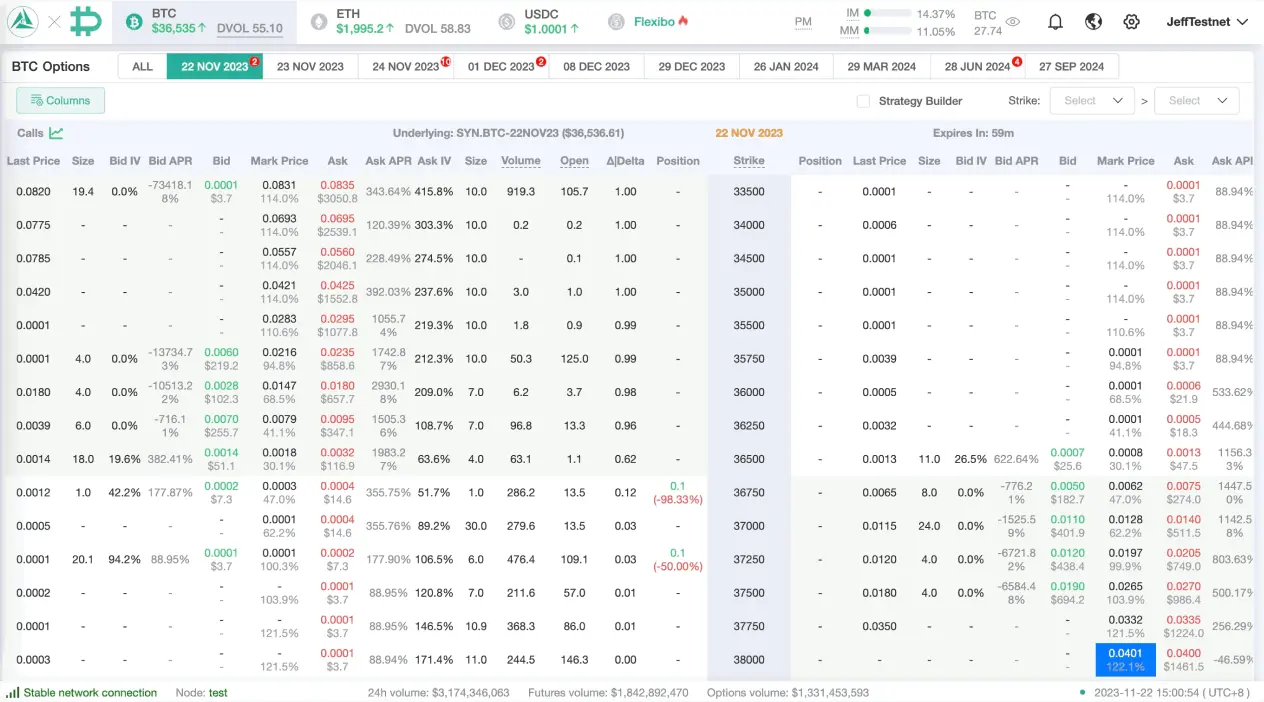
A Request for Quote (RFQ) system provides a direct mechanism for controlling this execution variable. It is a communications channel allowing a trader to privately solicit competitive, firm quotes from a select group of liquidity providers for a specified trade. This process transforms the execution from a public scramble for liquidity into a private, competitive auction. The trader defines the instrument, size, and structure ▴ from a simple block of calls to a complex four-legged iron condor ▴ and receives actionable, all-or-none prices from market makers competing for the order flow.
This grants the trader command over the two most critical variables in large-scale execution ▴ price and information. The trade is consummated at a known price, and the order is never exposed to the public book, preventing the information leakage that drives adverse market impact.
A study by TABB Group highlighted that RFQ platforms allow traders to secure price improvement over the national best bid/offer (NBBO) for sizes significantly larger than what is publicly displayed.
This method is the standard for institutional-grade operations because it systematically removes the ambiguity of execution. The public order book is a valuable tool for price discovery, but for the execution of size, it introduces unacceptable friction. An RFQ system isolates the transaction from the chaotic churn of the open market. It allows the professional to deal directly with liquidity providers capable of handling the full size of the order, ensuring the trade is completed in its entirety at a single, predetermined price.
This operational distinction is fundamental. It shifts the trader’s role from a passive participant reacting to available liquidity to a proactive director of their own execution, dictating terms to the market’s largest players in a confidential and controlled environment.


Systematic Deployment of Alpha
Integrating an RFQ system into an options strategy is a direct investment in execution quality. The theoretical alpha of a trade idea is only realized through its precise and cost-effective implementation. For the serious options trader, RFQ is the delivery mechanism for that precision, particularly in three key domains ▴ executing large directional positions, constructing complex multi-leg structures, and managing the risk of a core underlying portfolio.

Commanding Price on Directional Blocks
Consider a scenario where a portfolio manager has a high-conviction view and needs to purchase 500 contracts of an out-of-the-money ETH call option. Placing this order on the public market would be an exercise in frustration. The order would likely walk up the offer stack, filling small lots at increasingly unfavorable prices. The total cost could substantially exceed the initial expected entry point, a direct result of slippage.
Furthermore, the visible demand pressure could itself cause the underlying asset’s price to move, as market makers hedge their own inventory against the large, aggressive buyer. This is a clear case of information leakage penalizing the initiator.
Using an RFQ system changes the entire dynamic. The manager sends a single request for a 500-lot of the specific ETH call to a curated list of five institutional market makers. These liquidity providers compete directly, submitting their best offer for the entire block. The manager now sees five firm, competing quotes.
The competitive tension among the market makers works in the manager’s favor, often resulting in a fill price at or better than the publicly displayed best offer, and for the full size. The transaction is executed as a single block, privately, with no market impact. The manager achieves their desired position at a certain, favorable price, preserving the strategy’s intended risk-reward profile.

Engineering Complex Structures with Zero Legging Risk
The value of an RFQ system becomes even more pronounced when executing multi-leg options strategies. Structures like collars (buying a protective put and selling a covered call against a stock holding), straddles (buying a call and a put at the same strike), or iron condors involve simultaneous transactions across multiple options contracts. Attempting to “leg” into such a trade on the open market ▴ executing each piece separately ▴ introduces significant risk.
The price of the remaining legs can move adversely while the first leg is being executed, destroying the profitability of the entire structure. A four-leg options trade on Deribit, for example, can be submitted as a single RFQ, ensuring all components are priced and executed as one unit.
For instance, a trader looking to establish a large, cost-neutral risk reversal on Bitcoin (selling a downside put to finance the purchase of an upside call) faces immense legging risk on a CLOB. Using an RFQ, the trader can request a quote for the entire package. Liquidity providers price the spread as a single item, internalizing the hedging and execution risk. They deliver a single net price for the entire structure.
This guarantees the trader enters the position at the desired net cost, with all legs filled simultaneously. It transforms a high-risk, multi-step process into a single, clean, and certain execution.
Platforms like Deribit have seen block trades, primarily executed via RFQ, grow to account for over 27% of total volume, with over $23 billion facilitated in just four months, signaling massive institutional adoption for its certainty and efficiency.
This is where the visible intellectual grappling with the process becomes apparent. One might assume the speed of a public order book offers an advantage. Yet, that speed is illusory when it comes to size. The seconds saved by hitting a market order are paid for with minutes or even hours of managing a partial fill, chasing the price, and watching the market react to your own footprint.
The RFQ process, which may take a few moments longer to gather quotes, provides certainty of execution for the entire block. It is a trade-off between the appearance of speed and the delivery of strategic integrity. For any position of consequence, the latter is the only metric that matters.
- Strategy Definition ▴ The trader defines the full, multi-leg options structure. Example ▴ A 200-contract ETH collar, selling the 3500-strike call and buying the 2800-strike put against a long ETH position.
- RFQ Submission ▴ The trader submits the entire collar as a single package to a select group of market makers, either anonymously or with their identity disclosed.
- Competitive Quoting ▴ Liquidity providers respond with a single net price (a credit or debit) for the entire 200-lot collar. They compete to offer the most attractive net price.
- Execution Certainty ▴ The trader selects the best quote and executes the entire collar in one transaction. There is no risk of the price of one leg changing while trying to fill the other. The cost basis is locked in.

A Comparative Analysis RFQ Vs Central Limit Order Book
The operational differences and their financial consequences become stark when laid out directly. The choice of execution venue is a strategic decision with a measurable impact on the portfolio’s bottom line.
| Factor | Central Limit Order Book (CLOB) Execution | Request for Quote (RFQ) Execution |
|---|---|---|
| Price Certainty | Low. Price is uncertain until the order is fully filled, subject to slippage as it consumes liquidity. | High. Price is locked in pre-trade based on competitive quotes for the full order size. |
| Market Impact | High. Large orders are visible and can move the market against the trader as others react. | Minimal to None. Trades are negotiated privately and reported post-execution, preventing information leakage. |
| Size Limitation | Limited by the visible depth of the order book at any given moment. Large orders require being broken up. | High. Designed specifically for block trades, with minimum size requirements ensuring deep liquidity. |
| Multi-Leg Execution | High Risk. Exposes the trader to “legging risk,” where prices of subsequent legs move adversely. | Low Risk. Entire complex strategies are quoted and executed as a single, indivisible package. |
| Anonymity | Partial. The order’s presence is public, even if the trader’s identity is not. | High. The trader can choose to remain anonymous to the liquidity providers during the quoting process. |


The Frontier of Portfolio Engineering
Mastering RFQ execution elevates a trader’s capabilities from single-strategy implementation to holistic portfolio management. This system is the connective tissue that allows for the efficient, large-scale deployment of sophisticated risk management and alpha-generation frameworks. The ability to move size with precision and discretion unlocks portfolio-level strategies that are simply unfeasible with public market execution. It allows a manager to think in terms of their entire book, not just the next trade.

Systematic Risk Overlays and Hedging
A primary function for institutional desks is managing the risk of a large, concentrated position in an underlying asset like BTC or a portfolio of altcoins. Implementing a portfolio-wide hedge, such as a protective collar, requires transacting options in a size proportional to the entire holding. Executing a 5,000-contract collar via the CLOB is a non-starter; the market impact would be immense, and the cost of slippage could severely damage the hedge’s effectiveness. An RFQ is the only viable mechanism.
It allows a fund to obtain quotes for the entire collar structure, ensuring the protective put and the income-generating call are executed simultaneously at a known net cost. This transforms hedging from a reactive, costly scramble into a proactive, efficient, and centrally-cleared operation.
Moreover, delta-neutral strategies, which are fundamental to many quantitative funds, can be executed with precision. For instance, a delta-neutral block trade involving both E-mini S&P 500 options and the underlying futures can be privately negotiated and reported to the CME Group as a single transaction. This ensures the position is perfectly balanced from its inception, a feat nearly impossible to achieve with precision when legging into the trade on separate public markets.

Accessing a Deeper Liquidity Pool
The public order book displays only a fraction of the market’s true liquidity. Many of the largest market makers and liquidity providers do not rest their full size on the public book to avoid signaling their positions. They reserve their most significant capacity for privately negotiated trades where they can manage their risk more effectively. An RFQ system is the gateway to this hidden liquidity.
When a trader initiates an RFQ, they are directly tapping into the primary inventory of the market’s most significant players. This is particularly true for complex or longer-dated options where public liquidity may appear thin. The RFQ process summons liquidity on demand, revealing a depth that is invisible to those looking only at the screen. This access is a structural advantage, enabling better pricing and the ability to execute size even in less liquid instruments. It is the definitive method for finding the true market for a block trade.
- Direct Counterparty Access ▴ An RFQ connects you directly to the trading desks of major liquidity providers.
- Competitive Environment ▴ Pitting these providers against each other in a private auction ensures optimal pricing.
- Certainty of Clearing ▴ Trades executed via RFQ on platforms like CME or Deribit benefit from central clearing, mitigating counterparty risk without the need for bilateral ISDA agreements.
Ultimately, the consistent use of RFQ execution compounds into a significant long-term edge. It systematically reduces transaction costs, minimizes information leakage, and provides access to deeper pools of liquidity. This capital efficiency and operational control allow a portfolio manager to deploy strategies more aggressively and with greater confidence. The ability to adjust portfolio risk with large-scale options trades, without moving the market, is a powerful tool.
It allows for a more dynamic and responsive management style, capable of capitalizing on opportunities and mitigating risks at a scale that is simply out of reach for those confined to the public order book. This is the end game.

Your Market Edge Defined
The transition to institutional-grade execution is a declaration of intent. It signifies a commitment to operational excellence, where the friction of the market is no longer an accepted cost of doing business but a variable to be controlled and minimized. The principles of price certainty, information security, and liquidity access are not abstract concepts; they are the tangible components of a superior trading framework. By integrating a Request for Quote system into your strategic process, you are fundamentally reshaping your relationship with the market.
You move from being a participant within the system to an operator who directs the system to achieve a specific outcome. This is the foundation upon which durable, scalable, and truly professional trading careers are built. The edge is not found in a secret indicator; it is engineered through superior process.

Glossary

Central Limit Order Book

Public Order Book

Market Impact

Liquidity Providers

Request for Quote

Public Order

Rfq System

Market Makers

Deribit

Order Book

Execution Certainty