

Concept
Navigating the intricate currents of modern financial markets presents a singular challenge for institutional principals ▴ the execution of substantial block trades. The inherent scale of these orders demands an operational methodology that transcends conventional approaches, particularly when seeking to transact across a multitude of venues. The objective extends beyond simply completing a trade; it involves orchestrating a complex ballet of liquidity sourcing, information suppression, and price optimization.
Every large order, by its very nature, carries a potential footprint, a signal that can be exploited by opportunistic market participants. This necessitates a strategic concealment of intent, ensuring that the act of seeking liquidity does not inadvertently diminish the very value being pursued.
The core challenge in block trade execution stems from the fundamental asymmetry between order size and available immediate liquidity. A large institutional order, if exposed prematurely, risks adverse price movement, often termed market impact or slippage. This phenomenon, where the act of trading itself moves the price against the initiator, can erode a significant portion of potential returns.
Consequently, the pursuit of optimal execution demands a dynamic, adaptive approach that fragments large orders into smaller, more manageable child orders, strategically distributing them across a diverse array of trading venues. This disaggregation aims to camouflage the overarching trade objective, thereby mitigating the informational footprint.
The digital asset derivatives landscape intensifies these complexities, characterized by fragmented liquidity, nascent market structures, and rapid technological evolution. Here, the traditional mechanisms for block trading often prove inadequate, necessitating the deployment of highly specialized algorithmic strategies. These computational directives serve as the nervous system of institutional trading, executing complex instructions with precision and speed far exceeding human capabilities. They are engineered to analyze real-time market data, discern liquidity patterns, and dynamically adapt execution tactics to prevailing market conditions, all while striving to achieve a predetermined execution benchmark.
A truly sophisticated algorithmic framework considers the entire market ecosystem, from public exchanges to private liquidity pools, including bilateral price discovery protocols. The selection of the appropriate venue, the timing of order placement, and the intelligent sizing of child orders collectively determine the ultimate execution quality. This multi-venue approach is paramount for accessing diverse liquidity sources, thereby minimizing the impact on any single market. The computational power underlying these systems permits the continuous re-evaluation of execution pathways, ensuring that the strategy remains responsive to the fleeting opportunities and shifting risks inherent in high-velocity markets.
Algorithmic strategies orchestrate complex block trade execution across venues, meticulously balancing liquidity access with information suppression to optimize price and minimize market impact.
Understanding the intricate interplay between market microstructure and algorithmic design forms the bedrock of superior execution. Market microstructure, the study of how financial instruments are traded, provides the theoretical underpinning for designing algorithms that effectively navigate the nuances of order books, bid-ask spreads, and order flow dynamics. By deeply understanding these mechanisms, an algorithmic system can anticipate market reactions, intelligently probe for liquidity, and execute trades with a level of discretion that protects the principal’s position. This rigorous, analytical stance on market mechanics transforms a potential liability of size into a strategic advantage of precision and stealth.


Strategy
Developing a robust strategy for algorithmic block trade execution across venues requires a deep understanding of liquidity dynamics and the inherent risks of information leakage. The strategic imperative involves deploying computational systems capable of dynamically adapting to fragmented market conditions, ensuring that large orders are executed with minimal market impact. This necessitates a multi-pronged approach, leveraging a diverse set of algorithmic primitives and intelligently routing orders to optimal liquidity sources. The overarching goal is to transform a significant market footprint into a series of undetectable micro-transactions, thereby preserving the intrinsic value of the trade.
One fundamental strategic component involves the intelligent fragmentation of a parent order. Rather than submitting a single, monolithic order that could alert other market participants, algorithms slice the block into numerous smaller child orders. These smaller components are then executed over time, across various venues, and with randomized parameters to obscure the original order’s intent.
The effectiveness of this fragmentation hinges on the algorithm’s ability to predict short-term liquidity, assess real-time market impact, and adjust its pace of execution accordingly. Predictive models, often incorporating machine learning, play a pivotal role in this adaptive scheduling.
Venue selection represents another critical strategic dimension. The modern market landscape includes a spectrum of trading environments ▴ lit exchanges, dark pools, and over-the-counter (OTC) desks. Each venue possesses distinct characteristics regarding transparency, liquidity depth, and execution protocols.
Algorithms strategically route child orders to venues that offer the most favorable conditions for a given segment of the trade, balancing the need for price discovery with the desire for anonymity. Dark pools, for example, facilitate discreet execution by matching orders without public display, thereby reducing the risk of adverse price movements.
Strategic algorithmic execution fragments large orders, routes them across diverse venues, and employs advanced models to minimize market impact and information leakage.
The application of Request for Quote (RFQ) protocols forms a cornerstone of institutional block trading, particularly in derivatives markets. RFQ systems allow a principal to solicit competitive bids from multiple liquidity providers simultaneously, off-exchange. This bilateral price discovery mechanism provides a distinct advantage by allowing for high-fidelity execution of complex, multi-leg spreads and large block orders without exposing the order to the wider market. The discretion offered by RFQ minimizes information leakage, securing more favorable pricing for the entire block.
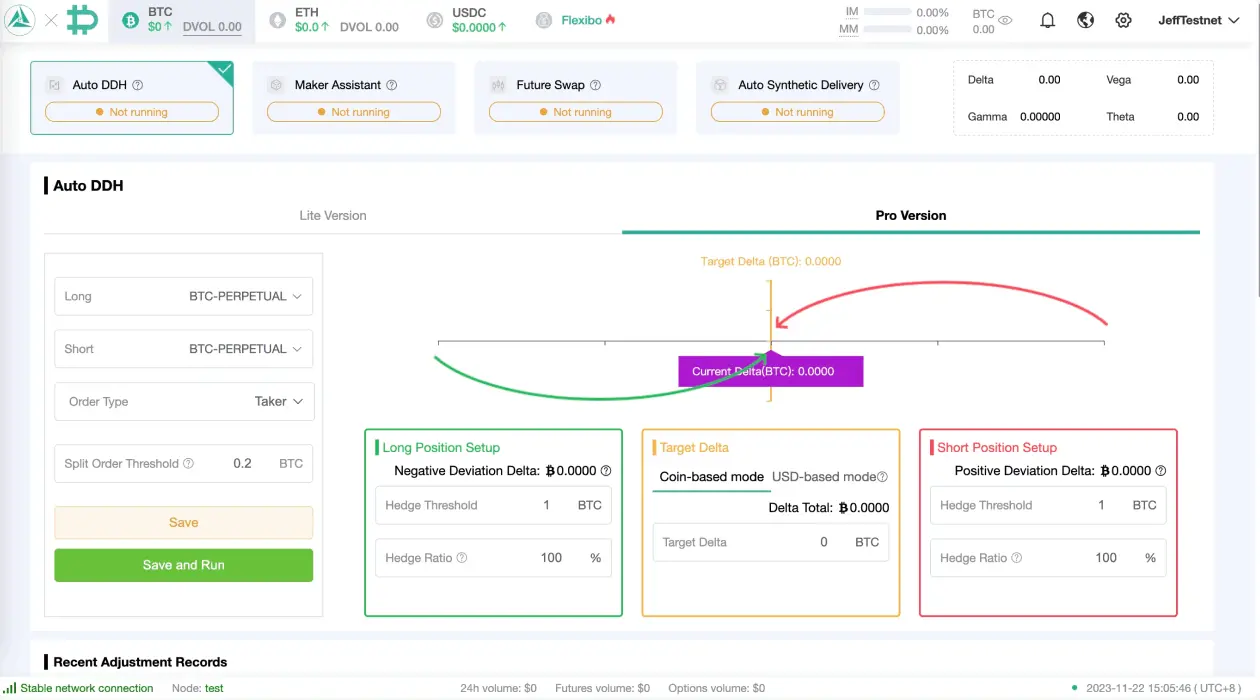
Advanced trading applications extend beyond simple order placement, incorporating sophisticated risk management and capital efficiency mechanisms. Automated Delta Hedging (DDH), for instance, allows for the dynamic adjustment of hedges as market parameters shift, mitigating directional risk associated with derivatives positions. Similarly, the construction of synthetic knock-in options or other complex structures requires an algorithmic capability to manage the underlying components with precision. These advanced functionalities are integral to preserving capital and optimizing risk-adjusted returns within a dynamic portfolio.
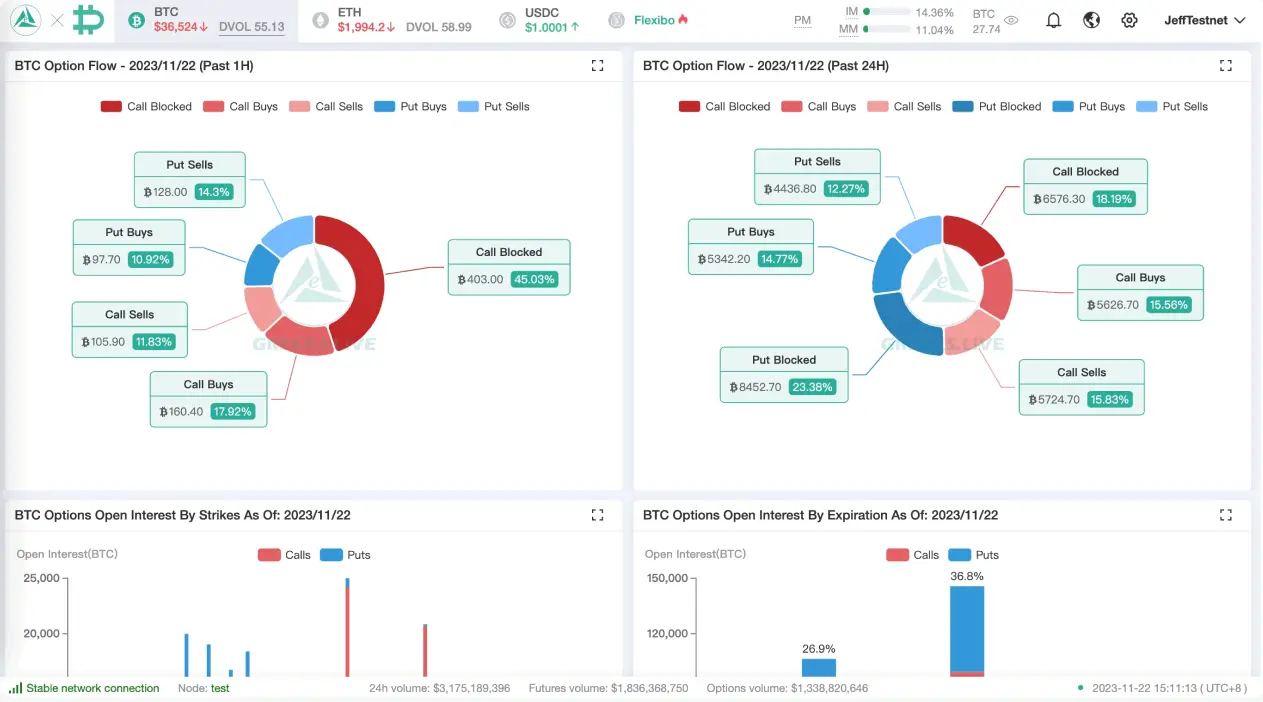
The intelligence layer supporting these strategies processes real-time market flow data, offering a continuous stream of actionable insights. This data includes order book dynamics, trade volumes, and micro-price movements, all of which inform the algorithmic decision-making process. System specialists, often quantitative analysts and trading engineers, provide expert human oversight, particularly for complex execution scenarios or when anomalies arise. Their role involves fine-tuning algorithmic parameters, validating model outputs, and intervening when unforeseen market conditions necessitate a discretionary adjustment.
| Strategic Dimension | Primary Objective | Key Mechanisms |
|---|---|---|
| Order Fragmentation | Minimize market impact | Slicing, randomized timing, volume participation |
| Venue Selection | Access optimal liquidity | Smart Order Routing (SOR), dark pools, OTC desks |
| Information Leakage Control | Preserve trade value | RFQ protocols, hidden orders, dynamic pacing |
| Risk Management | Protect capital, optimize returns | Automated hedging, dynamic position sizing |
| Real-Time Intelligence | Adaptive decision-making | Market flow data, predictive analytics, human oversight |
A truly comprehensive strategy incorporates continuous performance measurement and iterative refinement. Transaction Cost Analysis (TCA) provides a post-trade evaluation of execution quality, measuring metrics such as implementation shortfall, slippage, and fill rates. This feedback loop allows for the ongoing calibration of algorithmic parameters and the identification of areas for improvement.
The objective involves not only executing the current trade efficiently but also enhancing the entire operational system for future transactions. This continuous learning cycle reinforces the adaptive nature of superior algorithmic execution.


Execution

The Operational Playbook
Executing large block trades across diverse venues with algorithmic precision requires a meticulously designed operational playbook. This procedural guide outlines the sequence of actions, decision points, and technological interactions necessary to achieve optimal execution quality while minimizing market impact and information leakage. The process begins long before an order is placed, with a comprehensive pre-trade analysis that evaluates market conditions, liquidity profiles, and potential execution costs. This initial assessment informs the selection of the appropriate algorithmic strategy and its configurable parameters.
The initial phase involves a thorough order intake and parameterization. Institutional clients provide the core trade details, including asset, quantity, desired price range, and urgency. These inputs feed into a pre-trade analytics engine, which assesses the prevailing market microstructure.
This engine evaluates factors such as average daily volume (ADV), bid-ask spread, order book depth across multiple venues, and historical volatility. The outcome of this analysis guides the selection of an optimal execution algorithm, such as Volume-Weighted Average Price (VWAP), Time-Weighted Average Price (TWAP), or Implementation Shortfall (IS), each tailored to specific market conditions and urgency levels.
Once an algorithm is selected, its parameters are calibrated. This includes defining the participation rate, the maximum allowable slippage, the acceptable price deviation, and the target completion time. For block trades, a critical parameter is the order slicing logic, which determines how the large parent order is broken into smaller child orders.
These child orders are then dynamically routed to various venues based on real-time liquidity and price discovery. Smart Order Routing (SOR) systems play a central role here, intelligently directing order flow to lit exchanges, dark pools, or bilateral RFQ channels.
Operational execution for block trades hinges on pre-trade analysis, dynamic algorithm calibration, and intelligent order routing across fragmented venues.
During the active execution phase, the algorithm continuously monitors market conditions. This involves processing high-frequency market data feeds, including changes in order book depth, trade prints, and market sentiment indicators. The algorithm dynamically adjusts its pace and venue selection in response to these real-time signals.
For instance, if a large block of natural liquidity appears in a dark pool, the algorithm might increase its participation rate in that venue to capture the available depth discreetly. Conversely, if market impact becomes noticeable on a lit exchange, the algorithm might reduce its presence or shift liquidity seeking to alternative channels.
Post-trade analysis completes the operational cycle, providing critical feedback for continuous improvement. Transaction Cost Analysis (TCA) tools measure the effectiveness of the chosen strategy against various benchmarks, such as arrival price, VWAP, or a custom target price. This analysis quantifies metrics like implementation shortfall, slippage, and the realized spread.
The insights derived from TCA are then fed back into the pre-trade analytics engine, refining the models and parameter calibrations for future block trades. This iterative process of analysis, execution, and review ensures the system continually adapts and optimizes its performance.

Procedural Steps for Algorithmic Block Execution
- Pre-Trade Intelligence Gathering ▴ Collect and analyze market data, including historical liquidity, volatility, and order book depth across all relevant venues.
- Strategy Selection and Parameterization ▴ Choose an optimal algorithmic strategy (e.g. VWAP, TWAP, IS) and configure its parameters based on trade size, urgency, and market conditions.
- Order Fragmentation Logic ▴ Define how the parent block order will be sliced into smaller child orders to minimize market impact and information leakage.
- Dynamic Venue Routing ▴ Implement Smart Order Routing (SOR) to direct child orders to the most liquid and discreet venues, including lit exchanges, dark pools, and RFQ platforms.
- Real-Time Monitoring and Adaptation ▴ Continuously observe market data, adjusting execution pace, order sizing, and venue selection in response to live conditions.
- Risk Control and Circuit Breakers ▴ Establish automated safeguards to prevent excessive slippage or unintended market impact, triggering human oversight if thresholds are breached.
- Post-Trade Performance Evaluation ▴ Conduct thorough Transaction Cost Analysis (TCA) to assess execution quality against benchmarks and identify areas for algorithmic refinement.

Quantitative Modeling and Data Analysis
The bedrock of effective algorithmic block trade execution resides in rigorous quantitative modeling and continuous data analysis. These analytical disciplines furnish the insights necessary to predict market behavior, quantify execution costs, and optimize trading decisions. Models for market impact, liquidity prediction, and optimal execution form the intellectual core of any sophisticated trading system. The data processed includes historical order book data, trade ticks, macroeconomic indicators, and even sentiment analysis derived from news feeds.
Market impact models are fundamental, predicting how a given trade size will influence prices. These models often consider both temporary and permanent impact components. Temporary impact represents the transient price deviation caused by the order flow, which typically reverts after the trade’s completion.
Permanent impact, conversely, reflects a lasting price shift dueor to the market’s absorption of new information conveyed by the large trade. Understanding these components permits algorithms to calibrate their participation rates, minimizing adverse price movements.
Liquidity prediction models leverage historical data and real-time order flow to forecast where and when liquidity will be available across different venues. These models analyze patterns in order book depth, spread dynamics, and trade volumes to identify optimal windows for execution. Machine learning algorithms, particularly those trained on vast datasets of market microstructure, excel at discerning subtle, non-linear relationships that human traders might overlook. This predictive capability is vital for maximizing fill rates while minimizing market impact.
Optimal execution models, such as those derived from stochastic control theory, aim to determine the ideal schedule for liquidating a large position. These models typically balance the trade-off between market impact costs (incurred by aggressive trading) and price risk (the risk of adverse price movements if trading too slowly). The output is an optimal participation rate or a dynamic execution path that minimizes the expected total cost of the trade. Such models are often adapted for specific benchmarks, like VWAP or arrival price, providing a mathematically grounded approach to execution.
| Parameter | Description | Impact on Execution |
|---|---|---|
| Participation Rate | Proportion of total market volume traded by the algorithm | Higher rates increase market impact, lower rates increase timing risk |
| Slippage Tolerance | Maximum acceptable price deviation from the quoted price | Tighter tolerance risks partial fills; looser tolerance accepts worse prices |
| Venue Priority | Preference given to specific trading venues (e.g. dark pools, lit exchanges) | Influences liquidity access, anonymity, and price discovery dynamics |
| Order Size Fragmentation | Method for breaking large orders into smaller child orders | Smaller sizes reduce individual impact but increase order count and complexity |
| Time-in-Force (TIF) | Duration an order remains active in the market | Dictates urgency and exposure to market fluctuations |
Data analysis extends to the continuous monitoring of algorithmic performance through Transaction Cost Analysis (TCA). This involves comparing realized execution prices against various benchmarks and dissecting the total cost into components such as market impact, commission, and spread costs. Granular data tables detail these metrics across different asset classes, market conditions, and algorithmic strategies.
This empirical feedback loop is indispensable for identifying inefficiencies, validating model assumptions, and driving the iterative refinement of the entire algorithmic framework. The depth of this analytical scrutiny determines the system’s capacity for sustained outperformance.
# Simplified Python-like pseudocode for Market Impact Estimation
def estimate_market_impact(order_size, current_volume, volatility, lambda_impact) ▴  """ Estimates the temporary market impact of an order. :param order_size ▴  Size of the order to be executed. :param current_volume ▴  Current average daily volume (ADV) of the asset. :param volatility ▴  Asset's historical volatility.
:param lambda_impact ▴  Market impact sensitivity parameter. :return ▴  Estimated temporary market impact in basis points. """ participation_rate = order_size / current_volume temporary_impact = lambda_impact (participation_rate 0.5) volatility return temporary_impact 10000 # Convert to basis points # Example Usage:
# order_size_usd = 10_000_000
# adv_usd = 100_000_000
# asset_volatility = 0.02 # 2% daily volatility
# impact_sensitivity = 0.5 # A calibrated parameter # estimated_impact_bps = estimate_market_impact(order_size_usd, adv_usd, asset_volatility, impact_sensitivity)
# print(f"Estimated Market Impact ▴  {estimated_impact_bps:.2f} bps")
The application of advanced statistical techniques, including econometric models and time-series analysis, permits the identification of subtle market inefficiencies. Techniques such as cointegration analysis can detect stable long-term relationships between asset prices, enabling sophisticated pairs trading or arbitrage strategies within block execution. Furthermore, Bayesian statistics allows for the continuous updating of model parameters as new market data becomes available, ensuring that the algorithmic system remains adaptive and responsive to evolving market dynamics. This integration of diverse quantitative methods provides a holistic analytical perspective.

Predictive Scenario Analysis
A robust algorithmic execution framework extends beyond reactive trading, incorporating a sophisticated layer of predictive scenario analysis. This proactive approach involves simulating various market conditions and liquidity environments to anticipate potential execution challenges and calibrate strategies accordingly. By modeling hypothetical market states, institutional traders gain a forward-looking perspective, enabling them to refine algorithmic parameters and prepare for diverse operational contingencies. This analytical foresight transforms uncertainty into a manageable set of probabilities, enhancing the system’s resilience and adaptive capacity.
Consider a hypothetical scenario involving a portfolio manager tasked with liquidating a block of 50,000 ETH options, representing a significant exposure in a moderately volatile market. The current market price for ETH is $3,000, and the options are near-the-money with an implied volatility of 70%. The total notional value of the block approaches $150 million.
Executing such a substantial order directly on a single venue would trigger immediate, severe market impact, driving prices against the liquidation. A naive execution would result in an estimated 50 basis points of slippage, equating to a direct cost of $750,000.
The algorithmic system initiates a predictive scenario analysis. It first models the current market depth across five primary centralized exchanges (CEXs) and two prominent decentralized exchanges (DEXs) offering similar options contracts. The model simulates the impact of a 50,000-contract order broken into 500 child orders of 100 contracts each, distributed over a two-hour window.
In Scenario A, the baseline, the algorithm uses a simple VWAP strategy, distributing orders proportionally to historical volume. The simulation reveals an expected market impact of 35 basis points due to insufficient liquidity depth on certain CEXs during periods of concentrated volume, leading to a projected cost of $525,000. The risk of information leakage remains elevated as child orders frequently interact with the top of the order book.
Scenario B introduces an enhanced Smart Order Routing (SOR) algorithm that prioritizes dark pools and Request for Quote (RFQ) protocols for the initial, larger slices of the order. The simulation models the expected fill rates and price improvements from bilateral RFQ inquiries with five pre-qualified liquidity providers. It also incorporates a dynamic participation rate that adjusts based on real-time order book imbalances detected across the CEXs.
This strategy projects a reduced market impact of 20 basis points, translating to a cost of $300,000. The primary improvement stems from the discreet execution in dark venues and the competitive pricing secured through RFQ, which collectively minimize price signaling.
Scenario C, the most sophisticated, integrates a machine learning model trained on historical order flow and market microstructure events. This model predicts micro-liquidity surges and troughs with higher accuracy. It dynamically shifts between passive (limit orders in dark pools) and aggressive (market orders on lit exchanges during high liquidity) execution styles. Furthermore, it incorporates an anti-gaming module that randomizes order sizes and submission times to counteract predatory algorithms.
The simulation for this scenario forecasts a market impact of 12 basis points, resulting in an estimated cost of $180,000. This substantial reduction in cost arises from the algorithm’s ability to “hunt” for liquidity more intelligently, exploit fleeting opportunities, and avoid detection.
The predictive analysis also considers tail risks. A stress test is performed, simulating a sudden 10% spike in ETH volatility during the execution window, coupled with a 20% reduction in overall market depth. In this adverse condition, Scenario A’s VWAP strategy experiences a market impact exceeding 70 basis points, escalating costs to over $1 million. Scenario B, with its reliance on RFQ, performs better, limiting impact to 45 basis points due to pre-negotiated prices.
Scenario C, with its adaptive ML model and dynamic risk controls, manages to keep the impact at 28 basis points, showcasing the resilience of advanced algorithmic design under duress. This granular scenario planning allows the portfolio manager to select the optimal strategy, not merely for average conditions, but for a spectrum of potential market realities. The depth of this pre-trade simulation provides a critical advantage, translating directly into enhanced capital preservation and superior execution quality.
The process of modeling these scenarios is not static. It involves continuous backtesting against historical market data, ensuring that the predictive capabilities remain robust and relevant. The parameters within the simulation, such as estimated slippage, market depth, and counterparty response times for RFQs, are regularly updated with live market observations.
This iterative refinement process, driven by the feedback loop between simulated outcomes and actual execution performance, ensures that the algorithmic system continuously learns and adapts. The ultimate goal involves building a resilient operational capability, one capable of navigating market complexities with a consistent, measurable edge.

System Integration and Technological Architecture
The operationalization of advanced algorithmic block trade execution demands a robust system integration and a meticulously designed technological framework. This intricate arrangement of interconnected components provides the foundational capabilities for high-fidelity trading across fragmented venues. The architecture is a living system, engineered for low-latency processing, data integrity, and seamless communication across disparate market participants and internal systems.
At the core of this framework lies the Order Management System (OMS) and Execution Management System (EMS). The OMS handles the lifecycle of an order from creation to allocation, ensuring compliance and accurate record-keeping. The EMS, integrated with the OMS, focuses on the optimal execution of trades. It serves as the primary interface for algorithmic strategies, routing orders, monitoring fills, and managing real-time risk.
These systems are typically connected via industry-standard protocols, with the Financial Information eXchange (FIX) protocol being paramount for inter-system communication. FIX messages, in their various versions, encapsulate order details, execution reports, and market data, enabling a standardized and efficient exchange of information between the EMS, brokers, and exchanges.
The connectivity layer extends to external liquidity venues through dedicated API endpoints. These APIs provide direct, low-latency access to market data feeds and order submission interfaces on centralized exchanges (CEXs), decentralized exchanges (DEXs), dark pools, and OTC desks. For RFQ protocols, specialized API endpoints facilitate the submission of quote requests and the reception of competitive bids from multiple liquidity providers. The system’s ability to seamlessly connect to and aggregate liquidity from a wide array of sources is a defining characteristic of its effectiveness.
Data infrastructure forms another critical pillar. High-frequency market data, encompassing tick-by-tick price updates, order book snapshots, and trade volumes, streams into a real-time data processing engine. This engine, often built on distributed stream processing technologies, normalizes, cleanses, and enriches the raw data, making it immediately available to algorithmic decision-making modules.
Historical data, stored in optimized time-series databases, serves as the training ground for machine learning models and for post-trade analytics. The integrity and availability of this data are non-negotiable for accurate model predictions and effective algorithmic adaptation.
The intelligence layer, powered by machine learning and artificial intelligence, is deeply embedded within the execution architecture. Predictive models for market impact, liquidity, and short-term price movements consume real-time and historical data to generate actionable signals. These models inform the algorithmic decision-making process, dynamically adjusting parameters such as order sizing, timing, and venue selection. An anti-gaming module, for example, might employ adversarial machine learning techniques to detect and neutralize predatory trading patterns from other market participants, thereby protecting the principal’s order from exploitation.
Security and resilience are paramount considerations. The entire architecture is designed with redundancy, fault tolerance, and robust cybersecurity measures. Distributed systems, geographically dispersed data centers, and rigorous access controls ensure continuous operation and protection against cyber threats.
Regular audits and penetration testing validate the system’s integrity, safeguarding sensitive trade information and client assets. The reliability of this underlying technology is a prerequisite for building institutional trust and ensuring uninterrupted trading operations.
Ultimately, the technological architecture functions as a unified operational system, where each component contributes to the overarching goal of superior execution. The seamless flow of information from market data ingestion to algorithmic decision-making, order routing, and post-trade analysis creates a continuous feedback loop. This integrated approach, underpinned by robust technology and adherence to industry standards, allows for the precise, discreet, and efficient execution of even the largest block trades, transforming complex market challenges into measurable operational advantages.

References
- Harris, Larry. Trading and Exchanges ▴ Market Microstructure for Practitioners. Oxford University Press, 2003.
- O’Hara, Maureen. Market Microstructure Theory. Blackwell Publishers, 1995.
- Gueant, Olivier. “Execution and Block Trade Pricing with Optimal Constant Rate of Participation.” Journal of Mathematical Finance, vol. 4, no. 4, 2014, pp. 255-264.
- Kyle, Albert S. “Continuous Auctions and Insider Trading.” Econometrica, vol. 53, no. 6, 1985, pp. 1315-1335.
- Madhavan, Ananth. Market Microstructure ▴ An Introduction to Electronic Markets. Oxford University Press, 2002.
- Almgren, Robert, and Neil Chriss. “Optimal Execution of Portfolio Transactions.” Journal of Risk, vol. 3, no. 2, 2000, pp. 5-39.
- Schwartz, Robert A. Reshaping the Equity Markets ▴ A Guide for the Perplexed. Wiley, 2010.
- Hasbrouck, Joel. “Trading Costs and Returns for U.S. Equity Portfolios.” The Journal of Finance, vol. 55, no. 3, 2000, pp. 1403-1433.

Reflection
The journey through algorithmic strategies for block trade execution reveals a landscape of profound complexity and unparalleled opportunity. Consider your own operational framework; does it merely react to market conditions, or does it proactively sculpt them through intelligent design? The insights presented herein are components of a larger system of intelligence, a dynamic blueprint for mastering market microstructure.
True strategic advantage arises not from passive observation, but from the deliberate construction of a superior operational architecture. Empower your decisions, not with mere data, but with the analytical rigor that transforms information into a decisive edge, continually refining your capacity to navigate the markets with unparalleled precision and control.

Glossary

Block Trades

Block Trade Execution

Market Impact

Optimal Execution

Child Orders

Algorithmic Strategies

Market Conditions

Execution Quality

Price Discovery

Market Microstructure

Order Flow

Block Trade Execution across Venues

Information Leakage

Smaller Child Orders

Machine Learning

Venue Selection

Lit Exchanges

Dark Pools

Order Book

Transaction Cost Analysis

Order Book Depth

Participation Rate

Smart Order Routing

Market Data

Transaction Cost

Minimize Market Impact

Order Routing

Cost Analysis

Algorithmic Block Trade Execution

Basis Points

System Integration

Algorithmic Block