

The Information Gradient in Digital Options
Navigating the complex currents of crypto options Request for Quote (RFQ) pricing demands a keen understanding of the information gradient. Every market participant, from the sophisticated institutional investor to the specialized liquidity provider, operates with varying degrees of insight. This inherent asymmetry, where one party possesses superior or proprietary data, profoundly influences price discovery and execution quality. The unique characteristics of digital asset markets, including their nascent regulatory frameworks, fragmented liquidity pools, and rapid technological evolution, often amplify these informational disparities, creating an environment ripe for both strategic advantage and potential mispricing.
Asymmetric information, at its core, describes a situation where one side of a transaction holds more relevant information than the other. This imbalance gives rise to fundamental market frictions. Adverse selection, for instance, occurs when the less informed party faces a disadvantage due to the hidden information held by the counterparty.
In crypto options RFQ, this might manifest when a dealer, possessing a more granular view of real-time order flow or implied volatility surfaces across multiple venues, can quote prices that protect them against potential losses from an institution with superior directional insight. Conversely, the institution, armed with a deeper understanding of its own trading intent or a more precise valuation model for an exotic options spread, seeks to transact at prices that reflect its informational edge.
Informational imbalances fundamentally shape price formation and execution outcomes in crypto options RFQ.
The decentralized and often pseudonymous nature of crypto markets further complicates these dynamics. While traditional finance offers certain transparency mechanisms, the digital asset landscape frequently presents a less structured environment. This can lead to instances where a liquidity provider might possess privileged insight into impending large block trades or significant market events, allowing them to adjust their pricing models preemptively.
Such an informational advantage, whether derived from proprietary data feeds, advanced analytics, or a deep understanding of network-level activities, becomes a critical determinant in the bilateral price discovery process inherent in RFQ protocols. Understanding these foundational forces is paramount for any institution seeking to establish a robust operational framework for digital asset derivatives.


Operationalizing Informational Advantage
Institutions seeking to transact in crypto options via Request for Quote protocols must construct a strategic framework that accounts for the persistent reality of asymmetric information. This involves not merely reacting to market conditions but proactively shaping the information exchange to their advantage. The RFQ mechanism, while designed for bilateral price discovery, inherently creates opportunities for information leakage if not managed with precision. A robust strategy centers on mitigating adverse selection, ensuring competitive pricing, and preserving the integrity of proprietary trading signals.
The mechanics of an RFQ protocol offer a controlled environment for sourcing liquidity. A principal broadcasts a request for a price on a specific options contract or multi-leg spread to a selected group of liquidity providers. These providers then respond with firm quotes. The strategic value here lies in the ability to select counterparties and control the information disseminated.
Private quotations, for example, allow an institution to engage with specific dealers without revealing its full intent to the broader market, thereby minimizing the potential for front-running or price impact. Aggregated inquiries, conversely, enable the bundling of smaller, related orders to mask individual trade details, reducing the informational footprint of a larger position.
Strategic RFQ deployment hinges on controlling information flow and selecting appropriate liquidity providers.
Mitigating information leakage stands as a primary strategic imperative. Dealers often infer an institution’s directional bias or urgency from the characteristics of its RFQs, such as order size, frequency, and the specific options chosen. An astute institution employs tactics to obfuscate these signals. This includes varying order sizes, distributing inquiries across multiple liquidity providers, and diversifying its trading strategies beyond simple directional bets.
Furthermore, sophisticated participants utilize synthetic options structures or multi-leg spreads that, by their nature, reveal less about a singular market view than a simple call or put option. This layered approach to order construction provides a shield against counterparties attempting to capitalize on perceived informational advantages.
Dealer selection represents another critical strategic dimension. Not all liquidity providers possess the same depth of market insight or the same pricing models. Institutions must rigorously evaluate dealers based on their historical pricing competitiveness, response times, and their ability to handle complex options structures without significant price degradation.
A dealer’s internal risk management capabilities and their access to diverse liquidity sources directly influence the quality of their quotes. Prioritizing relationships with counterparties demonstrating consistent tight spreads and minimal information impact becomes a strategic differentiator.

Optimizing Dealer Engagement for Price Discovery
Engaging with liquidity providers requires a disciplined approach to ensure fair pricing and minimal information footprint. The following table outlines key considerations for strategic dealer interaction within the RFQ framework.
| Strategic Element | Operational Consideration | Informational Impact |
|---|---|---|
| Counterparty Segmentation | Categorize dealers by expertise, capital, and historical pricing performance. | Limits exposure of complex trades to specialized providers, reducing broad market signal. |
| Dynamic Quote Request | Adjust the number of solicited dealers based on liquidity, volatility, and order size. | Prevents over-exposure of large orders to too many eyes, minimizing potential for adverse selection. |
| Quote Aggregation | Combine smaller, related RFQs into a single, larger inquiry for anonymity. | Masks individual trade intentions, making it harder for dealers to infer overall strategy. |
| Timing Protocols | Vary the timing of RFQ submissions to avoid predictable patterns. | Disrupts dealer algorithms attempting to anticipate institutional flow. |
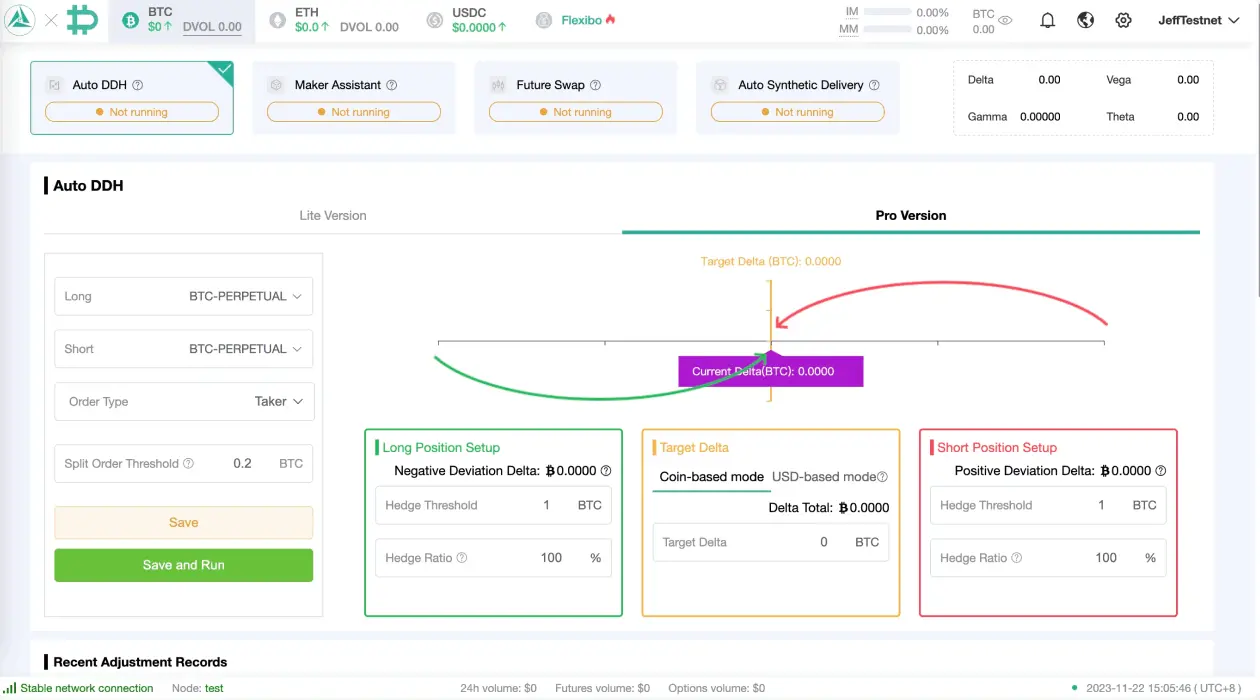
Advanced trading applications further empower institutions to navigate informational asymmetries. Automated Delta Hedging (DDH) systems, for example, allow for continuous, programmatic adjustments to a portfolio’s directional exposure, thereby mitigating the risk associated with options positions and reducing the need for large, market-moving hedging trades. The deployment of synthetic knock-in options, which activate only upon certain market conditions, offers a method for expressing complex views while controlling the timing and visibility of underlying exposure. These sophisticated tools transform raw market data into actionable intelligence, allowing institutions to maintain an edge in environments where information is both valuable and unevenly distributed.


Precision Execution in Volatility Markets
Mastering the execution phase of crypto options RFQ requires a profound understanding of operational protocols, quantitative modeling, and technological integration. This phase moves beyond theoretical strategy, demanding a tangible, step-by-step approach to navigate the nuanced landscape of informational asymmetries and achieve superior transaction outcomes. Institutions must approach each RFQ as a distinct tactical engagement, where every decision, from counterparty selection to order routing, carries implications for price and information leakage.

The Operational Playbook for RFQ
Executing crypto options via an RFQ system involves a sequence of precise actions designed to optimize price discovery while minimizing informational footprint. This procedural guide outlines the critical steps.
- Pre-Trade Analytics and Valuation ▴ Before initiating an RFQ, conduct a thorough analysis of the options contract. This includes computing theoretical fair value using advanced models, assessing historical and implied volatility surfaces, and evaluating the current liquidity profile across potential venues. Develop a clear internal bid/offer benchmark.
- Counterparty Selection and Segmentation ▴ Based on the trade’s characteristics (size, complexity, asset type), select a targeted group of liquidity providers. Utilize a segmentation strategy, directing simpler, high-liquidity trades to a broader pool and more complex, sensitive orders to a curated set of trusted dealers known for deep liquidity and competitive pricing.
- RFQ Construction and Transmission ▴ Craft the RFQ message with precision. For sensitive trades, consider submitting a “firm but hidden” order, where the quantity is not fully revealed until a quote is accepted. Employ multi-leg spread RFQs to express complex views and obscure directional intent. Transmit the RFQ via secure, low-latency API connections to minimize transmission delays and potential front-running.
- Quote Evaluation and Aggregation ▴ Upon receiving quotes, analyze them instantaneously. This involves comparing the quoted prices against the internal fair value, assessing the spread competitiveness, and considering the quoted size. Aggregate quotes from multiple dealers to construct a composite view of available liquidity and price levels.
- Execution Decision and Order Routing ▴ Make an informed decision based on the aggregated quotes, prioritizing best execution while considering implicit costs like information leakage. Route the order to the selected dealer via the same secure API. Ensure the system is capable of rapid partial fills and dynamic adjustments if market conditions shift post-quote.
- Post-Trade Analysis and Performance Review ▴ Conduct a comprehensive Transaction Cost Analysis (TCA) to evaluate the execution quality. Compare the executed price against benchmarks, analyze slippage, and assess the impact of information leakage. Use these insights to refine future RFQ strategies and optimize dealer relationships.

Quantitative Modeling and Data Analysis
Quantitative models form the bedrock of an institution’s ability to contend with asymmetric information in crypto options pricing. These models extend beyond basic Black-Scholes calculations, incorporating real-time market microstructure data to infer hidden liquidity, predict short-term volatility, and detect potential information-driven order flow.

Volatility Surface Analysis for Options Pricing
Understanding the volatility surface is critical. It reflects the market’s expectation of future price movements across different strike prices and maturities. Deviations from a smooth surface can indicate informed trading activity.
| Maturity | Strike Price (BTC) | Implied Volatility (%) | Informational Anomaly (Basis Points) |
|---|---|---|---|
| 1 Week | 95,000 | 72.5 | +5.2 |
| 1 Week | 100,000 | 70.1 | -2.1 |
| 1 Month | 90,000 | 68.9 | +8.7 |
| 1 Month | 105,000 | 65.3 | -4.5 |
| 3 Months | 80,000 | 62.0 | +1.1 |
This table illustrates how quantitative analysts scrutinize implied volatility. An “Informational Anomaly” column highlights deviations from expected values, signaling potential informed interest or market inefficiencies. For instance, a positive anomaly at a specific strike and maturity could indicate a large buyer accumulating calls, driving up implied volatility beyond what fundamental models predict. This data point, derived from high-frequency market data and proprietary models, informs the institution’s response to RFQ quotes.
Furthermore, advanced algorithms monitor order book depth, bid-ask spreads, and trade volumes across multiple exchanges. These microstructural indicators provide a proxy for genuine liquidity versus spoofing or layering, helping to identify periods of heightened information asymmetry. A sudden widening of spreads on a particular options series, coupled with a surge in hidden orders, might suggest an informed trader is attempting to accumulate a position discreetly, prompting the institution to adjust its RFQ strategy or delay execution.

Predictive Scenario Analysis ▴ A Block Trade Simulation
Consider a hypothetical scenario involving an institutional client, “Alpha Capital,” aiming to execute a substantial block trade in Ethereum (ETH) options. Alpha Capital wishes to acquire 500 ETH 3-month 4,000-strike calls. The current spot price for ETH is 3,850, and the prevailing implied volatility for this series hovers around 75%.
Alpha Capital’s internal models, however, suggest a fair value implied volatility closer to 72% due to proprietary fundamental analysis indicating a short-term overestimation of market risk. This discrepancy represents Alpha Capital’s informational edge.
Alpha Capital initiates an RFQ to five selected liquidity providers. Three dealers return quotes immediately, while two remain silent, likely assessing the market impact or searching for internal hedges. Dealer A quotes a price implying 76.5% volatility, reflecting a cautious stance. Dealer B offers a tighter quote, implying 75.8% volatility.
Dealer C, a newer entrant, quotes 77.0%, signaling less confidence or a wider risk premium. Alpha Capital’s trading desk, leveraging its real-time intelligence feed, notices a slight uptick in volume for shorter-dated ETH calls on a major centralized exchange just before receiving these quotes. This microstructural signal, while subtle, suggests a potential underlying directional flow in the market, possibly driven by another informed participant.
Recognizing the potential for information leakage and adverse selection, Alpha Capital does not immediately execute. Instead, it adjusts its strategy. The trading system, informed by the intelligence layer, initiates a smaller, test RFQ for 50 ETH calls to a different subset of three dealers, including Dealer B, known for its algorithmic pricing and lower latency.
This smaller inquiry serves as a probe, gauging the market’s current sensitivity and confirming the initial quotes. The responses to this test RFQ come back marginally higher, suggesting the market is indeed absorbing some information about institutional interest in ETH calls.
Alpha Capital’s “Systems Architect” then recommends a multi-stage execution. Instead of executing the entire 500 ETH block at once, the order is broken into two tranches ▴ 250 ETH calls initially, followed by the remaining 250 ETH calls after a brief cooling-off period, contingent on market stability. The first tranche is executed with Dealer B at a price implying 76.0% volatility, a slight concession from Alpha Capital’s fair value but still within acceptable parameters given the perceived market interest. This execution is conducted using a private, discreet protocol, minimizing its immediate public footprint.
Following the first execution, Alpha Capital’s internal monitoring systems observe the market’s reaction. There is a minor, transient increase in implied volatility for the 3-month ETH calls, but no significant widening of spreads or aggressive directional moves from other market participants. This indicates the controlled execution successfully mitigated significant information leakage. After 15 minutes, the remaining 250 ETH calls are put out for RFQ to a slightly expanded pool of four dealers, including Dealer B and a new participant, Dealer D, who had not quoted on the initial larger RFQ.
Dealer B, having observed the initial execution and internalizing the reduced risk from the smaller remaining size, offers an even more competitive quote, implying 75.5% volatility. Dealer D, eager to capture market share, matches this. Alpha Capital executes the second tranche, achieving an overall blended execution price that is closer to its internal fair value, validating the multi-stage, information-aware approach. This deliberate pacing and strategic use of information demonstrate how a well-engineered execution protocol can counteract the inherent challenges of asymmetric information in high-value crypto options transactions.

System Integration and Technological Architecture
The technological backbone supporting institutional crypto options RFQ execution must be robust, secure, and highly integrated. This operational framework demands seamless connectivity, low-latency data processing, and sophisticated algorithmic capabilities.

Core Architectural Components for RFQ Execution
An effective system relies on interconnected modules working in concert.
- Order Management System (OMS) ▴ Central to trade lifecycle management, the OMS handles order generation, routing, and tracking. It must integrate with various RFQ platforms and liquidity providers, supporting complex order types like multi-leg spreads and conditional orders.
- Execution Management System (EMS) ▴ The EMS optimizes order execution by analyzing real-time market data, evaluating quotes, and determining optimal routing strategies. It incorporates algorithms for smart order routing and information leakage mitigation.
- Real-Time Market Data Feeds ▴ Low-latency data feeds from multiple crypto exchanges and options venues are essential. This includes spot prices, order book depth, implied volatility surfaces, and trade volumes. Data aggregation and normalization are critical for consistent analysis.
- Quantitative Pricing Engine ▴ This module houses advanced options pricing models (e.g. stochastic volatility jump diffusion models) and calibration routines. It provides theoretical fair values, Greeks, and volatility surface analysis, informing quote evaluation.
- Risk Management System ▴ Continuous monitoring of portfolio risk, including delta, gamma, vega, and theta exposures. It integrates with the EMS to trigger automated hedging strategies or alert traders to significant deviations.
- Connectivity Layer ▴ Robust API (Application Programming Interface) endpoints facilitate communication with liquidity providers and exchanges. Standardized protocols, such as FIX (Financial Information eXchange) for traditional markets or proprietary JSON-based APIs for crypto, ensure reliable and secure data exchange.
The integration of these components forms a coherent operational system. For instance, the OMS initiates an RFQ, which the EMS then routes to selected dealers via the Connectivity Layer. The Quantitative Pricing Engine simultaneously provides fair value benchmarks, while the Real-Time Market Data Feeds update the current market state. Upon receiving quotes, the EMS evaluates them against the pricing engine’s output and current market conditions, informing the execution decision.
This tightly coupled architecture minimizes latency and maximizes the ability to react to dynamic market information. Secure communication channels and robust encryption protocols are paramount to prevent information leakage at the infrastructure level, safeguarding proprietary trading intent from external interception.
Furthermore, an institutional setup often incorporates a “System Specialists” oversight function. These human experts monitor the automated systems, intervene in anomalous situations, and refine algorithmic parameters based on evolving market microstructure. Their presence provides a critical layer of intelligence, ensuring the technology remains aligned with strategic objectives and adapts to unforeseen market behaviors. This blend of sophisticated automation and expert human oversight creates a resilient and adaptable execution capability, allowing institutions to maintain a decisive edge in the competitive landscape of crypto options trading.

References
- Bandi, F. M. & Renò, R. (2016). Nonparametric Jump-Diffusion Models. Journal of Econometrics, 192(1), 160-179.
- Easley, D. & O’Hara, M. (2004). Information and the Cost of Capital. The Journal of Finance, 59(4), 1553-1583.
- Glosten, L. R. & Milgrom, P. R. (1985). Bid, Ask and Transaction Prices in a Specialist Market with Heterogeneously Informed Traders. Journal of Financial Economics, 14(1), 71-100.
- Kyle, A. S. (1985). Continuous Auctions and Insider Trading. Econometrica, 53(6), 1315-1335.
- Stigler, G. J. (1964). A Theory of Oligopoly. Journal of Political Economy, 72(1), 44-61.
- Zavolokina, L. Schlegel, S. & Schwabe, G. (2020). Information Asymmetry in Financial Markets ▴ A Literature Review. Journal of Business Economics, 90(5), 721-756.

The Persistent Edge of Informed Action
The interplay of asymmetric information dynamics within crypto options RFQ pricing fundamentally shapes an institution’s capacity for superior execution. Understanding these forces transcends mere academic curiosity; it directly impacts capital efficiency and risk management. The strategic deployment of RFQ protocols, coupled with rigorous quantitative analysis and robust technological infrastructure, transforms a potential vulnerability into a structural advantage. Every trade, every quote, and every market interaction becomes an opportunity to affirm a controlled, informed stance.
Reflecting on your own operational framework, consider where latent informational disparities might reside. Are your systems truly designed to mitigate adverse selection, or do they inadvertently expose valuable trading signals? Does your counterparty engagement strategy actively leverage data to secure competitive pricing?
The mastery of these complex market systems ultimately hinges on an unyielding commitment to analytical precision and continuous architectural refinement. The journey toward a decisive operational edge in digital asset derivatives is an ongoing process of intellectual and technological evolution, demanding constant vigilance and adaptation.

Glossary

Price Discovery

Crypto Options

Asymmetric Information

Adverse Selection

Implied Volatility

Crypto Options Rfq

Information Leakage

Liquidity Providers

Automated Delta Hedging

Market Data

Options Rfq

Fair Value

Market Microstructure

Volatility Surface

Bid-Ask Spreads

Alpha Capital

Order Management System

Execution Management System