

Concept
Navigating the complex currents of digital asset derivatives demands a precise operational framework, especially for principals engaged in significant options positions. The interplay between automated delta hedging systems and Request for Quote (RFQ) crypto options represents a sophisticated convergence of risk management and bespoke liquidity sourcing. Understanding this synergy is fundamental for any institutional participant seeking to optimize capital efficiency and execution quality in an inherently volatile market.
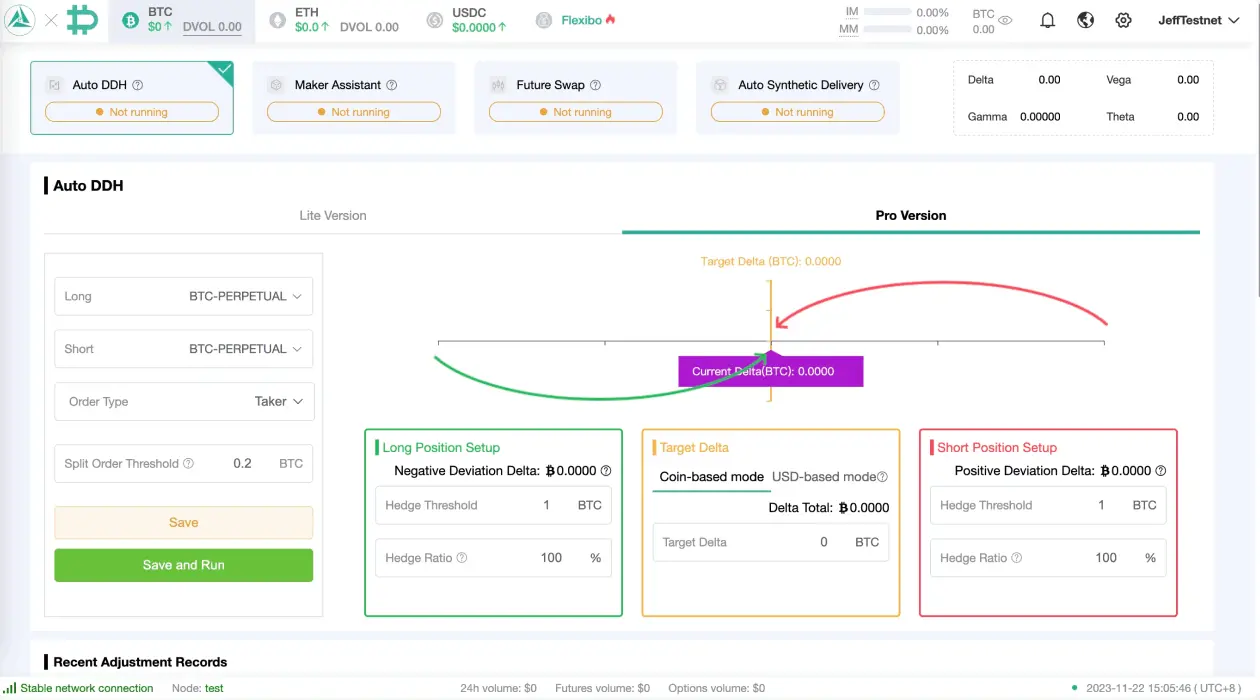
Automated delta hedging serves as a continuous calibration mechanism for options portfolios. Delta, a primary Greek, quantifies an option’s sensitivity to changes in the underlying asset’s price. Maintaining a delta-neutral posture means mitigating directional exposure, allowing a focus on other risk dimensions like implied volatility or time decay.
Systems designed for this purpose execute real-time adjustments to spot or futures positions, dynamically offsetting the portfolio’s aggregate delta as market conditions evolve. This programmatic approach ensures that the portfolio remains insulated from minor price fluctuations, a critical capability in the 24/7, high-velocity crypto markets.
Conversely, RFQ crypto options provide a structured channel for sourcing deep, bilateral liquidity for larger, often multi-leg, options trades. Unlike order-book driven exchanges, an RFQ protocol facilitates direct price discovery between an institutional buyer and a network of liquidity providers. This off-book liquidity sourcing mechanism is particularly advantageous for substantial block trades or complex options spreads where transparency and minimal market impact are paramount. Participants solicit quotes from multiple dealers simultaneously, fostering competition and enabling the execution of transactions at optimal prices without revealing their full intentions to the broader market.
Automated delta hedging precisely manages directional risk, while RFQ crypto options secure bespoke liquidity for large, complex trades, together forming a powerful institutional trading paradigm.
The confluence of these two distinct yet complementary capabilities forms a robust operational architecture. Automated delta hedging provides the dynamic risk control necessary to sustain options positions in a constantly shifting market. RFQ mechanisms supply the execution conduit for establishing or unwinding those positions with minimal footprint.
The integration ensures that the risk parameters of an options trade are continuously monitored and adjusted, even as the trade itself is sourced and executed through a discreet, competitive protocol. This layered approach to market engagement and risk containment underscores a sophisticated understanding of digital asset market microstructure.


Strategy
The strategic imperative driving the integration of automated delta hedging with RFQ crypto options centers on achieving superior execution and capital efficiency in digital asset derivatives. Institutional participants confront unique challenges in this nascent market, including fragmented liquidity, pronounced volatility, and the imperative for discreet execution of substantial orders. A sophisticated approach addresses these complexities by systematically linking risk management with strategic liquidity sourcing.

Execution Quality through Seamless Integration
Optimal execution quality stands as a primary strategic objective. When a principal initiates a large crypto options trade via an RFQ, the immediate post-trade environment requires dynamic risk mitigation. Automated delta hedging systems are pre-configured to receive real-time trade confirmations and instantly calculate the resulting portfolio delta.
This rapid response capability ensures that any new directional exposure from the options trade is promptly offset by corresponding spot or futures positions. The seamless transition from trade execution to risk neutralization minimizes the window of unhedged exposure, thereby safeguarding capital against adverse price movements that often characterize crypto markets.

Mitigating Market Impact and Slippage
The strategic use of RFQ protocols inherently minimizes market impact for large options blocks. By soliciting prices from multiple dealers off-exchange, a principal avoids signaling their trading intentions to the broader market, which can otherwise lead to price degradation. Integrating automated delta hedging with this off-book execution further amplifies the benefit.
The hedging trades, typically in the underlying asset, are also executed algorithmically, often employing smart order routing and liquidity-seeking algorithms across various venues. This combined approach reduces the aggregate market footprint of both the options trade and its corresponding hedge, preserving alpha and enhancing overall execution quality.
Strategic integration of automated delta hedging and RFQ crypto options provides institutional players with superior execution quality and capital efficiency, crucial for volatile digital asset markets.
A core conviction in this domain is that manual intervention in high-frequency risk adjustments introduces unacceptable latency and potential for error. The speed and precision of automated systems are not merely an advantage; they are a fundamental requirement for operating at scale in the digital asset space. This reflects a commitment to deterministic control over portfolio risk, where human oversight transitions from direct execution to strategic monitoring and exception management.

Capital Efficiency and Risk Transfer Optimization
Capital efficiency is another critical strategic pillar. By precisely managing delta exposure, institutions can optimize the use of their collateral and margin across different trading venues. Automated systems monitor the portfolio’s aggregate risk profile, including higher-order Greeks like gamma and vega, and suggest or execute adjustments that maintain desired risk tolerances while minimizing locked capital. This granular control allows for more effective deployment of resources, ensuring that capital is not unnecessarily tied up in managing unhedged directional risk.
Optimizing risk transfer involves leveraging the competitive dynamics of the RFQ environment. Multiple liquidity providers, aware of the potential for a subsequent hedging trade, can price options more keenly, knowing that their own delta exposure can be managed efficiently in the underlying market. This creates a virtuous cycle where the efficiency of automated hedging feeds back into better pricing on RFQ options, ultimately reducing the cost of risk transfer for the principal.
The evolving market microstructure of crypto derivatives, characterized by both fragmentation and rapid innovation, necessitates such integrated solutions. While some traditional markets offer similar capabilities, the 24/7 nature and inherent volatility of digital assets demand a more robust, always-on hedging infrastructure. The strategic decision to deploy automated delta hedging in conjunction with RFQ mechanisms positions an institution to capitalize on the unique opportunities presented by crypto options, transforming volatility into a source of strategic advantage rather than an unmanageable risk.
Consider the contrast between a reactive, manual hedging process and a proactive, automated system. A manual approach often entails delays in delta recalculation and execution, potentially leading to significant slippage in fast-moving markets. An automated system, conversely, continuously assesses market conditions and executes micro-adjustments with algorithmic precision, minimizing such adverse impacts.
| Feature | Manual Hedging | Automated Delta Hedging with RFQ |
|---|---|---|
| Execution Speed | Delayed, human-dependent | Real-time, algorithmic |
| Market Impact | Potentially high for large trades | Minimized through smart routing and RFQ discretion |
| Capital Efficiency | Suboptimal, reactive adjustments | Optimized, proactive risk management |
| Error Potential | Higher due to human factors | Lower, systematic rule-based execution |
| Scalability | Limited by human capacity | High, designed for large volumes |
| Market Adaptability | Slow to react to rapid changes | Dynamic, continuous rebalancing |


Execution
The operationalization of automated delta hedging within the RFQ crypto options framework represents a sophisticated engineering challenge, demanding a meticulously designed system architecture and robust algorithmic precision. For institutional participants, the tangible execution details define the efficacy of their risk management and liquidity sourcing strategies. This section delves into the granular mechanics, from data ingestion to real-time rebalancing, ensuring a profound understanding of the underlying operational protocols.

Architectural Design for Dynamic Risk Control
A resilient system for integrating automated delta hedging with RFQ crypto options begins with a robust architectural design. This foundational structure must accommodate high-frequency data streams, low-latency processing, and secure communication across disparate trading venues. The core components include a market data ingestion layer, a quantitative risk engine, an algorithmic execution management system (EMS), and a secure connectivity module for RFQ platforms and underlying spot/futures exchanges.
The market data layer continuously aggregates real-time price feeds, order book depth, and implied volatility surfaces from all relevant crypto options and spot/futures exchanges. This comprehensive data stream fuels the quantitative risk engine, which performs continuous calculations of options Greeks ▴ delta, gamma, vega, and theta ▴ for every position in the portfolio. The precision of these calculations, often derived from advanced Black-Scholes or binomial tree models adapted for crypto market specificities, directly influences hedging effectiveness.
An RFQ transaction typically initiates the workflow. Upon receiving an RFQ quote from a liquidity provider and its subsequent acceptance, the system registers the new options position. This triggers an immediate recalculation of the portfolio’s aggregate delta. The algorithmic EMS then formulates a hedging order in the underlying asset (e.g.
BTC or ETH spot or perpetual futures) to restore the desired delta-neutral state. This order is routed intelligently across multiple exchanges to minimize market impact and achieve best execution.

Algorithmic Rebalancing Logic
The heart of automated delta hedging lies in its rebalancing algorithms. These algorithms operate under predefined rules and thresholds, constantly monitoring the portfolio’s delta deviation from zero (or a target delta). Key parameters guiding this process include ▴
- Delta Threshold ▴ The maximum permissible deviation from the target delta before a rebalancing trade is triggered. A tighter threshold implies more frequent, smaller trades, reducing tracking error but increasing transaction costs.
- Rebalancing Frequency ▴ The interval at which delta is recalculated and rebalancing is considered. This can range from sub-second for high-frequency strategies to several minutes for less active portfolios.
- Transaction Cost Optimization ▴ Algorithms incorporate models for estimating slippage and commission costs, aiming to execute hedging trades that balance delta neutrality with minimizing trading expenses.
- Gamma and Vega Management ▴ Advanced systems extend beyond simple delta hedging to manage higher-order risks. Gamma hedging mitigates the change in delta as the underlying price moves, while vega hedging addresses exposure to implied volatility fluctuations.
Executing automated delta hedging within RFQ crypto options requires a sophisticated architecture, encompassing real-time data, precise quantitative models, and intelligent algorithmic rebalancing to maintain optimal risk posture.
The integration with RFQ platforms is seamless. When an options trade is executed, the RFQ system communicates the trade details ▴ underlying asset, strike, expiry, premium, and quantity ▴ to the risk engine via secure API connections. This immediate data transfer is crucial for prompt delta calculation and the initiation of hedging trades. The efficacy of this entire process hinges on low-latency data pipelines and robust error handling mechanisms, ensuring that no trade goes unhedged for an extended period.
The inherent complexity of managing dynamic delta across numerous crypto options, particularly in a fragmented liquidity environment, underscores the necessity of these automated systems. A manual approach, while conceptually sound, would quickly become operationally untenable and prone to significant execution leakage in the face of crypto market volatility. The system must also account for diverse margining regimes across different exchanges, consolidating a unified view of collateral and risk.
| Stage | Description | Key Inputs/Outputs |
|---|---|---|
| 1. Market Data Ingestion | Continuous aggregation of real-time spot, futures, and options data from multiple exchanges. | Inputs ▴ Price feeds, order book, implied volatility. Outputs ▴ Consolidated market data. |
| 2. RFQ Options Execution | Initiation and execution of options trades via the RFQ protocol with chosen liquidity providers. | Inputs ▴ RFQ parameters, dealer quotes. Outputs ▴ Executed options trade confirmation. |
| 3. Delta Calculation & Monitoring | Real-time calculation of portfolio delta and other Greeks, continuous monitoring against thresholds. | Inputs ▴ Options positions, market data. Outputs ▴ Current portfolio delta, rebalancing signals. |
| 4. Hedging Order Generation | Formulation of optimal hedging orders (spot/futures) to neutralize delta exposure. | Inputs ▴ Rebalancing signals, target delta. Outputs ▴ Algorithmic trade instructions. |
| 5. Hedging Order Execution | Intelligent routing and execution of hedging orders across underlying markets. | Inputs ▴ Trade instructions. Outputs ▴ Executed hedging trades. |
| 6. Post-Trade Reconciliation | Verification of executed trades, updating portfolio positions, and re-evaluating risk. | Inputs ▴ Executed trades. Outputs ▴ Updated portfolio, P&L. |

Operational Protocols and Oversight
While automation drives the core hedging process, human oversight remains a critical component. System specialists monitor the performance of the delta hedging algorithms, observe execution quality, and intervene during anomalous market conditions or system alerts. This intelligence layer ensures that the automated systems operate within expected parameters and adapt to unforeseen market events. Operational playbooks detail procedures for handling system outages, connectivity issues, or significant market dislocations that might challenge automated rebalancing.
- Real-time Performance Monitoring ▴ Continuous tracking of hedging effectiveness, slippage, and transaction costs through a centralized dashboard.
- Alerting Mechanisms ▴ Automated alerts for significant delta deviations, execution failures, or market data anomalies, prompting immediate human review.
- Parameter Calibration ▴ Regular review and recalibration of hedging thresholds, rebalancing frequencies, and execution logic based on historical performance and evolving market dynamics.
- Contingency Planning ▴ Established protocols for manual intervention, failover systems, and disaster recovery to maintain operational continuity.
- Compliance and Reporting ▴ Automated generation of audit trails and reports for regulatory compliance and internal risk management.
The true power of this integration lies in its ability to transform the often-unpredictable nature of crypto options trading into a more deterministic and controllable process. By systematically addressing directional risk through automated delta hedging, institutions can confidently engage with the bespoke liquidity offered by RFQ protocols, ultimately enhancing their strategic positioning in the digital asset derivatives ecosystem. This creates a decisive operational edge.

References
- On Automated Delta Neutral And Hedging Strategies for Yield Farming. Medium, 2022.
- Delta Hedging In Options ▴ A Guide For Crypto Traders. Pi42 Blog, 2025.
- Delta Hedging in Crypto- A Detailed Guide. Mudrex Learn, 2025.
- What Is Delta Hedging and How Does It Work in Crypto? CoinSwitch, 2025.
- Delta Hedging Crypto Options. CodeArmo.
- Microstructure and information flows between crypto asset spot and derivative markets. 2020.
- Microstructure and Market Dynamics in Crypto Markets. Easley, D. O’Hara, M. Yang, S. & Zhang, Z. Cornell University, 2024.
- MARKET MICROSTRUCTURE OF CRYPTOCURRENCY EXCHANGE ▴ ORDER BOOK ANALYSIS. ResearchGate, 2025.
- Market microstructure. Advanced Analytics and Algorithmic Trading.
- FalconX launches new platform to enable 24/7 institutional OTC options trading. 2025.
- Institutional Crypto. Blockchain.com.
- Investment Strategies for the Institutional Crypto Trader. Amberdata Blog, 2024.
- Paradigm ▴ Institutional Grade Liquidity for Crypto Derivatives.
- What Is Institutional Crypto Trading and Its Main Features? WhiteBIT Blog, 2025.
- Managing Risk in Digital Asset Portfolios ▴ Addressing the Complexities of Crypto Derivatives. 2025.
- Quantitative Risk Assessment in the Digital Asset. Lukka.tech.
- Digital-Asset Risk Management ▴ VaR Meets Cryptocurrencies. GARP, 2024.
- Risk Management Metrics in Crypto Derivatives Trading. Amberdata Blog, 2024.
- Top Algo Strategies for Option Hedging. DhanHQ.
- The Importance of Auto-hedging in Trading Algorithm Technology. NURP, 2024.
- A Guide to Algorithmic Options Trading. Alpaca, 2024.
- What are some popular algorithmic trading strategies used by hedge funds? Quora, 2023.
- What Is Options Hedging and How Can It Protect Your Investments? SpeedBot, 2025.

Reflection
Considering the intricate mechanics of automated delta hedging integrated with RFQ crypto options, one must contemplate the profound implications for an institution’s broader operational framework. The technical specifications and strategic advantages outlined herein are components of a larger, evolving system of market intelligence and execution. Mastering these advanced protocols moves beyond mere transactional efficiency; it becomes a fundamental redefinition of risk posture and liquidity access in digital assets.
This analytical depth compels a critical examination of existing operational capabilities. Does your current infrastructure provide the real-time visibility and algorithmic agility necessary to compete at this level? The convergence of bespoke liquidity and continuous risk control offers a blueprint for superior market engagement, prompting a re-evaluation of how technology, quantitative models, and strategic oversight coalesce within your own trading architecture. Ultimately, the decisive edge in this dynamic landscape stems from a commitment to an integrated, intelligent operational design.

Glossary

Automated Delta Hedging

Capital Efficiency

Automated Delta

Rfq Crypto Options

Market Impact

Delta Hedging

Market Microstructure

Digital Asset

Risk Management

Crypto Options

Execution Quality

Options Trade

Greeks

Rfq Crypto

Execution Management System

Quantitative Risk Engine

Market Data