

The Operational Canvas for Large Orders
Executing substantial orders within dynamic financial markets presents a persistent challenge for institutional principals. The very act of placing a large block trade introduces inherent complexities, fundamentally altering the liquidity landscape and potentially influencing price discovery. A deep understanding of the underlying market structures becomes paramount for any entity seeking to navigate these intricate dynamics with precision. Without this granular comprehension, achieving optimal execution remains an elusive objective, jeopardizing capital efficiency and overall portfolio performance.
Block trades, characterized by their significant size, inherently possess the capacity to exert a noticeable influence on an asset’s price. Placing such an order on a public exchange often broadcasts trading intent, leading to adverse price movements. This phenomenon, known as market impact, directly correlates with the order’s magnitude and the prevailing market liquidity.
Institutional participants, therefore, require sophisticated mechanisms to mitigate this impact, ensuring their transactions are executed efficiently and discreetly. The design of market infrastructure directly addresses these needs, providing various venues tailored for different execution objectives.
The financial ecosystem comprises distinct market structures, each offering a unique operational environment for block trade execution. Public exchanges, frequently termed “lit markets,” provide transparent order books where bids and offers are visible to all participants. While these venues offer robust price discovery for smaller, more liquid orders, their transparency can prove detrimental to large block trades, exposing them to predatory high-frequency trading strategies and substantial price slippage.
Understanding market structures is fundamental for institutional block trade execution, mitigating adverse price movements and optimizing capital efficiency.
Dark pools represent a contrasting market structure, operating as private trading venues where order information remains concealed until after execution. These platforms offer a crucial advantage for institutional investors ▴ the ability to transact significant volumes without immediately revealing their intentions to the broader market. This anonymity helps to minimize market impact and adverse selection, allowing for more favorable execution prices. The regulatory frameworks surrounding dark pools often permit delayed trade reporting, further contributing to their discreet nature.
Beyond organized exchanges and dark pools, over-the-counter (OTC) markets provide a highly customized environment for block trade execution, particularly prevalent in derivatives and less liquid assets. OTC transactions involve direct, bilateral negotiations between two counterparties, often facilitated by a broker-dealer. This structure allows for bespoke contract terms, tailoring the trade precisely to the specific risk and return requirements of each party.
While offering unparalleled flexibility, OTC markets introduce unique considerations, including heightened counterparty credit risk due to the absence of a central clearing mechanism. Navigating these diverse market architectures demands a nuanced understanding of their operational characteristics and inherent trade-offs.


Strategic Frameworks for Discretionary Execution
A comprehensive strategy for block trade execution requires a multi-pronged approach, leveraging the strengths of different market structures to achieve optimal outcomes. Institutional traders systematically assess market conditions, order characteristics, and desired levels of discretion to select the most appropriate execution channels and protocols. The objective centers on securing superior pricing while minimizing information leakage and market impact, a delicate balance demanding precise calibration.
Request for Quote (RFQ) protocols represent a cornerstone of institutional block trading, particularly within derivatives and fixed income markets. An RFQ system enables a trader to solicit executable price quotes from a select group of liquidity providers. This bilateral price discovery mechanism fosters competition among market makers, often resulting in tighter spreads and more competitive pricing for substantial order sizes than what might be available on public exchanges.
RFQ platforms facilitate multi-dealer liquidity, allowing the initiator to compare multiple quotes and select the most advantageous offering. This approach proves especially valuable for illiquid securities or complex multi-leg options spreads, where transparent, real-time pricing is less readily available.
RFQ protocols are crucial for institutional block trading, driving competitive pricing through multi-dealer liquidity and minimizing information leakage.
The strategic deployment of dark pools offers another critical component in a sophisticated execution framework. By directing large orders to these non-displayed venues, institutions effectively shield their trading intent from the public eye. This mitigates the risk of front-running and adverse selection, phenomena where other market participants exploit knowledge of a large pending order to trade against it.
Dark pools are particularly advantageous for executing large blocks of equities or exchange-traded funds (ETFs) that, if routed to a lit market, would significantly move the price. The discretion afforded by dark pools allows for a more controlled execution, aligning with the objective of minimizing slippage and achieving a better overall execution price.
Algorithmic execution strategies further enhance the precision and efficiency of block trading. These automated approaches segment large orders into smaller, more manageable child orders, which are then released into the market over time according to predefined rules. Volume-Weighted Average Price (VWAP) and Time-Weighted Average Price (TWAP) algorithms are commonly employed to minimize market impact by aligning execution with natural market liquidity patterns or spreading the trade evenly across a time horizon.
More advanced algorithms, such as Implementation Shortfall strategies, dynamically balance the trade-off between market impact and the risk of adverse price movements, adapting to real-time market conditions. The sophistication of these algorithms directly influences their effectiveness in achieving best execution, necessitating continuous optimization and adaptation.
Integrating these strategic elements ▴ RFQ, dark pools, and algorithmic execution ▴ creates a powerful synergy. A block order might initially be routed through an RFQ system to gauge available liquidity and secure initial quotes. Portions of the order not filled through RFQ, or those requiring deeper anonymity, could then be directed to dark pools.
Simultaneously, an execution algorithm might manage the residual order flow, dynamically adjusting its pace and venue selection based on prevailing market conditions. This layered approach allows for granular control over the execution process, optimizing for both price and discretion across various market microstructures.
For specialized instruments like options, particularly Bitcoin Options Block or ETH Options Block, the strategic landscape expands to include considerations of volatility and multi-leg execution. Complex options spreads, such as BTC Straddle Block or ETH Collar RFQ, often necessitate a customized approach, combining RFQ protocols for price discovery with careful consideration of implied volatility dynamics. The ability to anonymously trade large volatility blocks is paramount, as transparent execution could reveal proprietary views and influence option pricing. The intelligence layer, encompassing real-time intelligence feeds for market flow data and expert human oversight from system specialists, provides crucial insights for adapting these strategies to evolving market conditions and unforeseen events.


Operationalizing Superior Execution

The Operational Playbook
Operationalizing institutional block trade execution demands a meticulously structured playbook, integrating diverse market access points and advanced protocols. The process begins with a comprehensive pre-trade analysis, evaluating the specific asset, its liquidity profile, and the prevailing market microstructure. A critical first step involves defining clear execution benchmarks and risk parameters, including maximum allowable slippage and market impact tolerances. This initial assessment guides the selection of appropriate execution venues and strategic methodologies.
The core execution workflow typically involves a phased approach. For substantial orders, an initial exploration of off-exchange liquidity through Request for Quote (RFQ) mechanisms is often prioritized. This bilateral price discovery process allows the institutional trader to solicit competitive bids and offers from multiple qualified liquidity providers without revealing the full order size to the broader market.
The selection of counterparties for these private quotation protocols is a strategic decision, often based on historical fill rates, pricing aggressiveness, and the depth of their balance sheet. A robust RFQ system facilitates aggregated inquiries, streamlining the communication with multiple dealers and accelerating the price discovery phase.
Subsequent to the RFQ process, any remaining order quantity, or portions requiring deeper anonymity, can be strategically routed to dark pools. These alternative trading systems offer non-displayed liquidity, shielding the order from predatory high-frequency trading strategies that might otherwise exploit public order book information. The decision to use a dark pool involves a careful evaluation of its specific matching logic and potential for information leakage, even within a discreet environment. Traders frequently utilize conditional orders within dark pools, signaling a willingness to trade at a specific price without displaying the full size, waiting for a suitable counterparty to emerge.
For continuous execution of residual or smaller block components, algorithmic trading strategies provide systematic control. Volume-Weighted Average Price (VWAP) algorithms aim to distribute orders throughout the trading day proportional to historical volume patterns, minimizing market impact. Time-Weighted Average Price (TWAP) strategies execute orders evenly over a defined period, offering simplicity and control over timing risk.
More sophisticated Implementation Shortfall algorithms dynamically adjust execution speed and venue selection, balancing the trade-off between market impact costs and opportunity costs arising from adverse price movements. The choice of algorithm is calibrated to the order’s urgency, liquidity characteristics, and desired market footprint.
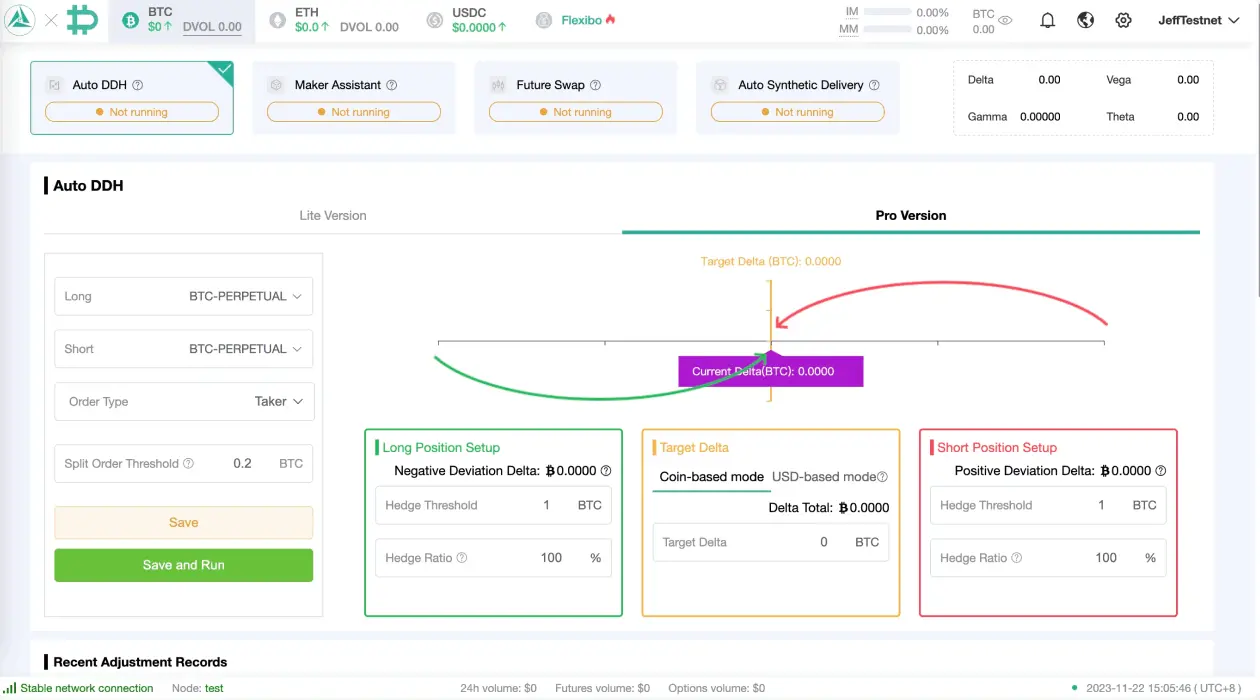
Advanced trading applications, such as those for multi-leg options or volatility blocks, necessitate specialized execution protocols. For instance, executing a complex options spread might involve a combination of RFQ for the spread itself, followed by automated delta hedging (DDH) to manage the directional risk introduced by the executed options. Synthetic Knock-In Options, requiring precise trigger monitoring and immediate execution upon activation, also benefit from highly automated, low-latency systems. System-level resource management ensures that these intricate execution sequences are handled with the necessary computational power and connectivity, preventing bottlenecks and ensuring timely order placement.
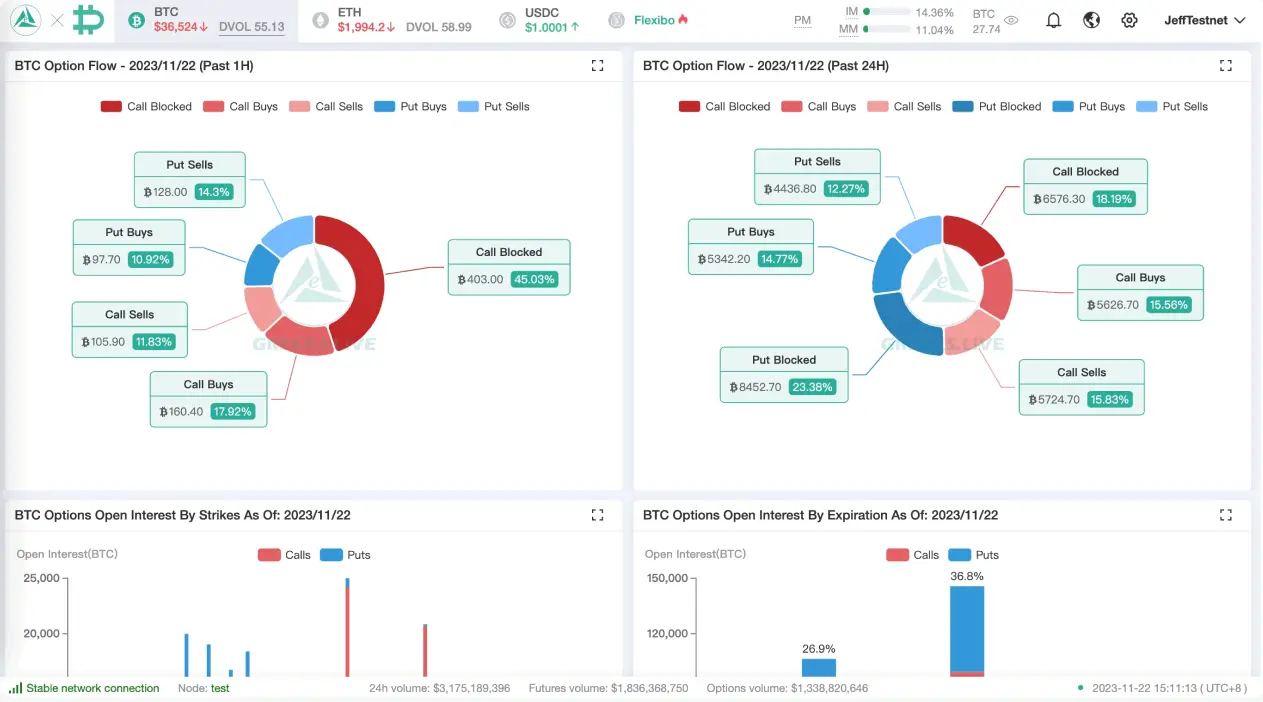
Throughout the entire execution lifecycle, continuous monitoring and real-time intelligence feeds are indispensable. These feeds provide critical market flow data, allowing traders to adapt their strategies dynamically to unforeseen shifts in liquidity, volatility, or order book dynamics. Expert human oversight, often provided by system specialists, complements algorithmic decision-making, particularly during periods of market stress or for highly bespoke transactions. This blend of automated precision and informed human intervention defines a high-fidelity execution framework.

Quantitative Modeling and Data Analysis
Quantitative modeling underpins effective block trade execution, providing the analytical rigor to predict market impact, estimate slippage, and optimize trading trajectories. The objective is to decompose the complex interplay of order flow, liquidity, and price formation into measurable components, enabling data-driven decision-making. Models typically consider factors such as order size relative to average daily volume (ADV), prevailing volatility, and the bid-ask spread.
Market impact models often employ power-law functions to describe the relationship between trade size and price movement. A commonly used model, derived from academic research, posits that market impact scales with the square root of the traded volume. This framework helps quantify the temporary and permanent price effects of a large order.
Temporary impact refers to the immediate, transient price deviation caused by the trade, which then reverts. Permanent impact, conversely, represents a lasting shift in the asset’s equilibrium price due to the information conveyed by the block trade.
Slippage, the difference between the expected execution price and the actual realized price, constitutes a critical metric for evaluating execution quality. Quantitative analysis of historical trade data, coupled with pre-trade estimates, allows for a precise measurement of slippage across different venues and execution strategies. This retrospective analysis informs future strategy adjustments, identifying which protocols or algorithms consistently deliver superior price capture.
Optimal execution models, such as those developed by Almgren and Chriss, seek to minimize a cost function that balances market impact costs with the risk arising from price volatility during the execution horizon. These models typically prescribe an optimal trading schedule, distributing the block trade over time to achieve the desired balance. The parameters of these models are calibrated using historical market data, requiring robust time-series analysis and econometric techniques.
| Metric | Definition | Calculation Example | Strategic Implication |
|---|---|---|---|
| Temporary Market Impact | Immediate price deviation during execution, followed by partial reversal. | (Execution Price – Pre-Trade Midpoint) – (Post-Trade Midpoint – Pre-Trade Midpoint) | Minimizing by using dark pools or smaller child orders. |
| Permanent Market Impact | Lasting change in equilibrium price after trade completion. | (Post-Trade Midpoint – Pre-Trade Midpoint) | Managing information leakage and trade signaling. |
| Slippage (VWAP) | Difference between actual VWAP and benchmark VWAP. | (Actual VWAP – Benchmark VWAP) | Evaluating algorithmic performance and venue selection. |
| Implementation Shortfall | Total cost of execution, including market impact and opportunity cost. | (Actual Execution Cost – Paper Portfolio Cost at Decision Time) | Holistic measure for overall execution quality. |
Data analysis for block trade execution also encompasses the evaluation of liquidity provider performance. By tracking metrics such as response times, quote competitiveness, and fill rates from various dealers within an RFQ system, institutions can refine their counterparty selection. This ongoing quantitative assessment ensures that the operational framework continuously adapts to market dynamics and maintains its edge. The deployment of advanced analytics, including machine learning techniques, further refines these models, enabling adaptive parameter optimization and improved prediction of market impact.

Predictive Scenario Analysis
A robust predictive scenario analysis provides institutional traders with a critical foresight capability, allowing them to anticipate potential outcomes and refine their block trade execution strategies under varying market conditions. Consider a scenario involving an institutional investor, “Alpha Capital,” tasked with selling a block of 500,000 shares of “Tech Innovations Inc.” (TINV), a mid-cap technology stock with an average daily volume (ADV) of 2 million shares. The current market price for TINV is $100.00. Alpha Capital aims to complete this divestment within a single trading day while minimizing market impact and achieving a price as close to the prevailing mid-price as possible.
In a baseline scenario, Alpha Capital decides to execute the trade primarily through a Volume-Weighted Average Price (VWAP) algorithm on a lit exchange. The algorithm is configured to distribute the 500,000 shares proportionally to TINV’s historical intraday volume profile. Assuming normal market conditions ▴ moderate volatility, stable liquidity, and no significant news events ▴ the VWAP algorithm aims to match the average price at which the stock trades throughout the day.
Under this scenario, the expected market impact is estimated at 10 basis points (bps), resulting in an average execution price of $99.90 per share, incurring a total cost of $50,000 ($0.10 per share 500,000 shares). The risk of significant price dislocation remains relatively low, as the algorithm’s pace aligns with natural market flow.
Now, consider an adverse scenario ▴ during the execution period, unexpected negative news regarding TINV’s quarterly earnings guidance breaks. The market reacts sharply, and TINV’s price begins to decline rapidly, accompanied by a surge in selling volume. In this environment, a rigid VWAP strategy would continue selling into a falling market, exacerbating losses. The original 10 bps market impact estimate becomes severely understated.
The predictive scenario analysis would have highlighted the need for dynamic adjustments. An adaptive execution algorithm, perhaps an Implementation Shortfall variant, would detect the sudden price movement and increased volatility. This algorithm would then immediately re-evaluate its urgency parameter, potentially accelerating execution in dark pools to offload a larger portion of the block before the price deteriorates further, or pausing execution if the market appears to be overreacting temporarily.
Conversely, envision a favorable scenario where positive industry news creates a sudden influx of buying interest in technology stocks, including TINV. The stock price begins to trend upwards, and liquidity on the bid side of the order book deepens. A static VWAP algorithm might fail to capitalize on this surge in demand. A sophisticated predictive model, however, would identify this favorable liquidity shift.
It would then instruct the execution algorithm to increase its participation rate, potentially by aggressively posting passive limit orders at the top of the bid or even crossing the spread to capture the upward momentum. The objective here shifts from merely minimizing impact to actively maximizing price improvement. If the market moves from $100.00 to $100.50 during the execution, and the algorithm can capture an average price of $100.40, this represents a significant alpha generation opportunity.
A more complex scenario involves the divestment of a less liquid asset, such as a large block of an OTC derivative. For example, Alpha Capital needs to unwind a custom interest rate swap with a notional value of $50 million. Public exchanges for such instruments are nonexistent, and the market is highly fragmented. The predictive analysis here focuses on counterparty availability and credit risk.
Alpha Capital would initiate a multi-dealer RFQ process, sending requests to a pre-vetted list of prime brokers and specialized dealers. The scenario analysis would model the potential price dispersion across quotes, the likelihood of receiving competitive bids, and the impact of the trade on the dealer’s balance sheet. It would also assess the creditworthiness of potential counterparties, recognizing the bilateral nature of OTC transactions. If only one or two competitive quotes emerge, the scenario dictates a negotiation strategy focused on tightening the bid-ask spread and securing favorable collateral terms, acknowledging the inherent illiquidity.
Each scenario underscores the imperative for flexible, adaptive execution strategies. Predictive modeling, continuously fed by real-time market data, enables the systems architect to pre-compute potential outcomes, understand the sensitivity of execution costs to various market shocks, and calibrate algorithmic parameters for optimal performance. This iterative process of forecasting and strategic adjustment moves beyond reactive trading, establishing a proactive stance in managing block trade execution risks and opportunities. The goal is to anticipate the market’s response, not merely to react to it.

System Integration and Technological Architecture
The foundation of institutional block trade execution resides within a robust technological architecture, meticulously designed for speed, resilience, and comprehensive control. This intricate system integrates various components, ensuring seamless communication and high-fidelity order routing across disparate market venues. The core objective centers on translating strategic intent into precise, low-latency operational actions.
The Order Management System (OMS) and Execution Management System (EMS) form the central nervous system of this architecture. The OMS handles the entire trade lifecycle, from order generation and compliance checks to position management and settlement. The EMS, conversely, focuses on the optimal routing and execution of orders.
These systems must be tightly integrated, allowing for real-time flow of order instructions, execution reports, and market data. A well-designed EMS provides traders with a consolidated view of liquidity across lit markets, dark pools, and RFQ platforms, enabling intelligent venue selection.
Connectivity to external market participants and venues primarily relies on standardized protocols, with the Financial Information eXchange (FIX) protocol serving as the industry standard for electronic communication. FIX protocol messages facilitate order placement (New Order Single), order modifications (Order Cancel Replace Request), and execution reports (Execution Report). For block trades, specific FIX extensions might be employed to convey additional information, such as minimum fill quantities or specialized instructions for conditional orders. Low-latency FIX connectivity is paramount, particularly for algorithmic execution strategies where microseconds directly translate into execution quality.
API endpoints provide programmatic access to market data feeds, execution venues, and internal systems. These Application Programming Interfaces enable custom algorithmic development, allowing quants to build proprietary execution logic that interacts directly with market infrastructure. For example, an API might be used to stream real-time tick data from multiple exchanges, feed this into a market impact model, and then generate child orders that are routed via FIX to a dark pool or an RFQ aggregator. The architecture prioritizes open, well-documented APIs to foster flexibility and rapid iteration of trading strategies.
The intelligence layer, a critical component, aggregates and processes vast quantities of real-time market data. This includes order book depth, trade prints, implied volatility surfaces for derivatives, and news feeds. Advanced analytics, often leveraging machine learning, identify liquidity patterns, predict short-term price movements, and detect potential market manipulation attempts. This real-time intelligence informs the dynamic adjustment of algorithmic parameters and provides system specialists with actionable insights, enabling them to intervene manually when complex situations arise.
The technological infrastructure supporting these operations must possess inherent resilience and fault tolerance. Redundant systems, geographically dispersed data centers, and robust disaster recovery protocols are non-negotiable. Cybersecurity measures, including encryption and multi-factor authentication, safeguard sensitive trade information and proprietary algorithms. The architecture operates as a high-performance computing environment, capable of processing millions of market events per second and executing orders with minimal latency, ensuring the integrity and efficiency of every block trade.

References
- Almgren, R. & Chriss, N. (2001). Optimal Execution of Large Orders. Risk, 14(10), 97-102.
- Harris, L. (2003). Trading and Exchanges ▴ Market Microstructure for Practitioners. Oxford University Press.
- O’Hara, M. (1995). Market Microstructure Theory. Blackwell Publishers.
- Lehalle, C. A. & Laruelle, S. (2013). Market Microstructure in Practice. World Scientific Publishing.
- Mendelson, H. & Tunca, T. I. (2004). Optimal Trade Execution in the Presence of Market Impact. Management Science, 50(9), 1198-1211.
- Kyle, A. S. (1985). Continuous Auctions and Insider Trading. Econometrica, 53(6), 1315-1335.
- Madhavan, A. (2002). Market Microstructure ▴ A Practitioner’s Guide. Oxford University Press.
- Gould, M. D. Porter, M. A. Williams, S. McDonald, M. Fenn, D. J. & Howison, S. D. (2013). Limit order books. Quantitative Finance, 13(11), 1709-1742.
- ISDA. (2011). Block trade reporting for over-the-counter derivatives markets.
- Tradeweb. (2016). U.S. Institutional ETF Execution ▴ The Rise of RFQ Trading.

Refining the Execution Edge
The mastery of block trade execution extends beyond a superficial understanding of market venues; it resides in the granular comprehension of how each market structure functions as a distinct module within a larger operational architecture. Reflect upon your own operational framework ▴ are your execution protocols merely reactive, or do they embody a proactive, systems-driven approach? The continuous evolution of market microstructure demands an adaptive mindset, where strategic intent translates into a dynamic, technologically empowered execution capability. This knowledge forms a critical component of a superior intelligence system, providing a decisive edge in navigating the complexities of institutional trading.

Glossary

Price Discovery

Block Trade

Adverse Price Movements

Market Impact

Block Trade Execution

Dark Pools

Trade Execution

Market Conditions

Multi-Dealer Liquidity

Execution Strategies

Average Price

Price Movements

Institutional Block Trade Execution

Market Microstructure

Automated Delta Hedging

High-Fidelity Execution

Market Data

Alpha Capital