

The Imprint of Large Orders
Navigating the intricate landscape of institutional trading, particularly when executing substantial orders, requires a deep understanding of systemic mechanics. Traders operating at this scale frequently confront the challenge of minimizing the price disturbance caused by their own actions. The core intent behind deploying a significant capital allocation often conflicts with the market’s immediate capacity to absorb that order without a material shift in price. This phenomenon, universally acknowledged as market impact, becomes a central determinant in the calculus of block trade sizing.
Market impact models serve as predictive instruments, quantifying the expected price change resulting from a given trade volume. These models move beyond simple heuristics, providing a quantitative framework for anticipating how a large order will interact with available liquidity, bid-ask spreads, and the broader order book dynamics. A primary function of these analytical tools involves distinguishing between temporary and permanent price effects.
Temporary impact represents the transient price deviation that tends to revert shortly after an order’s completion, while permanent impact reflects a lasting shift in the asset’s equilibrium price, often signaling new information to market participants. Understanding this duality is paramount for institutions aiming to preserve capital efficiency.
Block trading, characterized by orders too large for standard exchange mechanisms to absorb without significant friction, inherently amplifies market impact considerations. These trades often exceed the immediate depth available on a central limit order book, necessitating alternative execution venues and sophisticated strategies. Without a robust market impact model, a principal risks substantial execution costs, eroding the alpha generated by their investment thesis. The ability to precisely estimate and manage this cost directly influences the feasibility and profitability of a large trade.
Market impact models provide a quantitative lens for anticipating price shifts from large trades, distinguishing temporary fluctuations from lasting market revaluations.
The construction of these models draws upon empirical observations and theoretical market microstructure principles. Early research, such as that by Kyle (1985), established foundational insights into informed trading and its price consequences, demonstrating how optimal execution involves slicing large orders into smaller, incrementally executed pieces to minimize information leakage and adverse selection. Subsequent empirical studies have consistently shown a concave relationship between trading volume and market impact, meaning the price impact does not increase linearly with trade size. This non-linear characteristic underscores the complexity involved in predicting the precise effect of a large order and highlights the necessity for advanced modeling techniques.
Ultimately, market impact models are not static constructs; they evolve with market structure and data availability. Their sophistication has increased dramatically with the advent of high-frequency data and advanced computational capabilities. These analytical frameworks provide the critical intelligence layer, allowing institutional traders to move beyond intuition, grounding their block trade sizing decisions in rigorous, data-driven predictions of execution cost and market disturbance. A precise understanding of market impact becomes a cornerstone for achieving superior execution outcomes in any liquid market.


Crafting Optimal Trade Structures
For institutional participants, the strategic application of market impact models transcends mere cost estimation, forming an integral component of optimal trade structure design. These models are foundational for pre-trade analysis, allowing portfolio managers and execution desks to simulate various sizing scenarios and anticipate their respective costs and risks. The goal centers on minimizing the total execution cost, which comprises explicit commissions and fees alongside implicit market impact costs. A well-calibrated market impact model offers a decisive advantage by providing a forward-looking perspective on liquidity absorption and price dynamics.
A key strategic application involves determining the optimal slice size and execution schedule for a large order. A single, aggressive market order for a block can decimate available liquidity, leading to significant price concessions. Conversely, fragmenting an order too finely or executing it too slowly can expose the position to adverse price movements over an extended period, increasing market risk. Market impact models quantify this inherent trade-off, enabling the construction of execution algorithms that dynamically adjust order placement based on real-time market conditions and the model’s predictions.
Market impact models are instrumental in pre-trade analysis, guiding the construction of optimal execution algorithms and managing the inherent trade-offs between speed and cost.
Strategic frameworks often integrate different types of market impact models, each offering unique insights. Volume-weighted average price (VWAP) and time-weighted average price (TWAP) benchmarks, while widely used, serve as foundational strategies often enhanced by more sophisticated models that account for real-time order book depth, volatility, and order flow imbalance. For highly illiquid or exceptionally large blocks, the Request for Quote (RFQ) protocol emerges as a preferred mechanism.
In an RFQ system, market impact models inform the pricing expectations and risk assessment of both the initiator and the liquidity providers, ensuring competitive, discreet price discovery for multi-dealer liquidity. This bilateral price discovery process mitigates the market impact that would occur from exposing the full order size to a public order book.
The strategic decision to utilize advanced trading applications, such as those supporting multi-leg execution or synthetic options, also benefits immensely from robust market impact modeling. When structuring complex options spreads or hedging large derivatives positions, the execution of each leg can influence the price of others. Market impact models assist in optimizing the timing and sizing of these interdependent transactions, minimizing overall slippage and preserving the intended P&L profile of the strategy. This precision is especially vital in volatility block trades, where minor price deviations can materially alter the risk-reward equation.
The interplay between estimated market impact and the desired execution horizon is another critical strategic consideration. A shorter execution horizon generally implies a higher instantaneous market impact due to the necessity of absorbing liquidity more aggressively. A longer horizon, conversely, reduces instantaneous impact but increases exposure to market volatility and potential adverse selection. Market impact models quantify these trade-offs, allowing principals to align their execution strategy with their risk tolerance and information advantage.
A comparative analysis of strategic considerations for block trade sizing, informed by market impact models, reveals distinct approaches.
| Strategic Objective | Market Impact Model Application | Key Performance Indicators |
|---|---|---|
| Minimize Execution Cost | Optimal trajectory algorithms, liquidity-seeking models | Slippage, Price Improvement, VWAP/TWAP deviation |
| Reduce Information Leakage | Adverse selection models, hidden order strategies | Spread capture, post-trade price reversion |
| Achieve Timely Execution | Urgency-weighted models, real-time liquidity analytics | Completion rate, time to fill, execution certainty |
| Manage Volatility Risk | Volatility-adaptive algorithms, dynamic risk-adjusted sizing | Realized variance, P&L attribution, tail risk exposure |
The strategic deployment of these models extends to defining internal risk parameters and ensuring regulatory compliance. By quantitatively assessing the potential impact of a trade, institutions can set appropriate limits on execution costs, manage exposure to market volatility, and demonstrate best execution practices. This disciplined approach ensures that block trade sizing decisions are not arbitrary but rather the product of a sophisticated, data-driven process aimed at optimizing capital deployment.


Operationalizing Trade Sizing Intelligence
The transition from strategic intent to precise operational execution demands a granular understanding of how market impact models are woven into the fabric of institutional trading systems. This section details the mechanisms through which these models influence real-time block trade sizing decisions, highlighting the technological architecture and procedural protocols essential for achieving superior execution. The ultimate objective remains to translate quantitative insights into tangible reductions in transaction costs and enhanced capital efficiency.
Execution management systems (EMS) serve as the central nervous system for implementing block trade sizing decisions informed by market impact models. These systems ingest real-time market data, including order book depth, trade volume, and volatility metrics, which are then fed into the embedded market impact algorithms. The algorithms dynamically calculate optimal slice sizes and routing decisions, adapting to prevailing market conditions.
For instance, if a model predicts lower market impact during periods of increased liquidity, the EMS may increase the order’s participation rate. Conversely, during periods of low liquidity or high volatility, the system may reduce the rate or seek alternative, less impactful venues.
A critical component of operationalizing market impact models involves pre-trade transparency and the mitigation of adverse selection. When a large order is broken into smaller pieces, each child order still carries the potential to signal the presence of a larger meta-order. Advanced execution protocols, such as anonymous options trading or discreet protocols like private quotations within an RFQ system, are designed to obscure this information. Market impact models help calibrate the trade-off between the desire for anonymity and the need for liquidity, guiding the choice of venue and order type.
Integrating market impact models into execution systems enables dynamic order sizing, venue selection, and real-time adaptation to market conditions, ensuring optimal execution.
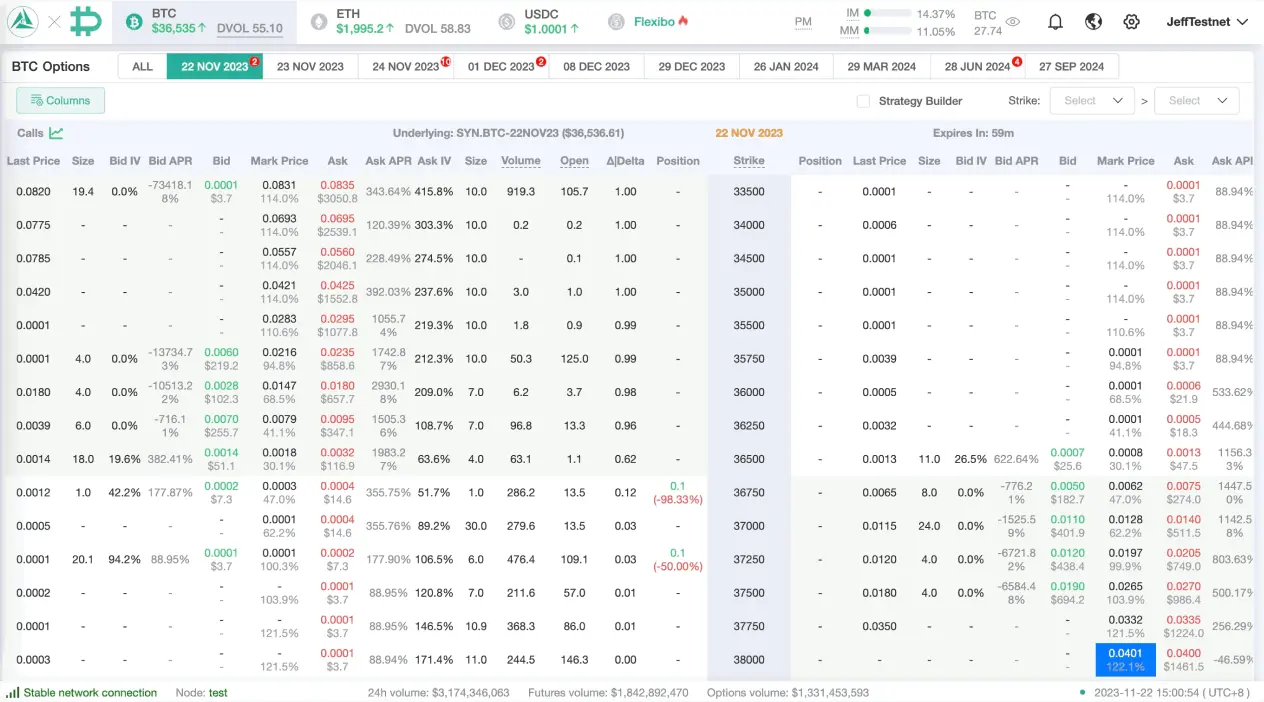
Consider the dynamic sizing of a Bitcoin Options Block. A sophisticated EMS, powered by a real-time market impact model, continuously evaluates the available liquidity across multiple venues ▴ both lit exchanges and OTC desks. The model might incorporate factors such as the current implied volatility surface, historical volume profiles for specific strikes and expiries, and the observed order flow imbalance. If the model detects an uptick in liquidity for a particular options contract at a favorable price, it can dynamically adjust the size of the child order sent to that venue, maximizing price capture while minimizing market impact.
The quantitative modeling and data analysis underpinning these execution decisions are extensive. Market impact functions often follow a power law, such as the square-root law, where impact scales with the square root of the trade size. However, more advanced models account for nuances such as order aggressiveness, duration of execution, and the elasticity of the order book. These models are typically calibrated using vast historical tick data, employing econometric techniques to estimate parameters that capture temporary and permanent impact components.
An in-depth aspect of block trade sizing involves the real-time adaptation of order placement strategies, a critical function for managing unforeseen market shifts.
- Initial Sizing Calibration ▴ Begin with a pre-trade analysis, leveraging a market impact model to determine an initial optimal execution schedule for the entire block, considering the desired completion time and acceptable slippage.
- Real-Time Liquidity Monitoring ▴ Continuously monitor order book depth, bid-ask spreads, and trade volumes across all relevant execution venues. Integrate real-time intelligence feeds to detect sudden shifts in liquidity or significant order imbalances.
- Dynamic Price Impact Recalculation ▴ As market conditions evolve, the market impact model recalibrates its predictions. For instance, an unexpected large order from another participant might deplete liquidity, necessitating a downward adjustment to subsequent child order sizes.
- Adaptive Order Placement ▴ The execution algorithm dynamically modifies child order sizes and prices based on the recalibrated market impact. This could involve increasing order size during periods of high liquidity, or reducing it and seeking dark pools during periods of low liquidity to minimize footprint.
- Information Leakage Control ▴ Employ strategies to mitigate adverse selection, such as randomizing order submission times or using iceberg orders, where only a small portion of the total order is visible.
- Post-Trade Analysis Feedback ▴ Continuously feed execution quality metrics (e.g. realized slippage, spread capture) back into the market impact model for ongoing refinement and calibration. This iterative process ensures the model remains robust and predictive.
The table below illustrates a hypothetical execution scenario for a large block trade, demonstrating how dynamic sizing decisions are made based on real-time market impact calculations.
| Time Interval | Available Liquidity (USD) | Market Impact Estimate (bps) | Child Order Size (USD) | Execution Venue |
|---|---|---|---|---|
| 09:00 – 09:15 | 5,000,000 | 2.5 | 750,000 | Lit Exchange A |
| 09:15 – 09:30 | 3,500,000 | 4.0 | 400,000 | Lit Exchange A, Dark Pool B |
| 09:30 – 09:45 | 6,000,000 | 2.0 | 1,000,000 | Lit Exchange C |
| 09:45 – 10:00 | 2,000,000 | 6.0 | 250,000 | RFQ Desk D |
System integration and technological architecture are foundational to this process. Low-latency connectivity to multiple trading venues via protocols like FIX (Financial Information eXchange) is essential for real-time data ingestion and order routing. The EMS must seamlessly integrate with order management systems (OMS) for position tracking and risk limits, and with internal data lakes for historical analysis and model calibration. This holistic ecosystem allows for continuous feedback loops, ensuring that the market impact models are not static but adapt and improve with every executed trade.
The involvement of expert human oversight, or “System Specialists,” complements the algorithmic execution. For exceptionally large or complex block trades, these specialists monitor the performance of the algorithms, intervene when unforeseen market events occur, and make discretionary adjustments to sizing parameters or venue selection. Their expertise in interpreting real-time intelligence feeds, combined with the predictive power of market impact models, forms a formidable operational capability, providing a decisive edge in managing block trade execution.

References
- Almgren, R. & Chriss, N. (2001). Optimal Execution of Large Orders. Risk, 14(10), 97-102.
- Bouchaud, J.-P. Farmer, J. D. Lillo, F. & Waelbroeck, H. (2004). The market impact of large trading orders ▴ Correlated order flow, asymmetric liquidity and efficient prices. UC Berkeley Haas.
- Cartea, A. Jaimungal, A. & Penalva, J. (2015). Algorithmic and High-Frequency Trading. Cambridge University Press.
- Hasbrouck, J. (2006). Empirical Market Microstructure ▴ The Institutions, Economics, and Econometrics of Securities Trading. Oxford University Press.
- Holthausen, R. W. Leftwich, R. W. & Mayers, D. (1990). The Effect of Large Block Transactions on Security Prices ▴ A Cross-Sectional Analysis. Journal of Financial Economics, 19(2), 237-268.
- Kyle, A. S. (1985). Continuous Auctions and Insider Trading. Econometrica, 53(6), 1315-1335.
- Lehalle, C.-A. & Laruelle, S. (2014). Market Microstructure in Practice. World Scientific Publishing Company.
- O’Hara, M. (1995). Market Microstructure Theory. Blackwell Publishers.
- Obizhaeva, A. A. & Wang, J. (2013). Optimal Trading Strategies with Transient Market Impact. The Journal of Finance, 68(1), 261-301.

Mastering the Market’s Invisible Hand
Reflecting on the pervasive influence of market impact models on block trade sizing reveals a deeper truth about modern market operations. The strategic deployment and precise execution guided by these analytical constructs represent a fundamental shift in how institutional capital navigates liquidity. This shift moves beyond simple rule-based trading, moving towards a dynamic, adaptive intelligence layer that constantly re-evaluates optimal pathways for order placement.
Consider your own operational framework ▴ are your execution protocols merely reactive, or do they proactively anticipate market response? The true value of sophisticated market impact modeling resides in its capacity to transform uncertainty into quantifiable risk, thereby enabling more informed and decisive action. This is not merely about avoiding adverse price movements; it is about building a structural advantage that compounds over every transaction.
The ability to accurately forecast and mitigate market impact becomes a cornerstone of any institution’s pursuit of superior execution and capital efficiency. This knowledge, when integrated into a robust technological architecture and complemented by expert human judgment, forms a powerful operational framework. The journey toward mastering market mechanics is continuous, demanding constant refinement of models and processes. This ongoing evolution is precisely what defines a leading-edge trading operation, securing a persistent strategic advantage in the intricate dance of supply and demand.

Glossary

Block Trade Sizing

Market Impact

Market Impact Models

Order Book Dynamics

Capital Efficiency

Market Impact Model

Block Trading

Market Microstructure

Optimal Execution

Block Trade Sizing Decisions

Impact Models

Pre-Trade Analysis

These Models

Large Order

Order Book

Adverse Selection

Trade Sizing

Trade Sizing Decisions

Sizing Decisions

Block Trade

Execution Management Systems

Child Order

Impact Model