

Decoding Market Dynamics
Institutional principals operating within the options markets understand that every large transaction is an engagement with a complex adaptive system. The mere act of initiating a significant options block trade sends ripples through the market, often revealing strategic intent to sophisticated participants. Market microstructure models provide the critical intelligence framework for understanding these underlying forces, translating raw transactional data into actionable insights for superior execution. These models dissect the intricate mechanics of price formation, liquidity dynamics, and information flow at the granular level, offering a lens into the subtle interplay of orders, quotes, and participant behaviors.
The challenge in executing options block trades extends beyond merely finding a counterparty; it encompasses mitigating adverse selection and minimizing market impact, both of which are direct consequences of the market’s microstructure. Information asymmetry, a fundamental concept in market microstructure, describes situations where one party possesses more accurate knowledge than another. This imbalance can lead to a less informed party facing disadvantageous terms.
In the context of block trading, the very presence of a large order can signal information to other market participants, prompting them to adjust their strategies. This signaling effect, sometimes referred to as information leakage, can result in front-running or other predatory behaviors that erode execution quality.
Market microstructure models offer an essential framework for dissecting the complex interplay of orders, quotes, and participant behaviors that shape options pricing and liquidity.
Options markets present unique microstructure complexities compared to equities, largely due to their derivative nature and the multi-dimensional aspects of pricing. An option’s price depends not only on the underlying asset’s price but also on volatility, time to expiration, and interest rates. This multifaceted dependency creates a richer, more fragmented liquidity landscape.
Understanding the bid-ask spread, the depth of the order book, and the latency involved in information dissemination becomes paramount for any institution seeking to transact large options positions efficiently. These elements collectively dictate the immediate costs and potential impact of a trade, making a deep understanding of market microstructure indispensable for achieving optimal outcomes.


Strategic Deployment for Liquidity Capture
Navigating the intricate landscape of options block trade execution requires a strategic approach informed by a deep understanding of market microstructure. Institutional traders deploy various strategies to manage the inherent challenges of liquidity, price impact, and information leakage. The strategic imperative centers on securing the most favorable terms for a large order without unduly influencing market prices or revealing too much about the firm’s directional intent. This involves a calculated choice of execution venues and protocols, each offering distinct advantages and disadvantages depending on market conditions and the specific options strategy being employed.
One primary strategic pathway involves the utilization of Request for Quote (RFQ) protocols, particularly in over-the-counter (OTC) or off-exchange environments. An RFQ system allows an institutional investor to solicit competitive bids and offers from multiple liquidity providers simultaneously for a specific options block trade. This bilateral price discovery mechanism provides several strategic benefits:
- High-Fidelity Execution for Multi-Leg Spreads ▴ RFQ platforms are particularly effective for executing complex options strategies involving multiple legs, such as spreads, butterflies, or condors. The ability to receive a single, executable price for the entire multi-leg strategy significantly reduces “leg risk,” where individual legs might fill at unfavorable prices or fail to fill at all. This integrated pricing ensures the desired risk-reward profile of the spread is preserved.
- Discreet Protocols for Private Quotations ▴ The RFQ process inherently offers a higher degree of discretion compared to placing orders on a lit exchange. By engaging directly with a select group of liquidity providers, institutions can minimize the signaling effect of their large order, thus reducing the potential for adverse price movements caused by other market participants reacting to their activity. This private negotiation helps preserve alpha.
- System-Level Resource Management with Aggregated Inquiries ▴ Institutional platforms often facilitate aggregated inquiries, allowing a single request to reach a broad network of market makers. This efficient resource management streamlines the price discovery process, ensuring access to diverse liquidity pools without manual, time-consuming outreach to individual counterparties. It transforms a potentially fragmented search into a consolidated, competitive process.
Beyond RFQ, strategic considerations also encompass the timing of trades, the sizing of individual order components, and the choice between passive (limit orders) and aggressive (market orders) execution styles. Microstructure models inform these decisions by providing insights into the current liquidity profile of the options contract, predicting short-term volatility, and estimating potential market impact costs. For instance, a model might indicate that liquidity is thin for a particular strike or expiration, prompting a trader to utilize an RFQ or break down a block into smaller, less impactful child orders over a longer period.
Strategic execution in options block trading prioritizes discretion and efficient price discovery, leveraging RFQ protocols to mitigate information leakage and secure competitive pricing across multiple liquidity providers.
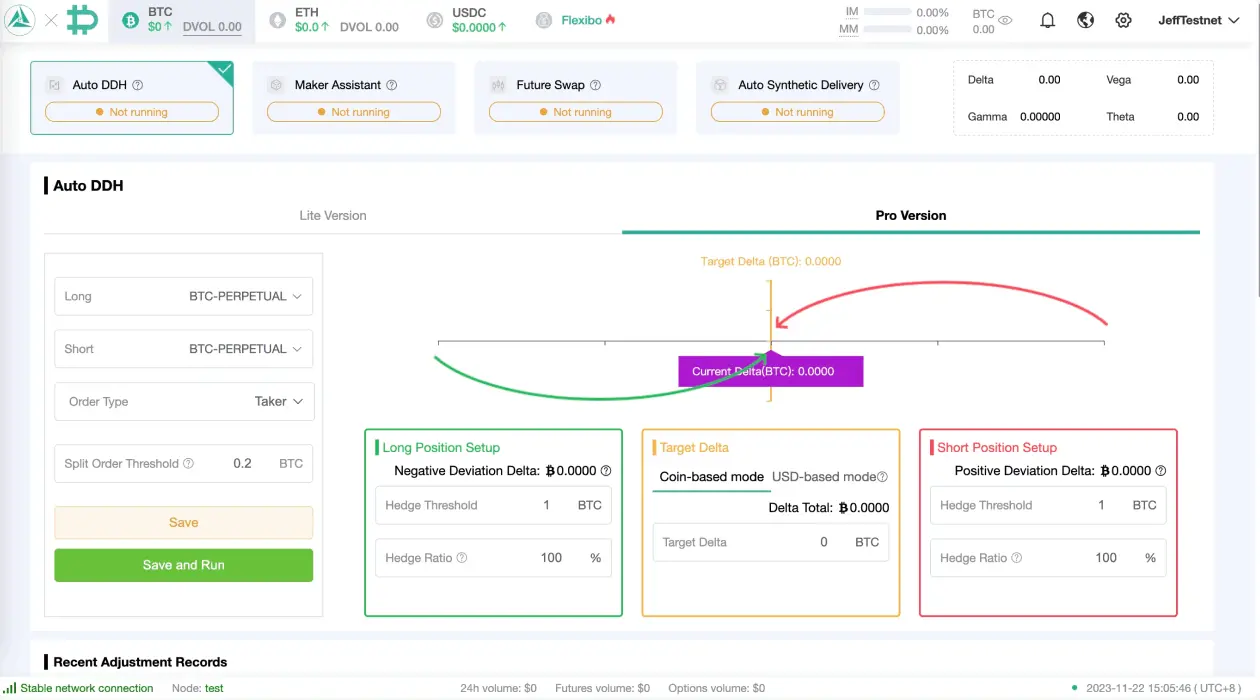
The strategic interplay between advanced trading applications and the intelligence layer further refines execution tactics. Automated Delta Hedging (DDH) mechanisms, for example, rely on real-time market data and microstructure insights to continuously adjust the hedge of an options position. This dynamic rebalancing minimizes delta risk exposure, a critical component of options portfolio management. The sophistication of these systems means that strategic decisions are not static but adapt to prevailing market conditions, often with minimal human intervention once parameters are set.
Another strategic dimension involves managing the trade-off between execution speed and market impact. Rapid execution of a large block trade often leads to higher temporary market impact, pushing prices against the trader. Conversely, slower execution, while reducing immediate impact, exposes the position to greater price risk over time.
Microstructure models quantify these trade-offs, allowing portfolio managers to select an optimal execution trajectory that aligns with their risk tolerance and investment horizon. The selection of an appropriate algorithm, whether a Volume Weighted Average Price (VWAP) or an Implementation Shortfall (IS) strategy, depends heavily on these model-derived insights into market behavior.


Operationalizing Optimal Trade Placement
The operationalization of options block trade execution, informed by market microstructure models, moves beyond conceptual understanding into precise, quantifiable mechanics. This stage demands a rigorous, data-driven approach to ensure superior execution quality and capital efficiency. Institutional desks leverage sophisticated algorithms and analytical frameworks to navigate the complex interplay of liquidity, price impact, and information dynamics inherent in large options transactions.

The Operational Playbook
Executing options block trades effectively requires a multi-step procedural guide, a structured approach that minimizes adverse outcomes while maximizing value capture. The following outlines a typical operational playbook for institutional traders, emphasizing pre-trade analysis, execution protocol selection, and post-trade evaluation.
- Pre-Trade Liquidity and Impact Analysis ▴
- Liquidity Assessment ▴ Evaluate the available liquidity for the specific options contract across various venues (e.g. lit exchanges, dark pools, OTC desks). This involves analyzing historical order book depth, average daily volume, and bid-ask spreads. Microstructure models provide predictive insights into future liquidity states.
- Market Impact Estimation ▴ Quantify the expected temporary and permanent market impact of the proposed block trade. Models such as Almgren-Chriss, or more advanced non-linear impact functions, estimate the price concession required to execute a given volume within a specified timeframe.
- Information Leakage Risk Evaluation ▴ Assess the potential for information leakage based on the trade size, instrument rarity, and chosen execution channel. Larger, less common options contracts carry a higher risk of signaling.
- Execution Protocol Selection ▴
- RFQ Protocol ▴ For large, complex, or illiquid options, initiating a Request for Quote (RFQ) is often the preferred method. This involves sending a discrete inquiry to a curated list of liquidity providers, securing competitive, firm prices.
- Algorithmic Execution ▴ Employ advanced algorithms for smaller components of a block or for continuous hedging. Algorithms such as VWAP (Volume Weighted Average Price), TWAP (Time Weighted Average Price), or Implementation Shortfall (IS) are selected based on the specific trade objectives and market conditions.
- Dark Pools and Block Facilities ▴ Utilize off-exchange venues designed for large orders to minimize market impact and information leakage. These venues offer anonymity and often facilitate price improvement away from the public order book.
- Real-Time Monitoring and Adjustment ▴
- Execution Performance Tracking ▴ Monitor the execution in real-time against pre-defined benchmarks (e.g. arrival price, VWAP). Automated systems alert traders to deviations or unexpected market impact.
- Market Condition Adaptation ▴ Dynamically adjust execution parameters (e.g. participation rate, order size, venue routing) in response to real-time market microstructure changes, such as sudden shifts in volatility or liquidity.
- Post-Trade Transaction Cost Analysis (TCA) ▴
- Performance Attribution ▴ Measure the actual transaction costs incurred against the estimated costs and benchmarks. This includes explicit costs (commissions, fees) and implicit costs (market impact, opportunity cost).
- Model Refinement ▴ Use TCA results to refine and improve market microstructure models and execution algorithms, creating a feedback loop for continuous optimization.
This systematic approach ensures that every facet of the trade lifecycle is meticulously managed, from initial analysis to final evaluation, translating theoretical models into practical, superior execution.

Quantitative Modeling and Data Analysis
Quantitative modeling forms the bedrock of informed options block trade execution, providing the analytical rigor necessary to navigate market complexities. These models process vast datasets to predict market behavior and quantify execution costs.
A central element is the market impact model, which estimates the price movement caused by a trade. For options, this is more complex than for equities due to their non-linear payoff structures and sensitivity to volatility. Models typically decompose market impact into temporary and permanent components. Temporary impact reflects the immediate pressure on the bid-ask spread, while permanent impact represents the information conveyed to the market by the trade, leading to a lasting price shift.
Consider the Almgren-Chriss framework, a foundational model in optimal execution, adapted for options. It balances the trade-off between market impact and price risk over a liquidation horizon. The optimal execution trajectory minimizes the expected cost, which includes the cost of market impact and the risk from adverse price movements.
Quantitative models serve as the analytical engine, translating complex market data into precise predictions of price behavior and execution costs for optimal trade placement.
The calculation for market impact often involves parameters derived from empirical analysis of historical trading data. These parameters quantify how order size, duration, and market conditions influence price.
| Parameter | Description | Value Range | Impact on Cost |
|---|---|---|---|
| Temporary Impact Coefficient (γ) | Measures immediate price concession per unit volume. | 0.001 – 0.005 | Directly proportional to order size. |
| Permanent Impact Coefficient (η) | Measures lasting price shift per unit volume. | 0.0001 – 0.0005 | Influences long-term P&L. |
| Volatility (σ) | Underlying asset’s price fluctuation. | 0.15 – 0.40 | Higher volatility increases price risk. |
| Liquidity Depth (L) | Volume available at best bid/offer. | 100 – 10,000 contracts | Inversely related to temporary impact. |
These parameters are dynamic, continuously updated using real-time market data. Predictive models, often employing machine learning techniques, forecast short-term liquidity and volatility, enabling algorithms to adapt execution strategies proactively. For example, a model might predict a sudden increase in liquidity due to an upcoming economic announcement, prompting an acceleration of a block trade’s execution.

Predictive Scenario Analysis
Consider an institutional portfolio manager seeking to liquidate a substantial position of 5,000 call options on a highly liquid equity ETF, with an expiry three weeks out. The current market price of the ETF is $200, and the call options have a strike price of $205, trading at a premium of $3.50. The total notional value of this block trade is $1,750,000 (5,000 contracts 100 shares/contract $3.50/share). The manager’s objective is to minimize implementation shortfall, executing the trade within the next four hours, while minimizing information leakage.
Initial pre-trade analysis, leveraging market microstructure models, reveals a few critical insights. The average daily volume for this specific options series is approximately 15,000 contracts, indicating that a 5,000-contract block represents a significant portion (roughly 33%) of typical daily flow. The current bid-ask spread on the lit exchange is $0.05 ($3.48 bid, $3.53 offer), but the available depth at the best bid is only 500 contracts. This immediately highlights the challenge ▴ attempting to execute the entire block on the lit market would result in substantial temporary market impact, driving the price down rapidly.
The predictive model also forecasts a 15% probability of a significant market-moving news event related to the underlying ETF within the next two hours, which could introduce heightened volatility. This necessitates a strategy that can adapt quickly or mitigate the risk of adverse price swings. Furthermore, the model estimates a potential information leakage cost of $0.08 per contract if the trade is executed aggressively on public venues, due to sophisticated high-frequency trading firms front-running the observed order flow.
Based on these insights, the “Systems Architect” proposes a hybrid execution strategy. The core of the strategy involves an initial Request for Quote (RFQ) for 3,000 contracts, directed to five pre-qualified liquidity providers known for their deep options liquidity. This off-exchange bilateral price discovery mechanism aims to secure a significant portion of the block with minimal information leakage and reduced market impact. The RFQ is structured to solicit firm, executable prices for the entire 3,000-contract lot, with a maximum acceptable price concession of $0.03 per contract from the current mid-price.
Concurrently, a smaller portion of the block, say 500 contracts, is designated for execution via an intelligent algorithmic order on the lit exchange. This algorithm is designed with a low participation rate (e.g. 5% of observed volume) and employs stealth tactics, such as iceberg orders and dynamic pegging, to minimize its footprint. The algorithm’s parameters are dynamically adjusted by the microstructure model, which continuously monitors order book depth and incoming order flow.
If the model detects an influx of passive liquidity, the algorithm’s participation rate might temporarily increase to capture favorable fills. Conversely, if liquidity thins or adverse order flow is detected, the algorithm reduces its activity or pauses execution.
The remaining 1,500 contracts are held back as a discretionary reserve. The decision to deploy this reserve, and the method of deployment, hinges on the outcome of the initial RFQ and the real-time market conditions. If the RFQ yields competitive prices and sufficient fills, the reserve might be executed through subsequent RFQs or via a more aggressive algorithm if market volatility subsides. If the RFQ is less successful, the reserve could be routed to an alternative block trading facility or worked more patiently through the lit market with a highly adaptive algorithm over a longer timeframe.
Two hours into the execution, the RFQ yields a fill for 2,800 contracts at an average price of $3.49, representing a $0.01 price improvement over the pre-trade mid-price, net of bid-ask spread. The algorithmic order on the lit exchange has filled 450 contracts at an average price of $3.47. The market-moving news event did not materialize, and implied volatility remained stable. With 1,750 contracts remaining, the market microstructure model now suggests a slight increase in passive liquidity on the lit exchange.
The “Systems Architect” decides to deploy 1,000 contracts of the reserve through the same stealth algorithm, increasing its participation rate slightly to 8%. The remaining 750 contracts are held for a final RFQ if the algorithmic execution proves too slow or costly.
Ultimately, the trade is completed within the four-hour window. The RFQ component secured a significant portion with minimal impact. The algorithmic portion on the lit market captured available liquidity efficiently.
Post-trade analysis reveals an overall implementation shortfall of $0.04 per contract, significantly lower than the $0.12 predicted by a purely lit-market, aggressive execution scenario. This outcome underscores the value of integrating market microstructure insights with a multi-pronged, adaptive execution strategy.

System Integration and Technological Architecture
The efficacy of options block trade execution hinges on a robust technological architecture and seamless system integration. This infrastructure acts as the nervous system, channeling market intelligence and executing complex instructions with precision and speed.
At the core lies the Order Management System (OMS) and Execution Management System (EMS). The OMS handles the lifecycle of an order, from inception to allocation, while the EMS focuses on optimal routing and execution across various venues. For options, these systems must be highly specialized to manage multi-leg strategies, complex risk parameters, and the unique messaging requirements of derivatives markets.
Integration points are critical for real-time data flow and instruction execution. The Financial Information eXchange (FIX) protocol serves as the universal language for electronic trading, facilitating communication between institutional clients, brokers, exchanges, and liquidity providers. For options RFQ, specific FIX message types (e.g. NewOrderSingle, QuoteRequest, Quote ) are utilized to manage the entire lifecycle of a bilateral price discovery.
The technological stack supporting this process includes:
- Low-Latency Market Data Feeds ▴ Real-time feeds providing bid-ask quotes, order book depth, and trade prints across all relevant options exchanges and OTC venues. These feeds are the lifeblood for microstructure models.
- Quantitative Analytics Engine ▴ A dedicated computational module that houses market impact models, optimal execution algorithms, and predictive analytics. This engine processes market data to generate real-time execution recommendations and risk assessments.
- Smart Order Router (SOR) ▴ An intelligent system that dynamically routes orders to the most advantageous venue based on real-time liquidity, price, and execution costs, often incorporating microstructure model outputs.
- Connectivity to Multi-Dealer RFQ Platforms ▴ Direct API endpoints or FIX connections to specialized RFQ platforms (e.g. Tradeweb, CME Globex) for soliciting private quotations for block trades.
- Automated Hedging Systems ▴ Modules for Automated Delta Hedging (DDH) that automatically adjust underlying asset positions to maintain a desired delta exposure for options portfolios.
- Risk Management and Compliance Modules ▴ Systems for pre-trade risk checks (e.g. position limits, credit limits) and post-trade compliance monitoring, ensuring adherence to regulatory requirements and internal policies.
API endpoints are crucial for programmatic access and customization. Institutional clients often integrate their internal systems with broker APIs to submit orders, receive fills, and access market data programmatically. This allows for bespoke algorithmic strategies and seamless data ingestion for internal analytics.
For instance, a firm’s proprietary options pricing model might feed real-time volatility surface data directly into the EMS via an API, informing dynamic hedging adjustments. The architectural design emphasizes resilience, scalability, and security, recognizing the high stakes involved in institutional trading.
The ability to integrate these disparate systems into a cohesive, high-performance operational framework defines the institutional advantage. This integration transforms theoretical microstructure insights into practical, real-time execution capabilities, allowing for agile responses to market shifts and robust management of large, complex options positions.

References
- Almgren, R. & Chriss, N. (2001). Optimal Execution of Large Orders. Risk, 14(10), 97-102.
- Guéant, O. (2014). Execution and Block Trade Pricing with Optimal Constant Rate of Participation. Journal of Mathematical Finance, 4(4), 255-264.
- Harris, L. (2003). Trading and Exchanges ▴ Market Microstructure for Practitioners. Oxford University Press.
- O’Hara, M. (1999). Market Microstructure Theory. Blackwell Publishers.
- Kyle, A. S. (1985). Continuous Auctions and Insider Trading. Econometrica, 53(6), 1315-1335.
- Gârleanu, N. & Pedersen, L. H. (2013). Dynamic Trading with Inventory Costs. Journal of Finance, 68(6), 2393-2421.
- Bertsimas, D. & Lo, A. W. (1198). Optimal Control of Execution Costs. Journal of Financial Markets, 1(1), 1-50.
- Cont, R. & Maglaras, C. (2020). Stochastic Market Microstructure Models of Limit Order Books. Columbia University / University of Oxford Presentation.
- Foucault, T. Pagano, M. & Röell, A. A. (2013). Market Liquidity ▴ Theory, Evidence, and Policy. Oxford University Press.
- Madhavan, A. (2002). Market Microstructure ▴ A Survey. Journal of Financial Markets, 5(3), 205-258.

Mastering the Subtleties of Flow
The journey through market microstructure models for options block trade execution ultimately reveals a deeper truth ▴ market mastery is an ongoing commitment to understanding the subtle, often invisible, forces that govern price and liquidity. Every executed block trade serves as a data point, an opportunity to refine one’s models and sharpen one’s operational edge. This is not a static pursuit; rather, it demands continuous adaptation to evolving market structures, technological advancements, and the strategic behaviors of other participants. The frameworks discussed herein, from quantitative impact models to the strategic deployment of RFQ protocols, are components within a larger, dynamic system of intelligence.
Consider how your firm’s current operational architecture processes information, identifies liquidity, and manages risk. Does it merely react to market movements, or does it anticipate them, leveraging a predictive understanding of microstructure? The ability to translate theoretical insights into tangible, real-time execution advantages distinguishes leading institutions.
This constant feedback loop, where execution data informs model refinement and refined models drive superior execution, forms the core of a truly sophisticated trading operation. Empowering your team with this systemic understanding fosters a culture of continuous optimization, ensuring that every trade contributes to a deeper mastery of the market’s intricate flow.

Glossary

Market Microstructure Models

Options Block Trade

Market Microstructure

Market Impact

Information Leakage

Order Book

Options Block Trade Execution

Market Conditions

Liquidity Providers

Price Discovery

Multi-Leg Spreads

Lit Exchange

Microstructure Models

Delta Hedging

Market Data

Block Trade

Optimal Execution

Average Price

Block Trade Execution

Options Block

Algorithmic Execution

Transaction Cost Analysis

Trade Execution

Market Impact Models