

Capital Efficiency for Market Makers
Market makers in the nascent yet rapidly maturing crypto options sphere confront a unique confluence of volatility, fragmentation, and the imperative for precise risk management. The prevailing question for these sophisticated participants revolves around optimizing the deployment of capital to sustain liquidity and capture spread without undue exposure. Achieving this objective hinges upon the strategic implementation of Request for Quote protocols. RFQ systems represent a fundamental shift in how large-scale, bespoke options trades are facilitated, moving beyond the limitations inherent in public order book mechanisms.
RFQ platforms enable market makers to calibrate their liquidity provision with surgical precision, offering tailored pricing that reflects a dynamic assessment of underlying asset volatility, hedging costs, and available inventory. This structured engagement directly addresses the core challenge of capital efficiency by mitigating slippage and front-running risks, which erode profitability and necessitate higher capital reserves. RFQ mechanisms create a direct conduit for price discovery between a liquidity seeker and multiple professional market makers, fostering a competitive environment that yields optimal pricing and superior execution quality. The ability to engage in private, bilateral price negotiations allows market makers to manage their inventory and risk exposure more effectively, reducing the need to post broad, passive quotes on public order books that are susceptible to adverse selection.
This discrete approach minimizes information leakage, a critical factor in volatile markets where every tick can represent significant value. RFQ protocols, therefore, stand as a foundational element for institutional participants aiming to achieve a superior operational edge and robust capital management in the complex world of crypto options.
RFQ protocols allow market makers to provide tailored quotes, reducing slippage and enhancing capital utilization in crypto options markets.
The inherent design of RFQ systems offers a distinct advantage by allowing market makers to engage with order flow that is specific and actionable. This contrasts sharply with the often-opaque nature of public order books, where a market maker commits capital to a two-sided quote without prior knowledge of the counterparty’s intent or the size of the impending order. RFQ processes empower market makers to respond to explicit requests for liquidity, enabling them to factor in real-time market conditions, their current risk book, and the precise characteristics of the option contract requested. This responsiveness facilitates a more dynamic allocation of capital, as commitments are made only when a viable and profitable opportunity presents itself.
The capacity for selective liquidity provision ensures that capital is not idly deployed or exposed to unnecessary market fluctuations, thereby maximizing its productive use. RFQ environments further support the aggregation of inquiries, allowing market makers to assess cumulative demand across various option strikes and expiries. This aggregated view provides a clearer picture of market sentiment and potential imbalances, informing more strategic quoting decisions. Ultimately, the systematic deployment of RFQ protocols transforms capital from a static resource into a highly agile and intelligently deployed instrument, underpinning the sophisticated operational frameworks required for sustained profitability in crypto options.

Market Microstructure Dynamics and Liquidity Channels
Understanding the intricacies of market microstructure provides essential context for RFQ protocols’ impact on capital efficiency. Crypto options markets, characterized by their 24/7 operation and fragmented liquidity across various venues, present unique challenges for market makers. The bid-ask spread, a primary revenue source for market makers, directly correlates with market liquidity and volatility. RFQ systems inherently address this by enabling market makers to quote tighter spreads for larger, institutional-sized trades, where public order books might exhibit significant depth dislocations or wide spreads.
This direct negotiation bypasses the implicit costs associated with public markets, such as order book impact and potential front-running, which can disproportionately affect large block orders. The ability to source off-exchange liquidity through RFQ channels supplements the liquidity available on centralized exchanges and decentralized protocols, creating a more resilient and interconnected market ecosystem. This multi-venue approach to liquidity sourcing ensures that market makers can always find a counterparty, even for less liquid options contracts, without incurring substantial price impact. The structural benefits of RFQ extend to price discovery, allowing for more precise valuations for complex multi-leg options strategies that might be difficult to price accurately or execute efficiently on a standard order book. RFQ, therefore, acts as a critical mechanism for enhancing the overall health and efficiency of the crypto options market microstructure, providing a robust framework for capital deployment and risk mitigation.

Optimizing Risk Exposure and Capital Allocation
The judicious management of risk stands as a cornerstone for market makers, particularly when deploying substantial capital in the volatile crypto options landscape. RFQ protocols offer a refined mechanism for controlling risk exposure by enabling market makers to tailor their quotes based on their current inventory, delta, gamma, and vega sensitivities. When a market maker receives an RFQ, they perform an instantaneous risk assessment, evaluating how the potential trade would impact their overall portfolio. This real-time analysis allows them to price the option accordingly, either widening the spread for riskier trades or tightening it for those that align with their existing hedging strategies.
The discrete nature of RFQ transactions means that market makers are not forced to publicly display quotes that might expose their risk appetite or directional bias to the broader market. This element of privacy reduces the potential for adverse selection, where informed traders might exploit a market maker’s displayed quotes. By selectively engaging with liquidity requests, market makers can optimize their capital allocation, directing resources towards trades that offer the most favorable risk-reward profiles. This disciplined approach ensures that capital is deployed efficiently, generating maximum return while maintaining a controlled risk posture. The flexibility inherent in RFQ systems also allows for rapid adjustments to quoting parameters in response to sudden market shifts, ensuring that capital remains protected even during periods of extreme volatility.


Strategic Frameworks for Liquidity Provision
The strategic deployment of RFQ protocols fundamentally redefines how market makers approach liquidity provision in crypto options. This sophisticated engagement moves beyond merely quoting prices; it represents a deliberate and nuanced strategy for managing capital, mitigating systemic risks, and securing a decisive competitive advantage. RFQ mechanisms enable market makers to actively seek out and respond to specific liquidity demands, allowing for a more targeted and efficient use of their balance sheet. This proactive stance contrasts with the passive approach of continuously posting bids and offers on an open order book, which can expose capital to unwanted directional risk and information leakage.
The strategic advantage of RFQ lies in its capacity for bilateral price discovery, where market makers can leverage their proprietary pricing models and real-time risk assessments to formulate highly competitive yet risk-adjusted quotes. This dynamic pricing capability ensures that each unit of deployed capital is working optimally, generating returns commensurate with the calculated risk. RFQ platforms further facilitate the execution of complex, multi-leg options strategies, such as straddles, strangles, or butterflies, which often require simultaneous execution across multiple strikes and expiries. The ability to price and execute these composite instruments as a single atomic transaction through an RFQ minimizes leg risk and improves overall capital efficiency. Market makers can thereby cater to a broader spectrum of institutional client needs, solidifying their position as preferred liquidity partners.

Advanced Quoting Mechanics and Risk Profiling
A sophisticated market maker employs advanced quoting mechanics within an RFQ framework to optimize capital efficiency. This involves more than simply offering a bid and an ask; it requires a deep understanding of option pricing theory, real-time market data, and an accurate assessment of the inherent risks. Market makers utilize complex algorithms to generate quotes that reflect the implied volatility surface, the underlying asset’s spot price, interest rates, and time to expiry. The quote generation process is dynamically adjusted based on the market maker’s current inventory position, their risk limits, and the perceived toxicity of the order flow.
For instance, if a market maker is already net short a particular option, they might offer a wider spread on a new sell quote to disincentivize further accumulation of that position, or a tighter spread on a buy quote to rebalance their book. This intelligent quoting mechanism ensures that capital is deployed strategically, either to profit from favorable market conditions or to actively manage and reduce existing risk exposures. The private nature of RFQ negotiations allows market makers to experiment with more aggressive or conservative pricing strategies without revealing their hand to the broader market. This tactical flexibility is paramount for maintaining a competitive edge and preserving capital in highly contested markets.
Consider a market maker receiving an RFQ for a large block of out-of-the-money call options on Ethereum. Their internal models immediately assess the current implied volatility, the historical volatility of Ethereum, and the correlation with other assets in their portfolio. They also evaluate their existing delta, gamma, and vega exposure. If their book is already long gamma, they might offer a more competitive price for a call option that would help to flatten their gamma profile.
Conversely, if their vega exposure is high, they might adjust the quote to reflect the increased risk associated with a potential surge in volatility. This granular level of risk profiling and dynamic adjustment is a hallmark of efficient capital deployment within an RFQ ecosystem.

Delta Hedging Automation for Portfolio Resilience
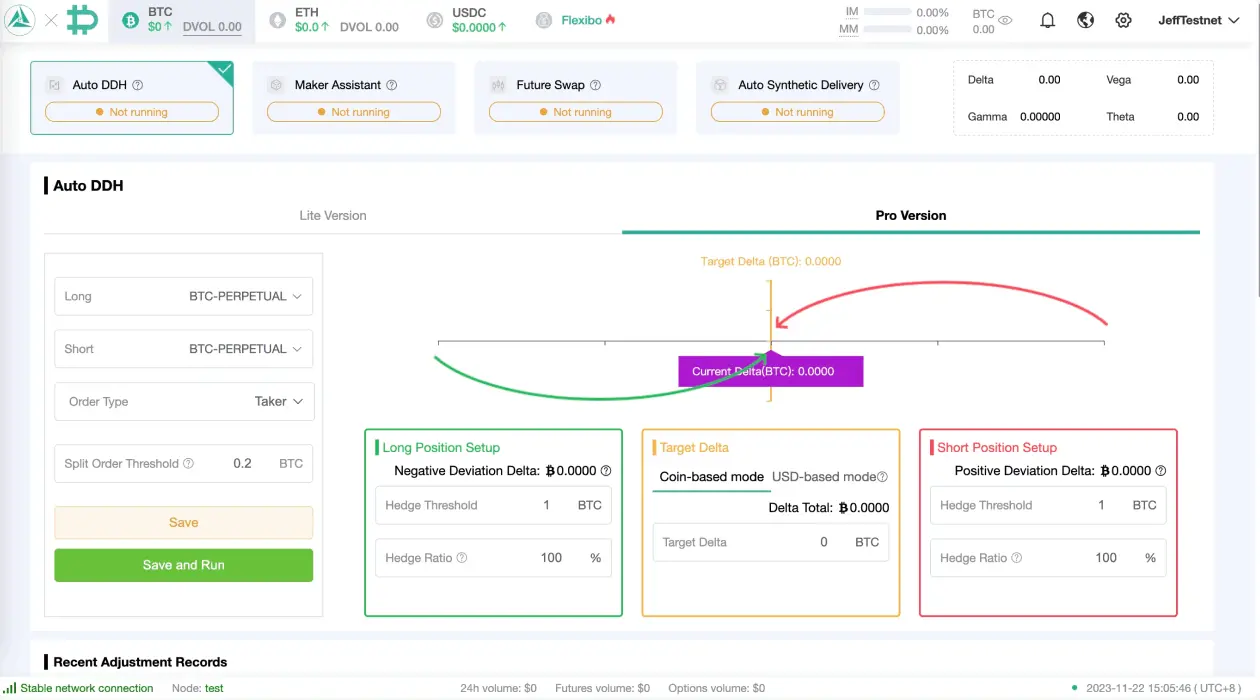
The implementation of automated delta hedging systems forms a critical component of a market maker’s strategy for capital efficiency within RFQ environments. Delta hedging aims to neutralize the directional risk of an options portfolio by taking offsetting positions in the underlying asset, such as spot crypto or futures contracts. For market makers, who constantly acquire and divest options, maintaining a delta-neutral or near delta-neutral book is paramount to protect capital from adverse price movements in the underlying asset. Automated systems continuously monitor the delta of the entire options portfolio and execute corresponding trades in the underlying asset to rebalance the position.
This algorithmic approach ensures that hedges are placed with minimal latency and transaction costs, which directly contributes to capital preservation. In an RFQ context, a market maker can integrate their delta hedging system directly into their quoting engine. As they provide a quote for an option, the system simultaneously calculates the required hedge and factors its cost into the quoted price. This integrated approach allows for more precise pricing and reduces the operational overhead associated with manual hedging, freeing up capital that would otherwise be held as a buffer against unhedged directional risk. The continuous, low-latency rebalancing afforded by automated delta hedging allows market makers to operate with a significantly lower Value at Risk (VaR), enabling them to deploy a larger portion of their capital for active market making.
Automated delta hedging systems continuously rebalance options portfolios, minimizing directional risk and enhancing capital efficiency.
Cross-exchange hedging further enhances capital efficiency by enabling market makers to leverage liquidity across different venues. If an options trade is executed on one exchange via an RFQ, the corresponding delta hedge might be placed on another exchange where liquidity is deeper or execution costs are lower. This cross-venue optimization reduces the overall cost of hedging, thereby improving the profitability of the options trade and enhancing the efficient use of capital. Dynamic inventory management also plays a pivotal role.
Market makers continuously adjust their bid and ask quotes based on their current inventory levels. If they accumulate an excess of a particular option, they might widen their bid-ask spread for that option or offer more aggressive quotes for the opposite side to rebalance their inventory. This dynamic adjustment, often automated, minimizes the capital tied up in undesirable inventory positions and ensures that the market maker can always maintain an optimal risk profile.

Comparative Analysis of Execution Models
| Feature | RFQ Protocols | Public Order Books | Automated Market Makers (AMMs) |
|---|---|---|---|
| Price Discovery | Bilateral negotiation, competitive quotes from multiple dealers. | Transparent, continuous matching of bids/asks. | Algorithmic pricing based on constant product formulas. |
| Slippage Control | Minimal to zero for large trades due to firm quotes. | Significant for large orders, dependent on order book depth. | High for large trades, impermanent loss risk for liquidity providers. |
| Information Leakage | Low, private negotiation. | High, orders visible to all participants. | Moderate, trade details public post-execution. |
| Capital Efficiency | High, targeted liquidity, reduced hedging costs. | Moderate, capital tied up in passive orders. | Lower, impermanent loss, less dynamic pricing. |
| Suitability | Large block trades, complex options strategies, illiquid assets. | Smaller, highly liquid trades, continuous trading. | Retail users, token swaps, passive yield generation. |


Operationalizing High-Fidelity Execution
The operationalization of RFQ protocols for market makers in crypto options represents a sophisticated blend of technological prowess, quantitative modeling, and real-time risk management. High-fidelity execution within this framework demands an infrastructure capable of processing vast amounts of market data, generating precise quotes, and executing complex hedging strategies with minimal latency. The ultimate goal remains the maximization of capital efficiency through superior trade execution and stringent risk controls. This necessitates a robust system that can seamlessly integrate with various liquidity venues, both centralized and decentralized, to source optimal pricing and manage inventory across a fragmented market landscape.
The precision required in quoting multi-leg options spreads, for example, demands an algorithmic engine that can instantly calculate the fair value of each leg and the composite instrument, while simultaneously factoring in the costs of hedging and the market maker’s desired profit margin. Such an operational setup allows market makers to participate in a broader range of options contracts, including those with bespoke characteristics, without over-committing capital or exposing themselves to unmanageable risks. The ability to execute block trades discreetly through RFQ channels also minimizes market impact, ensuring that large orders do not unduly influence the underlying asset’s price, thereby preserving the integrity of the market maker’s hedging positions.

The Operational Playbook
Executing large, complex, or illiquid crypto options trades via RFQ protocols demands a structured, multi-step operational playbook. This procedural guide ensures consistency, minimizes errors, and optimizes capital deployment. The process commences with the initial inquiry and culminates in post-trade reconciliation, each phase requiring meticulous attention to detail and robust technological support. This systematic approach is crucial for market makers to maintain their competitive edge and ensure that every transaction contributes positively to their overall capital efficiency.
- Inquiry Reception and Parsing ▴ The market maker’s system receives an RFQ, which may specify various parameters such as the underlying asset (e.g. Bitcoin, Ethereum), option type (call/put), strike price, expiry date, quantity, and desired settlement currency. Advanced systems parse this information automatically, classifying the request by complexity and potential impact on the existing portfolio.
- Real-Time Risk Assessment ▴ Upon parsing, the system immediately initiates a real-time assessment of the request’s impact on the market maker’s current risk profile. This involves evaluating delta, gamma, vega, and theta exposures across the entire options book. The assessment also considers inventory levels of the underlying asset and any related derivatives positions.
- Proprietary Pricing Model Invocation ▴ The RFQ details are fed into the market maker’s proprietary pricing models. These models calculate a fair value for the requested option(s) by incorporating current market data, implied volatility surfaces, historical volatility, and funding rates. The model also factors in expected hedging costs and the market maker’s target profit margin.
- Quote Generation and Dissemination ▴ Based on the pricing model output and risk assessment, the system generates a firm, executable bid and ask quote. This quote is then discreetly transmitted back to the liquidity seeker through the RFQ platform. The speed of this step is paramount for competitiveness.
- Counterparty Due Diligence and Credit Checks ▴ Simultaneously with quote generation, the system performs automated counterparty due diligence, verifying the liquidity seeker’s creditworthiness and adherence to pre-established trading limits. This step ensures that the market maker is engaging with reliable entities.
- Trade Acceptance and Execution ▴ If the liquidity seeker accepts the quote, the trade is electronically confirmed. The RFQ platform facilitates the atomic execution of the transaction, often leveraging smart contracts for on-chain settlement in decentralized environments.
- Immediate Delta Hedging ▴ Post-execution, the market maker’s automated delta hedging system instantly identifies the new directional exposure introduced by the executed options trade. It then initiates offsetting trades in the underlying spot or futures market to restore a delta-neutral position. This rapid hedging minimizes slippage and directional risk.
- Position Update and Risk Re-evaluation ▴ The executed trade and its corresponding hedges are immediately recorded in the market maker’s portfolio management system. The overall risk profile of the book is re-evaluated, and any necessary adjustments to future quoting parameters or risk limits are made.
- Post-Trade Reconciliation and Reporting ▴ All trade details, including pricing, execution time, and settlement information, are meticulously recorded for compliance, auditing, and performance analysis. Comprehensive reporting provides insights into execution quality and capital utilization.

Quantitative Modeling and Data Analysis
The efficacy of RFQ protocols for market makers is deeply rooted in sophisticated quantitative modeling and rigorous data analysis. These analytical capabilities enable precise pricing, effective risk management, and continuous optimization of trading strategies. Market makers leverage advanced econometric models to forecast volatility, understand correlation structures, and estimate the fair value of complex options.
The sheer volume and velocity of data in crypto markets necessitate real-time processing and analytical pipelines to ensure that quotes are always reflective of current market conditions. This data-driven approach allows for a granular understanding of market microstructure, informing decisions on bid-ask spread adjustments, position sizing, and hedging frequency.

Implied Volatility Surface Dynamics for ETH Options
| Strike Price (USD) | Expiry ▴ 1 Week | Expiry ▴ 1 Month | Expiry ▴ 3 Months |
|---|---|---|---|
| 2800 (OTM Put) | 65.2% | 60.8% | 58.1% |
| 3000 (ATM) | 60.5% | 58.2% | 56.7% |
| 3200 (OTM Call) | 62.1% | 59.5% | 57.9% |
| 3500 (Far OTM Call) | 68.9% | 63.4% | 60.2% |
Data reflects hypothetical implied volatility percentages for Ethereum (ETH) options across various strike prices and expiries, illustrating the volatility smile and term structure. Market makers utilize such surfaces to calibrate their pricing models.
Quantitative models for crypto options pricing often extend beyond standard Black-Scholes, incorporating jump-diffusion processes or local volatility models to account for the unique characteristics of digital assets, such as fat tails and sudden price movements. Transaction Cost Analysis (TCA) is another vital component, where market makers analyze the impact of their hedging trades on the underlying spot or futures market. This analysis helps refine execution algorithms, minimizing the cost of rebalancing and thereby enhancing overall capital efficiency. For example, a market maker might employ a Volume-Weighted Average Price (VWAP) or Time-Weighted Average Price (TWAP) algorithm for their hedging orders to reduce market impact.
The continuous feedback loop between trade execution data and quantitative models allows for adaptive learning, where the system progressively improves its quoting and hedging strategies based on historical performance. This iterative refinement is a cornerstone of maintaining a competitive edge in a rapidly evolving market. Moreover, the analysis of order flow toxicity helps market makers differentiate between informed and uninformed order flow, enabling them to adjust their spreads accordingly. High-frequency data analysis of order book dynamics, including bid-ask spread movements, order book depth, and order cancellations, provides critical insights into real-time liquidity conditions and potential market dislocations.

Predictive Scenario Analysis
Consider a market maker, “QuantFlow Dynamics,” specializing in Bitcoin (BTC) options. QuantFlow employs a sophisticated RFQ system integrated with an advanced predictive scenario analysis module. Bitcoin’s spot price is currently $40,000.
QuantFlow receives an RFQ for a large block of 500 BTC call options with a strike price of $42,000, expiring in one month. The notional value of this trade is substantial, representing a significant directional exposure if unhedged.
QuantFlow’s system immediately begins its multi-faceted analysis. First, it pulls real-time market data, including the current implied volatility surface for BTC options, the order book depth on major spot and futures exchanges, and prevailing funding rates. The system determines the current fair value of the call option to be $2,500, based on its proprietary quantitative model that accounts for Bitcoin’s historical volatility, jump risk, and the market’s risk-neutral probability distribution.
The delta of a single call option is calculated at 0.65, meaning each option’s price moves $0.65 for every $1 change in BTC’s spot price. For 500 options, this translates to a total delta exposure of 325 BTC (500 options 0.65 delta/option).
The predictive scenario analysis module then simulates various market movements. It models a 5% upward movement in Bitcoin’s spot price to $42,000, a 5% downward movement to $38,000, and a scenario of increased volatility without a significant directional shift. For the upward movement scenario, the model projects the call option’s delta to increase to 0.75, necessitating a larger short position in BTC to maintain delta neutrality. The cost of hedging this increased delta, considering potential slippage on the spot market, is estimated.
For the downward movement, the delta is projected to decrease to 0.55, requiring a reduction in the short BTC hedge. The system also simulates the impact of a sudden 10% spike in implied volatility, which would significantly increase the value of the options held, necessitating an adjustment to vega hedges. This granular simulation provides QuantFlow with a comprehensive understanding of the potential profit and loss outcomes under different market conditions.
Based on these simulations, QuantFlow’s system calculates a dynamic bid-ask spread for the RFQ. For this specific request, considering the size and the current market conditions, QuantFlow’s system determines a bid price of $2,480 and an ask price of $2,520, representing a $40 spread. This spread incorporates the calculated fair value, a risk premium for the trade size, and the estimated costs of immediate delta hedging and potential future rebalancing.
The system also flags the trade as requiring a substantial initial delta hedge of 325 BTC, which will be executed by shorting BTC futures on a highly liquid derivatives exchange. The execution algorithm for this hedge is configured to use a TWAP strategy over a 15-minute window to minimize market impact, given the size of the order.
Upon acceptance of the $2,520 ask price by the liquidity seeker, QuantFlow’s system immediately executes the options trade and simultaneously initiates the 325 BTC futures short position. Over the next month, as Bitcoin’s price fluctuates, the automated delta hedging system continuously monitors the portfolio’s delta and adjusts the futures position accordingly. For example, if Bitcoin rises to $41,000, the call options’ delta might increase to 0.68. The system would then automatically short an additional 15 BTC futures (500 (0.68 – 0.65)) to maintain neutrality.
Conversely, if Bitcoin falls to $39,000, the delta might decrease to 0.62, prompting the system to buy back 15 BTC futures. This continuous, automated rebalancing, informed by predictive scenario analysis, ensures that QuantFlow’s capital is efficiently utilized, minimizing directional risk while capturing the bid-ask spread and any favorable volatility movements. The entire process, from quote generation to continuous hedging, operates with minimal human intervention, demonstrating the power of high-fidelity execution in enhancing capital efficiency.

System Integration and Technological Architecture
The foundational element enabling RFQ protocols to enhance capital efficiency for crypto options market makers is a robust and highly integrated technological architecture. This system extends beyond mere trading terminals, encompassing a complex ecosystem of data feeds, pricing engines, risk management modules, and execution management systems (EMS). The architecture must facilitate seamless, low-latency communication between all components and external liquidity venues.
The use of standardized protocols, such as the Financial Information eXchange (FIX) protocol, is crucial for interoperability with institutional clients and other trading platforms. For crypto-native solutions, custom API endpoints designed for high throughput and secure communication are paramount.
The core of this system is a high-performance market data aggregation layer, which collects real-time quotes and trade data from all relevant spot, futures, and options exchanges. This data feeds into a sophisticated pricing engine that calculates fair values and implied volatilities. A critical component is the Order Management System (OMS), which handles the lifecycle of RFQ requests, from reception to execution. The OMS is tightly coupled with a comprehensive Risk Management System (RMS) that monitors exposures (delta, gamma, vega, theta, credit risk) in real-time.
This RMS is responsible for enforcing pre-trade limits, triggering automated hedges, and providing a holistic view of the market maker’s risk book. The Execution Management System (EMS) then handles the routing and execution of both the options trades and their corresponding hedges, often employing smart order routing and algorithmic execution strategies to minimize market impact and transaction costs. Secure communication channels, often leveraging cryptographic protocols for decentralized RFQ, ensure the privacy and integrity of bilateral negotiations. This integrated technological stack empowers market makers to respond to RFQs with speed and precision, optimize their capital deployment, and manage complex options portfolios with exceptional efficiency.

Key System Components and Functions
| Component | Primary Function | Impact on Capital Efficiency |
|---|---|---|
| Market Data Aggregator | Collects real-time quotes, order book depth, and trade data from diverse venues. | Enables accurate pricing and informed quoting decisions, reducing adverse selection. |
| Proprietary Pricing Engine | Calculates fair value, implied volatility, and Greeks for options contracts. | Ensures competitive yet profitable quotes, optimizing spread capture. |
| Order Management System (OMS) | Manages RFQ lifecycle, order routing, and trade confirmation. | Streamlines workflow, reduces operational errors, and accelerates execution. |
| Risk Management System (RMS) | Monitors real-time portfolio exposures, enforces limits, triggers hedges. | Protects capital from adverse market movements, minimizes VaR. |
| Execution Management System (EMS) | Routes trades, executes algorithms, minimizes market impact for hedges. | Reduces transaction costs and slippage in hedging activities. |
| Connectivity Layer (APIs/FIX) | Facilitates secure, low-latency communication with external venues and clients. | Ensures seamless interaction, access to diverse liquidity pools. |

References
- Zaman, Faseeh. “RFQ Trades Unveiled ▴ From Traditional Finance to Decentralized Markets.” Medium, 2023.
- Fore, Kat. “Wtf is RFQ on-chain? The most common ways in which users…” Medium, 2023.
- Khakhar, Adam, and Xi Chen. “Delta Hedging Liquidity Positions on Automated Market Makers.” arXiv preprint arXiv:2208.03318, 2022.
- “Liquidity in DeFi ▴ Market makers, AMMs, & the hybrid future.” Finance Alliance, 2025.
- “RFQ vs Limit Orders ▴ Choosing the Right Execution Model for Crypto Liquidity.” FinchTrade, 2025.
- “Options Market-Making In Crypto ▴ Risk Management & Edge Explained.” Pi42, 2025.
- “What is RFQ (Request for Quote)? DeFi and Web3 Trading Guide.” Cube Exchange.
- “Guide to Hedging Strategies of Crypto Market Makers.” DWF Labs, 2025.
- “The Rise Of Crypto Derivatives & Crypto Derivatives Market Making ▴ The Ultimate 2024 Handbook.” Autowhale, 2024.
- “Delta Hedging In Options ▴ A Guide For Crypto Traders.” Pi42 Blog, 2025.

Strategic Intelligence Unfolding
The journey through RFQ protocols and their profound impact on capital efficiency for market makers in crypto options underscores a fundamental truth ▴ mastery of these dynamic markets requires more than just participation; it demands a superior operational framework. Consider the intrinsic value of moving beyond conventional order book reliance to embrace a system that enables precision, discretion, and algorithmic agility. This shift in operational philosophy positions a market maker to not merely react to market movements but to proactively shape their exposure and optimize their capital deployment. Reflect on your own operational blueprint ▴ does it afford the granularity of control, the real-time risk visibility, and the low-latency execution necessary to thrive in this rapidly evolving ecosystem?
The insights presented here are not endpoints; they are foundational elements for continuous refinement. A truly intelligent operational framework evolves, constantly adapting to new market structures and technological advancements, ensuring that every strategic decision translates into tangible capital advantage. The ultimate edge belongs to those who view their trading infrastructure as a living, breathing system, capable of learning, adapting, and continuously enhancing its capabilities.

Glossary

Risk Management

Crypto Options

Allows Market Makers

Public Order Books

Rfq Protocols

Market Conditions

Market Makers

Capital Efficiency

Bid-Ask Spread

Capital Deployment

Order Book

Market Maker

Rfq Systems

Directional Risk

Real-Time Risk

Implied Volatility

Underlying Asset

Automated Delta Hedging

Delta Hedging

Automated Delta

Real-Time Risk Management

Market Data

Market Impact

Fair Value

On-Chain Settlement

Management System

Order Book Depth