

Concept
Navigating the intricate currents of crypto options markets demands a precise understanding of their underlying execution mechanisms. For institutional participants, the choice between a Request for Quote (RFQ) protocol and an Order Book model shapes everything from price discovery to the ultimate fidelity of trade execution. Each system offers a distinct operational architecture for aggregating liquidity and managing risk, tailored to different strategic objectives within the digital asset derivatives landscape. A discerning approach recognizes these systems not as interchangeable conduits, but as specialized engines for capital deployment.
The Request for Quote system operates as a private, bilateral price discovery mechanism. It allows a trading desk to solicit bespoke pricing from multiple liquidity providers simultaneously for a specific, often complex, options structure or a large block trade. This off-exchange interaction facilitates the execution of significant volumes without immediate market impact, a critical consideration for managing large positions.
The protocol channels a direct line of communication between a liquidity seeker and a network of market makers, enabling competitive bidding for a defined transaction. This structured inquiry provides a controlled environment for price negotiation, moving beyond the public gaze of continuous trading.
RFQ systems offer private, bilateral price discovery for tailored options structures and large block trades.
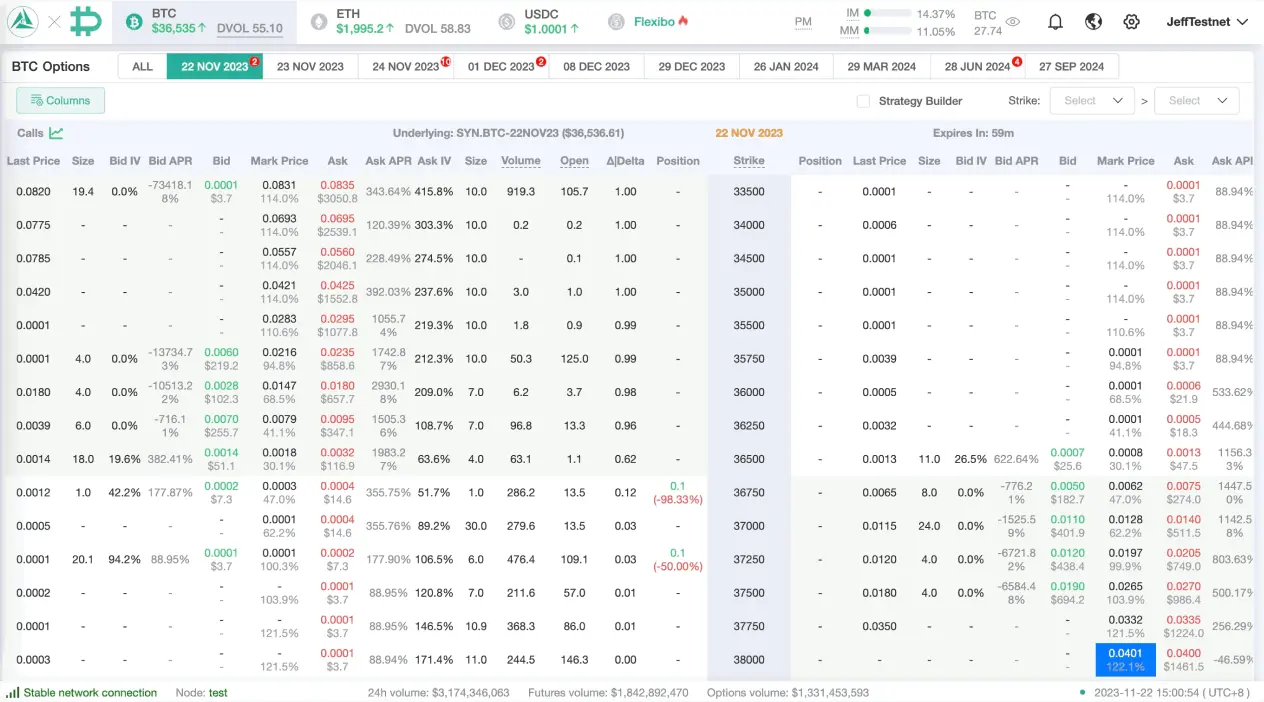
Conversely, the Order Book model, prevalent across centralized and decentralized exchanges, represents a continuous, transparent, and multilateral price formation environment. It aggregates publicly displayed buy and sell orders at various price levels, creating a visible depth of market. Participants interact by placing limit orders, which specify a price at which they are willing to trade, or market orders, which execute immediately against the best available prices.
This mechanism provides instant access to prevailing liquidity and fosters a dynamic, real-time auction for all listed instruments. The order book reflects a constant interplay of supply and demand, with prices fluctuating in response to incoming order flow and participant behavior.
The core divergence lies in the inherent transparency and immediacy each system affords. An order book broadcasts all available liquidity, inviting rapid, high-frequency interactions and continuous price updates. RFQ, by design, introduces a layer of discretion, allowing for price negotiation on larger clips without signaling intent to the broader market.
This distinction carries profound implications for information leakage, slippage control, and the management of counterparty exposure, fundamentally altering the execution calculus for institutional actors. Understanding these foundational differences provides a critical lens through which to evaluate the optimal pathway for deploying capital in the evolving crypto options domain.

Execution Paradigms for Digital Derivatives
Digital asset derivatives present unique challenges, demanding a robust understanding of execution paradigms. RFQ and order book models serve as primary conduits for options trading, each possessing inherent strengths and limitations for various trade profiles. RFQ protocols address the need for discretion and tailored pricing for larger, illiquid, or multi-leg options strategies, where the public order book might lack sufficient depth or risk significant price impact. The ability to request a quote for a complex spread, for example, streamlines the execution process by obtaining a single, all-in price from a competitive pool of market makers.
Order book execution, on the other hand, excels in environments demanding high throughput and granular control over price points. For smaller, more liquid options contracts, the order book offers superior speed and the potential for price improvement through passive order placement. It enables algorithmic strategies that react to real-time market data, providing opportunities for latency arbitrage or dynamic liquidity provision.
The continuous nature of order book trading supports constant price discovery, a vital component for instruments with rapidly decaying time value. Each model serves as a distinct operational channel, optimizing for specific trade characteristics and market conditions.
How Do Execution Mechanisms Influence Options Pricing?


Strategy
Developing a coherent execution strategy in crypto options necessitates a deep appreciation for the distinct operational characteristics of RFQ and order book mechanisms. The strategic decision hinges upon optimizing for liquidity access, minimizing information asymmetry, and managing the intricate dance of price impact. Institutional participants approach this choice with a keen eye on capital efficiency and risk mitigation, recognizing that the optimal pathway varies significantly based on trade size, complexity, and prevailing market conditions.

Liquidity Aggregation Dynamics
RFQ systems inherently aggregate liquidity through a targeted, multi-dealer approach. A trading desk transmits a request for a specific options contract or a multi-leg strategy to a curated group of liquidity providers. These providers, often specialized market makers, respond with firm, executable quotes. This process consolidates competitive pricing from various sources into a single, actionable response for the taker.
The primary advantage rests in accessing substantial liquidity for large block trades without exposing the full order size to the public market, thus preserving price integrity. This discreet protocol mitigates the risk of adverse selection, where informed traders might exploit public order book movements.
Order book execution aggregates liquidity differently, relying on the continuous posting of bids and offers from a diverse array of market participants. Limit orders populate the order book, creating visible depth at various price levels. Market makers and high-frequency trading firms continuously refresh these quotes, providing ongoing liquidity.
While this model offers transparency and immediate execution for smaller orders, larger trades risk significant slippage by “walking the book” or “sweeping” multiple price levels. The strategic choice here involves balancing the potential for passive price improvement with the need for immediate, guaranteed fills.
RFQ prioritizes discretion and competitive quotes for large, complex trades, while order books offer transparency and speed for smaller, liquid instruments.

Information Asymmetry and Price Impact
Information asymmetry represents a central strategic concern in options trading. RFQ protocols mitigate information leakage by keeping trade interest private among the involved parties until execution. This controlled environment reduces the likelihood of front-running or adverse price movements triggered by the announcement of a large order.
The price discovery process unfolds in a quasi-dark pool setting, allowing the institutional client to achieve a more favorable average execution price for substantial volumes. This aspect holds particular relevance for Bitcoin options block trades and ETH options block strategies, where significant capital deployment can materially influence market perception.
Order book execution, conversely, operates with inherent transparency. Every limit order placed, modified, or cancelled contributes to the visible market depth, providing signals to other participants. While this transparency fosters efficient price discovery under normal conditions, it also creates opportunities for sophisticated algorithms to detect and react to order flow imbalances.
Large market orders can instantly consume available liquidity, causing price dislocations and increased slippage. Strategic participants in order book environments must employ advanced order types and smart order routing algorithms to navigate these dynamics, aiming to minimize their footprint and optimize execution quality.

Optimal Application Frameworks
An effective strategy employs both RFQ and order book models in a complementary fashion. RFQ becomes the preferred channel for executing multi-leg options spreads, large volatility block trades, or illiquid instruments where finding sufficient depth on a public order book is challenging. It offers a structured approach to sourcing anonymous options trading liquidity, ensuring competitive pricing for bespoke structures. This method aligns with the objectives of minimizing slippage and achieving best execution for high-fidelity trades.
The order book serves as the optimal venue for highly liquid, single-leg options contracts or for implementing automated delta hedging strategies that require continuous, low-latency interaction with the market. Here, the goal shifts towards capturing incremental price improvements and efficiently managing dynamic risk exposures. Strategic participants might use the order book for smaller components of a larger strategy, or for liquidating residual positions. A robust operational framework often integrates both capabilities, dynamically routing orders based on real-time liquidity analysis and the specific requirements of each trade.
What Are the Best Practices for Minimizing Slippage in Crypto Options?


Execution
The transition from strategic intent to tangible outcome in crypto options hinges upon the precise mechanics of execution. For institutional desks, mastering the operational protocols of both RFQ and order book systems provides a decisive advantage in achieving superior capital efficiency and risk-adjusted returns. This requires a deep understanding of the technical standards, risk parameters, and quantitative metrics that govern each execution pathway.

RFQ Protocol Discretionary Execution
Executing through an RFQ protocol involves a structured sequence of interactions designed to provide discretion and competitive pricing for large or complex options trades. The process commences with the taker initiating a request for quotation, specifying the instrument, quantity, and desired direction for each leg of a potential multi-leg options strategy. This inquiry is then broadcast to a select group of market makers or liquidity providers within the network.
Market makers respond with firm, executable quotes, often double-sided (bid and ask), for the requested structure. These quotes reflect their assessment of the underlying asset’s price, implied volatility, and their own inventory positions, along with a competitive spread.
The taker evaluates the received quotes, typically displayed in a consolidated view showing the best available bid and ask prices from the pool of responders. A key aspect of this system is the ability to accept a quote, leading to an atomic execution of the entire multi-leg structure at the agreed-upon price. This guarantees no leg risk, a significant concern in order book environments where individual legs might fill at disparate prices or times. The protocol prioritizes the seamless, holistic execution of complex strategies, providing a single price for the entire combination.
RFQ execution provides atomic settlement for complex options structures, eliminating leg risk through competitive, firm quotes.
Deribit’s Block RFQ system, for instance, permits requests for structures comprising up to 20 legs, encompassing options, futures, or spot pairs, all within the same quote currency. This allows for the creation of highly customized trading strategies, including basis trades where a spot pair is hedged with a future. The API-driven nature of these systems enables programmatic interaction, allowing for integration with proprietary order management systems (OMS) and execution management systems (EMS). This facilitates aggregated inquiries and systematic processing of responses, enhancing operational efficiency for institutional flows.

Order Book Algorithmic Precision
Order book execution, conversely, thrives on continuous interaction and granular control. Participants submit limit orders, which rest on the order book at a specified price, or market orders, which consume liquidity immediately. The operational mechanics involve a matching engine that pairs incoming orders with existing ones based on price-time priority. This environment demands sophisticated algorithmic trading strategies to navigate its complexities effectively.
For options, the order book presents a dynamic landscape where bid-ask spreads, market depth, and order flow imbalances constantly shift. High-frequency trading firms often leverage low-latency connectivity to update quotes rapidly, providing liquidity and capturing small price discrepancies. Institutional traders employing order book strategies might use smart order routing to access the best available prices across multiple venues, or employ iceberg orders to mask large trade sizes and minimize market impact. The execution quality in an order book is highly dependent on the chosen order type, the timing of submission, and the prevailing market microstructure.
A key consideration for order book execution in crypto options involves managing volatility and the fragmentation of liquidity across exchanges. Unlike traditional markets with deeper, more consolidated order books, crypto options can exhibit thinner liquidity, particularly for out-of-the-money strikes or longer-dated expiries. This necessitates careful monitoring of market depth and the potential for significant price slippage during periods of heightened volatility. Sophisticated models often assess the probability of execution at various price levels, incorporating factors such as order book imbalance and historical volatility.
What Are the Liquidity Provision Challenges in Decentralized Options Markets?

Quantitative Execution Analysis
Quantitative analysis of execution performance is paramount for both RFQ and order book strategies. For RFQ, metrics focus on the average price improvement relative to a benchmark (e.g. mid-market price at time of RFQ initiation), the number of quotes received, and the fill rate. For order book execution, metrics include realized slippage, effective spread, and the probability of execution at different price points. These quantitative insights drive iterative refinement of trading algorithms and execution protocols.
Consider the following comparative analysis of execution metrics for a hypothetical 100 BTC-equivalent options block trade, illustrating the trade-offs between RFQ and order book execution. This analysis highlights how RFQ can yield superior price improvement for large trades by leveraging competitive multi-dealer liquidity, whereas direct order book execution might incur higher slippage if not managed with advanced algorithms.
| Metric | RFQ Execution | Order Book Execution |
|---|---|---|
| Average Price Improvement (bps) | +5.2 | -2.1 |
| Execution Time (seconds) | 15-60 | 1-5 |
| Information Leakage Risk | Low | Moderate to High |
| Slippage Control | High (atomic fill) | Variable (algorithmic dependent) |
| Counterparty Diversity | Multiple dealers | Fragmented, anonymous |
| Complexity of Trade Support | High (multi-leg spreads) | Lower (single leg focus) |
This table underscores RFQ’s role in minimizing slippage for substantial options blocks, a critical consideration for institutional desks managing large exposures. The order book, while offering speed, requires more sophisticated algorithmic overlays to achieve comparable execution quality for significant size.

Operational Playbook for Optimal Options Execution
Implementing an optimal options execution strategy requires a structured playbook, integrating both RFQ and order book mechanisms into a cohesive operational framework. This multi-stage procedural guide ensures high-fidelity execution and robust system-level resource management.
- Pre-Trade Analytics and Sizing Assessment ▴
- Instrument Liquidity Analysis ▴ Evaluate the specific options contract’s liquidity across available venues, assessing bid-ask spreads, order book depth, and historical volume.
- Trade Size Thresholding ▴ Establish dynamic thresholds for trade size. Orders exceeding a defined BTC or ETH equivalent notional value automatically trigger an RFQ protocol.
- Volatility Skew and Term Structure ▴ Analyze the current volatility landscape to identify potential mispricings or strategic opportunities.
- RFQ Protocol Activation for Block Trades ▴
- Multi-Leg Spread Construction ▴ For complex strategies involving multiple options legs, futures, or spot, construct the precise structure within the RFQ system.
- Dealer Selection and Routing ▴ Direct the RFQ to a pre-qualified network of liquidity providers known for competitive pricing in crypto options.
- Quote Evaluation and Acceptance ▴ Utilize an automated system to compare incoming quotes against internal benchmarks and execute against the most favorable price, ensuring atomic settlement.
- Order Book Execution for Tactical Positions ▴
- Smart Order Routing (SOR) ▴ Employ SOR algorithms to fragment smaller orders across multiple order books, seeking best price and minimizing market impact.
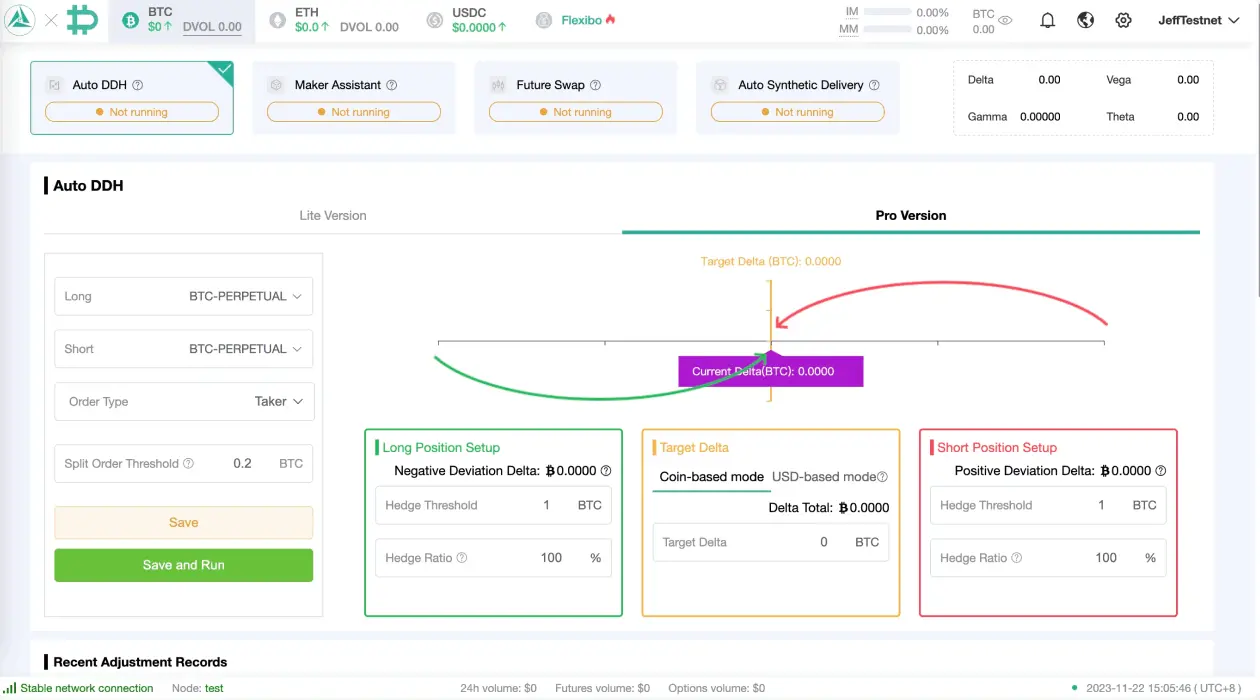
- Algorithmic Delta Hedging ▴ Implement automated delta hedging (DDH) routines via the order book for dynamic risk management of options positions, using passive limit orders to capture spread.
- Iceberg and TWAP/VWAP Orders ▴ For larger order book trades, deploy iceberg orders to conceal size or time-weighted average price (TWAP) and volume-weighted average price (VWAP) algorithms to spread execution over time.
- Post-Trade Transaction Cost Analysis (TCA) ▴
- Slippage Measurement ▴ Quantify actual slippage relative to arrival price and mid-market price for both RFQ and order book executions.
- Fill Rate and Latency Analysis ▴ Monitor fill rates for limit orders and execution latency for market orders to assess platform performance.
- Dealer Performance Review ▴ Periodically review the competitiveness and responsiveness of RFQ liquidity providers to refine the preferred dealer network.
This structured approach, leveraging the strengths of each execution paradigm, ensures that institutional desks can consistently achieve optimal outcomes across the diverse spectrum of crypto options trading.

System Integration and Technological Architecture
The technological architecture supporting institutional crypto options execution demands seamless integration across disparate systems. A robust framework combines an Order Management System (OMS), an Execution Management System (EMS), and direct API connectivity to both RFQ platforms and order book exchanges. This integrated ecosystem facilitates efficient trade flow, risk monitoring, and post-trade processing.
API endpoints serve as the critical nexus for connectivity. For RFQ systems, a dedicated API facilitates the programmatic submission of quote requests and the reception of responses. This often involves specific message formats, such as FIX protocol messages, tailored for derivatives.
The ability to parse and act upon these messages with minimal latency is paramount for competitive execution. Data streams from RFQ platforms provide real-time quote updates, enabling rapid decision-making.
Order book integration relies on high-throughput, low-latency APIs for order submission, cancellation, and real-time market data feeds. This includes level 2 and level 3 order book data, providing granular insight into market depth. The EMS leverages this data to power smart order routing algorithms, automated delta hedging, and other advanced trading applications. The entire architecture must be designed for resilience and scalability, capable of handling significant order flow and data volume, especially in volatile crypto markets.
The interplay between the OMS and EMS is crucial. The OMS manages the lifecycle of orders from inception to settlement, maintaining a golden source of truth for all positions. The EMS, receiving orders from the OMS, then determines the optimal execution venue and method (RFQ or order book) based on pre-defined rules and real-time market conditions.
This system-level resource management ensures that capital is deployed efficiently and risks are contained within established parameters. A sophisticated architecture also incorporates real-time intelligence feeds, providing market flow data and analytics to system specialists who oversee complex execution strategies.

References
- FinchTrade. (2025). RFQ vs Limit Orders ▴ Choosing the Right Execution Model for Crypto Liquidity.
- ResearchGate. (2025). MARKET MICROSTRUCTURE OF CRYPTOCURRENCY EXCHANGE ▴ ORDER BOOK ANALYSIS.
- MDPI. (2025). Order Book Liquidity on Crypto Exchanges.
- Bergault, P. & Guéant, O. (2024). Liquidity Dynamics in RFQ Markets and Impact on Pricing. arXiv.
- HEC Montréal. (2021). The impact of order book and market information on Bitcoin price movements.
- HeLa Labs. (2025). Institutional Crypto Trading ▴ A Practical Guide for Funds and Firms.
- Paradigm. (n.d.). Institutional Grade Liquidity for Crypto Derivatives.
- Crypto.com. (2025). Wall Street On-Chain Part 3 ▴ Trading & Liquidity.
- AInvest. (2025). Bitcoin’s Institutional Liquidity Breakthrough ▴ Why Derivatives Expansion Signals a New Bull Market Phase.
- Deribit. (2025). Deribit Block RFQ.

Reflection
The dynamic interplay between RFQ and order book execution models defines the frontier of institutional crypto options trading. Understanding these distinct operational architectures moves beyond mere theoretical comprehension; it compels a deeper introspection into one’s own operational framework. How robust are the systems for discerning between discreet, negotiated liquidity and transparent, continuous price discovery?
The strategic imperative lies in constructing a framework that dynamically adapts to market microstructure, ensuring capital efficiency and superior execution quality. Ultimately, a decisive operational edge emerges from the seamless integration of these mechanisms, tailored to the nuanced demands of digital asset derivatives.

Glossary

Digital Asset Derivatives

Price Discovery

Liquidity Providers

Market Makers

Limit Orders

Order Book

Crypto Options

Options Trading

Order Book Execution

Price Improvement

Capital Efficiency

Block Trades

Options Block

Smart Order Routing

Automated Delta Hedging

Rfq Protocol

Execution Management Systems

Market Microstructure

Multi-Dealer Liquidity

High-Fidelity Execution