

The Imperative of Precision Execution
Navigating the nascent yet rapidly maturing landscape of crypto options markets presents a formidable challenge for institutional participants. Achieving high-fidelity Request for Quote (RFQ) execution for these complex derivatives is not a trivial undertaking; it demands a robust technological foundation capable of addressing the unique liquidity fragmentation, latency sensitivities, and counterparty risks inherent in digital asset trading. Market participants understand that the pursuit of optimal execution extends beyond merely finding a price; it encompasses the certainty of fill, minimal information leakage, and the efficient management of capital across diverse venues.
This necessitates a systems-level approach, where every component, from market data ingestion to order routing, operates with uncompromising precision. The quest for superior outcomes in this domain mandates an operational architecture that prioritizes speed, security, and intelligent liquidity aggregation, enabling the confident deployment of capital in an environment characterized by both volatility and significant opportunity.
Understanding the core technological requirements begins with recognizing the fundamental characteristics of crypto options themselves. These instruments, whether Bitcoin options block trades or ETH options spreads, inherit the volatility and 24/7 nature of their underlying digital assets. This continuous market operation places immense pressure on infrastructure to maintain constant availability and responsiveness. Furthermore, the over-the-counter (OTC) nature of many institutional crypto options transactions, often facilitated through RFQ protocols, introduces a distinct set of demands compared to traditional exchange-traded derivatives.
The discretion and private quotation mechanics intrinsic to RFQ workflows necessitate secure, low-latency communication channels and sophisticated price discovery mechanisms. The systemic interplay between these factors defines the foundational needs for any institution aiming to master this asset class.
High-fidelity crypto options RFQ execution requires a robust technological foundation addressing liquidity, latency, and counterparty risks.
The very notion of “high-fidelity” execution implies a minimization of deviation from theoretical fair value and an assurance of transaction completion at the requested terms. This objective transcends simple order matching; it requires a predictive understanding of market dynamics and the capacity to interact with multiple liquidity providers simultaneously and intelligently. A truly effective system processes aggregated inquiries with a discerning eye, evaluating not only the quoted price but also the implicit costs associated with execution, such as potential market impact and the cost of hedging dynamic delta exposures. Such an advanced operational posture differentiates those who merely participate from those who consistently capture alpha.


Crafting a Definitive Edge in Digital Derivatives
Developing a strategic framework for high-fidelity crypto options RFQ execution necessitates a profound understanding of market microstructure and the judicious application of advanced computational capabilities. The primary objective involves architecting a system that optimizes price discovery while minimizing the adverse selection risks inherent in off-book liquidity sourcing. This begins with establishing robust, multi-dealer liquidity channels, enabling a comprehensive view of available pricing across various institutional counterparties.
A strategic approach integrates diverse data streams, ranging from real-time spot and futures prices to implied volatility surfaces, to construct a dynamic and accurate internal fair value model. This internal model serves as the benchmark against which all incoming quotes are evaluated, providing a critical filter for discerning competitive pricing from potentially stale or mispriced offerings.
The strategic deployment of an RFQ system must also account for the nuanced requirements of different options structures. Executing complex multi-leg spreads, such as BTC straddle blocks or ETH collar RFQs, demands a system capable of atomic execution across all legs. This ensures that the intended risk profile of the spread is preserved without incurring slippage on individual components.
A key strategic consideration involves the ability to manage aggregated inquiries, where a single request is broadcast to multiple liquidity providers simultaneously. This parallel price discovery mechanism accelerates the quoting process, enhancing the probability of securing best execution within tight market windows.
Strategic RFQ execution in crypto options demands multi-dealer liquidity, dynamic fair value modeling, and atomic execution for complex spreads.
Furthermore, a sophisticated strategy incorporates intelligent order routing logic that dynamically adapts to market conditions and counterparty performance. This involves profiling liquidity providers based on their historical fill rates, response times, and pricing competitiveness for specific options types and sizes. The system should possess the capacity for anonymous options trading, where the identity of the requesting principal remains concealed until a quote is accepted.
This discretion is paramount for large block trades, preventing information leakage that could lead to unfavorable price movements. The strategic imperative centers on creating a controlled environment for bilateral price discovery, transforming a potentially opaque process into a transparent and optimized transaction flow.
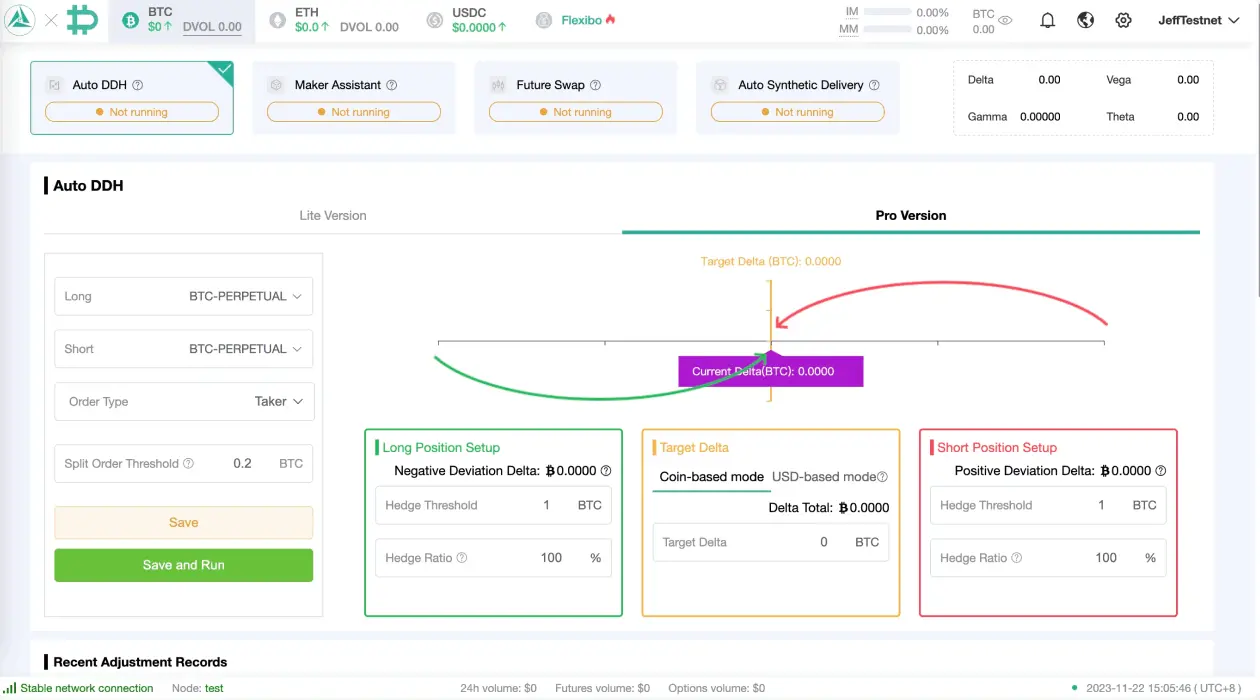
Another strategic pillar involves the integration of automated delta hedging (DDH) capabilities directly into the execution workflow. Upon the successful execution of an options trade, the system should instantaneously calculate and initiate the necessary spot or futures hedges to maintain a desired delta exposure. This real-time risk management significantly mitigates gamma risk and reduces the operational burden on trading desks. The seamless orchestration of options execution with underlying asset hedging is a hallmark of high-fidelity operations, preventing unintended market exposure and preserving capital efficiency.
The table below illustrates a comparative analysis of strategic considerations for different crypto options RFQ scenarios, highlighting the varying emphasis on speed, discretion, and complexity management.
| Scenario | Primary Strategic Focus | Key Technological Enablers | Risk Mitigation Priorities |
|---|---|---|---|
| Large Bitcoin Options Block | Discreet Liquidity Sourcing, Minimal Market Impact | Anonymous RFQ Protocols, Multi-venue Aggregation, Predictive Analytics | Information Leakage, Slippage, Counterparty Credit |
| ETH Options Spread (e.g. Straddle) | Atomic Execution, Precise Legging, Volatility Block Trade | Multi-leg Execution Logic, Real-time Pricing Models, Automated Hedging Integration | Legging Risk, Gamma Exposure, Implied Volatility Discrepancy |
| Illiquid Altcoin Options RFQ | Expanded Counterparty Reach, Price Discovery Algorithms | Wide-network Connectivity, Historical Price Analysis, “Last Look” Protocols | Adverse Selection, Wide Spreads, Execution Certainty |


Operationalizing High-Fidelity Crypto Derivatives
Operationalizing high-fidelity crypto options RFQ execution requires a meticulous focus on system design, quantitative rigor, and seamless integration. The journey from strategic intent to precise execution is paved with specific technological demands that coalesce into a resilient and performant trading apparatus. This section dissects the tangible components and protocols essential for achieving superior outcomes in the digital asset derivatives space, providing an operational playbook for institutional participants.

The Operational Playbook
The operational playbook for high-fidelity crypto options RFQ execution commences with establishing ultra-low-latency connectivity to a diverse ecosystem of liquidity providers. This includes direct API integrations with specialized crypto options desks, over-the-counter brokers, and potentially decentralized finance (DeFi) protocols that offer institutional-grade RFQ capabilities. The latency profile of these connections is paramount, as even microsecond delays can translate into significant price degradation in fast-moving markets. Network infrastructure must be optimized for proximity to liquidity sources, often involving co-location services or direct fiber links to key data centers.
Upon receiving an inquiry, the system must initiate a rapid, parallelized quote solicitation protocol. This involves broadcasting the RFQ to a pre-qualified list of counterparties, ensuring that the request format adheres to standardized messaging protocols, such as FIX (Financial Information eXchange) for traditional derivatives, or custom JSON-based APIs prevalent in crypto. The system must then ingest and normalize the incoming quotes in real-time, accounting for varying data formats and quote conventions. A robust quote management module is essential for tracking quote lifecycles, managing expiration timers, and handling rejections or amendments with minimal human intervention.
The execution phase demands sophisticated order management and smart order routing capabilities. Once the optimal quote is identified ▴ based on a composite evaluation of price, size, and counterparty reputation ▴ the system must transmit the acceptance with guaranteed delivery and acknowledgment. For multi-leg options strategies, atomic execution is a non-negotiable requirement.
This ensures that all legs of a spread are executed simultaneously, preventing partial fills or legging risk that could drastically alter the intended payoff profile. Post-execution, immediate trade confirmation and settlement instructions are generated, integrating seamlessly with internal accounting and risk management systems.
- Connectivity ▴ Establish ultra-low-latency links to diverse crypto options liquidity providers, prioritizing direct API integrations and co-location for speed.
- Quote Solicitation ▴ Implement a parallelized, standardized protocol for broadcasting RFQs and ingesting normalized quotes in real-time.
- Intelligent Routing ▴ Employ sophisticated logic to select the optimal quote based on price, size, and counterparty performance, ensuring guaranteed delivery.
- Atomic Execution ▴ Mandate simultaneous execution for all legs of complex options spreads to eliminate legging risk and preserve strategy integrity.
- Post-Trade Processing ▴ Generate immediate trade confirmations and settlement instructions, integrating with internal accounting and risk systems.

Quantitative Modeling and Data Analysis
The analytical core of a high-fidelity RFQ system rests upon a suite of sophisticated quantitative models and real-time data analysis capabilities. Central to this is a robust implied volatility surface construction engine. This engine ingests market data from various sources ▴ spot prices, futures prices, and quotes for different strikes and expiries ▴ to build a dynamic, three-dimensional representation of implied volatility.
This surface serves as the bedrock for fair value pricing, enabling the system to accurately price incoming RFQ quotes and identify potential mispricings or arbitrage opportunities. The models must be capable of handling the discontinuous and often less liquid nature of crypto options data compared to traditional markets.
Beyond fair value pricing, quantitative models are critical for pre-trade and post-trade transaction cost analysis (TCA). Pre-trade TCA estimates the potential market impact and slippage associated with a proposed trade, allowing the system to refine its execution strategy or adjust its target price. Post-trade TCA evaluates the actual execution quality against benchmarks, providing invaluable feedback for refining liquidity provider selection and optimizing algorithmic parameters. This iterative feedback loop is essential for continuous improvement in execution performance.
Consider a scenario where an institution seeks to execute a large ETH options block. The quantitative engine would perform the following calculations:
| Metric | Calculation Basis | Purpose | Impact on Execution |
|---|---|---|---|
| Fair Value Price (FVP) | Black-Scholes-Merton or Binomial Model, incorporating real-time spot, volatility surface, interest rates, dividends. | Benchmark for quote evaluation. | Determines acceptable quote range. |
| Estimated Slippage | Historical liquidity provider performance, order book depth, volatility. | Pre-trade cost estimation. | Informs optimal order size and timing. |
| Delta-Gamma Profile | Sensitivity of option price to underlying price and volatility changes. | Real-time risk exposure assessment. | Triggers automated delta hedging. |
| Information Leakage Risk Score | Historical RFQ patterns, counterparty behavior analysis. | Quantifies potential market impact from RFQ. | Influences counterparty selection and anonymity protocols. |
The continuous refinement of these models, incorporating machine learning techniques to identify subtle patterns in market flow and counterparty behavior, elevates the system beyond a mere quoting engine to a predictive intelligence layer. The ability to forecast short-term liquidity conditions or anticipate potential adverse selection allows for proactive adjustments to the RFQ strategy, thereby safeguarding capital and maximizing execution alpha.

Predictive Scenario Analysis
A truly advanced RFQ execution platform incorporates a robust predictive scenario analysis engine, offering institutional principals a profound foresight into potential market outcomes. This capability moves beyond static pricing models, simulating the impact of various market events and execution strategies on proposed crypto options trades. Imagine a scenario where a portfolio manager at ‘Quantum Capital’ seeks to acquire a significant BTC options straddle block, anticipating a major volatility event following an upcoming economic data release.
The notional value of this trade is substantial, involving 100 BTC calls and 100 BTC puts, both with a strike of $70,000 and an expiry of one month. The current BTC spot price is $68,500, and the implied volatility for one-month options is hovering around 65%.
Before sending out the RFQ, Quantum Capital’s system would engage its predictive scenario analysis module. This module, drawing upon historical market data, real-time order book depth, and various volatility regimes, would simulate the potential responses from their network of liquidity providers. The system might run several thousand Monte Carlo simulations, each modeling slightly different market conditions and counterparty behaviors.
For instance, one simulation might model a sudden spike in spot BTC price by 2% immediately after the RFQ is sent, while another might simulate a decrease in implied volatility by 5 basis points across the surface. The engine would also account for the potential impact of information leakage, estimating how quickly other market participants might react to a large RFQ, leading to adverse price movements.
In one such simulation, the system predicts that if the RFQ is sent during a period of low market depth and high correlation between spot and options liquidity, the average slippage on the call leg could be as high as 15 basis points, and the put leg 12 basis points, resulting in an additional execution cost of approximately 0.25 BTC. The system might also forecast that, under specific stress conditions, only 70% of the desired quantity might be filled at the initially requested price, necessitating subsequent RFQs or execution on alternative venues at potentially worse prices. Conversely, another scenario, perhaps involving an RFQ during peak European trading hours with ample liquidity, suggests a negligible slippage of less than 3 basis points across both legs, and a 98% fill probability.
The predictive engine further allows for the stress-testing of different RFQ parameters. What if Quantum Capital opts for a smaller block size, breaking the order into two 50-BTC straddles? The system could simulate that this approach, while potentially reducing the per-trade market impact, might incur higher aggregate transaction costs due to increased operational overhead and the risk of price drift between the two separate executions. It might also show that waiting an additional 30 minutes for a predicted influx of liquidity from Asian market participants could improve the expected fill price by an average of 5 basis points.
Crucially, the system would also analyze the dynamic delta hedging requirements for each scenario. If the volatility spike occurs post-execution, the system could model the increased gamma exposure and the associated costs of re-hedging the delta. It might project that under extreme conditions, the daily re-hedging cost could consume an additional 0.1 BTC due to heightened market friction and bid-ask spreads in the spot market.
This level of granular, forward-looking analysis empowers Quantum Capital’s portfolio manager to make informed decisions, adjusting the RFQ timing, size, and counterparty selection with a clear understanding of the probabilistic outcomes. This analytical foresight transforms reactive trading into a strategically optimized process, safeguarding capital and enhancing the probability of achieving the desired risk-adjusted returns.

System Integration and Technological Architecture
The underlying technological architecture supporting high-fidelity crypto options RFQ execution is a complex interplay of distributed systems, high-performance computing, and secure communication protocols. At its core resides a modular design, where distinct services handle market data ingestion, quote aggregation, order routing, risk management, and post-trade processing. This modularity ensures scalability, resilience, and ease of maintenance, allowing for independent upgrades and optimizations of individual components. The entire framework operates as a sophisticated operating system for derivatives trading.
The integration layer is paramount, connecting the internal trading system with external liquidity providers and market data sources. This typically involves a combination of custom API connectors and standardized protocols. For instance, while some crypto options venues might offer RESTful APIs for quote requests and order placement, others might utilize WebSocket streams for real-time market data.
The system must abstract away these underlying technical differences, presenting a unified interface to the internal trading logic. FIX protocol messages, while less prevalent in the native crypto options space, are gaining traction among institutional participants for their robustness and standardization in communicating order intent, execution reports, and allocation instructions.
A key architectural component is the Order Management System (OMS) and Execution Management System (EMS). The OMS manages the lifecycle of an order, from its initial creation and pre-trade compliance checks to its eventual execution and settlement. The EMS, in turn, focuses on optimizing the execution process itself, employing smart order routing algorithms and interacting with various liquidity venues.
In a high-fidelity RFQ context, the EMS is responsible for intelligently distributing RFQs, aggregating responses, and selecting the optimal fill. The tight coupling of OMS and EMS functionalities is essential for maintaining control and visibility throughout the execution workflow.
Data integrity and security are foundational architectural requirements. All communication channels, both internal and external, must be encrypted using industry-standard protocols. The system must implement robust access controls, ensuring that only authorized personnel and processes can interact with sensitive trading functions and market data.
Furthermore, a comprehensive audit trail of all RFQs, quotes received, and trades executed is indispensable for regulatory compliance and internal reconciliation. The entire architecture must be designed with fault tolerance and disaster recovery in mind, incorporating redundant systems and failover mechanisms to ensure continuous operation in the face of unforeseen outages.
The technological architecture is a living entity, requiring continuous monitoring, performance tuning, and adaptation to evolving market structures and regulatory landscapes. It is a commitment to an ongoing process of refinement, where system specialists leverage real-time intelligence feeds to identify bottlenecks, optimize data flows, and enhance the overall resilience and efficiency of the trading infrastructure.

References
- Harris, Larry. Trading and Exchanges ▴ Market Microstructure for Practitioners. Oxford University Press, 2003.
- O’Hara, Maureen. Market Microstructure Theory. Blackwell Publishers, 1995.
- Lehalle, Charles-Albert. Market Microstructure in Practice. World Scientific Publishing Company, 2018.
- Hull, John C. Options, Futures, and Other Derivatives. Pearson, 2018.
- Fabozzi, Frank J. and Steven V. Mann. The Handbook of Fixed Income Securities. McGraw-Hill Education, 2012.
- Schwartz, Robert A. and Bruce W. Weber. Liquidity, Markets and Trading in Financial Electronic Systems. John Wiley & Sons, 2010.
- CME Group. Market Regulation & Rules.
- Deribit. API Documentation and Market Specifications.
- Merton, Robert C. “Theory of Rational Option Pricing.” The Bell Journal of Economics and Management Science, vol. 4, no. 1, 1973, pp. 141-183.
- Black, Fischer, and Myron Scholes. “The Pricing of Options and Corporate Liabilities.” Journal of Political Economy, vol. 81, no. 3, 1973, pp. 637-654.

Strategic Operational Contemplation
The insights presented herein delineate a clear path for institutional principals seeking to master high-fidelity crypto options RFQ execution. The true measure of a robust operational framework resides in its capacity to translate complex market dynamics into decisive action, ensuring capital efficiency and mitigating systemic risk. This comprehensive understanding of technological requirements, from low-latency infrastructure to advanced quantitative modeling, provides the intellectual scaffolding upon which superior trading outcomes are built.
Reflect upon your existing operational architecture ▴ does it possess the resilience, intelligence, and precision demanded by the evolving digital asset landscape? The ongoing pursuit of an unparalleled strategic edge necessitates a continuous evaluation and refinement of these core capabilities, transforming theoretical knowledge into a tangible competitive advantage.

Glossary

Information Leakage

Crypto Options

Order Routing

Market Data

Bitcoin Options Block

Eth Options

Price Discovery

Liquidity Providers

Market Impact

High-Fidelity Crypto Options

Multi-Dealer Liquidity

Implied Volatility

Fair Value

Atomic Execution

Best Execution

Anonymous Options Trading

Automated Delta Hedging

Crypto Options Rfq

High-Fidelity Crypto

Rfq Execution

Options Rfq

Eth Options Block

Basis Points

Real-Time Intelligence Feeds