

Algorithmic Velocity’s Market Imprint
The intricate dance between high-frequency trading and block trade resilience presents a fundamental challenge to market participants. Understanding this dynamic requires an appreciation for the systemic interactions at play. High-frequency trading, characterized by its lightning-fast execution and sophisticated algorithmic strategies, reshapes market microstructure.
This pervasive force influences liquidity provision, price discovery mechanisms, and ultimately, the ability of large institutional orders to transact with minimal market impact. Examining the structural implications reveals how these rapid-fire operations interact with the deliberate, often sensitive, execution of substantial principal commitments.
Block trades, by their very nature, involve significant capital allocations, necessitating discreet execution to avoid adverse price movements. The inherent tension arises from the differing time horizons and operational objectives of these two market segments. High-frequency traders operate on a microsecond scale, capitalizing on fleeting arbitrage opportunities and providing transient liquidity.
Conversely, block trades seek deep, stable liquidity, often over longer periods, to minimize information leakage and ensure efficient capital deployment. The convergence of these distinct approaches within the same market ecosystem creates complex feedback loops, influencing how efficiently large orders can clear.
High-frequency trading fundamentally alters market microstructure, creating a complex interplay with the discreet execution requirements of block trades.
The foundational impact of high-frequency trading extends to the very fabric of order book dynamics. Its algorithms contribute to tighter bid-ask spreads and increased quote activity, which superficially suggests enhanced liquidity. However, this liquidity can prove ephemeral, particularly during periods of heightened volatility or significant order imbalances.
The rapid withdrawal of HFT-provided liquidity, often termed “liquidity cliff events,” poses a direct threat to the resilience of block trades. Such rapid shifts in market depth complicate the execution of large orders, potentially leading to increased slippage and higher transaction costs for institutional participants.
Considering the mechanisms of price discovery, HFT plays a dual role. Its aggressive quoting and cancellation activity can contribute to more efficient price formation in normal market conditions, rapidly incorporating new information into asset valuations. Nevertheless, the speed at which these algorithms react can also amplify price movements, creating sharp, momentary dislocations.
For a block trade seeking a stable price point for execution, these rapid fluctuations introduce additional layers of complexity and risk. The market’s responsiveness to small order imbalances becomes significantly heightened, impacting the perceived stability required for large-scale transactions.

Order Book Ecology and Volatility Dynamics
The ecological balance within the electronic order book undergoes a constant redefinition due to the continuous presence of high-frequency trading. These participants typically operate with sophisticated predictive models, constantly updating their bids and offers based on a multitude of real-time data feeds. The result is a highly reactive market environment where price levels can shift with extraordinary speed.
This dynamic environment can be beneficial for small, retail-sized orders, as they often encounter tight spreads. Yet, for large block orders, the rapid changes in available depth and price levels introduce a significant execution challenge.
Analyzing the nature of volatility, one observes how HFT strategies contribute to both its reduction and its exacerbation. During periods of low market stress, HFT can dampen volatility by swiftly arbitraging away small discrepancies across venues, maintaining tight price convergence. Conversely, in stressed market conditions, these same algorithms, designed to manage risk with extreme prejudice, can accelerate price discovery and magnify downward spirals. The collective, instantaneous withdrawal of passive liquidity by HFT algorithms during such events leaves block orders exposed to significant market impact, compromising their resilience.

Information Asymmetry and Execution Discretion
Information asymmetry remains a perennial concern for institutional traders executing block trades. The presence of high-frequency trading exacerbates this challenge, as these firms possess superior technological infrastructure and data processing capabilities. Their ability to observe, interpret, and react to order flow nuances before slower participants creates a distinct informational advantage. This disparity can lead to situations where the intent of a large order, even when fragmented, is inferred by HFT algorithms, prompting anticipatory trading that can move prices adversely.
Preserving execution discretion is a paramount objective for block traders. The goal involves transacting substantial volume without signaling market intent to opportunistic participants. The relentless probing and rapid quoting from high-frequency traders can compromise this discretion, making it more difficult to accumulate or distribute positions without leaving a discernible footprint.
This continuous interaction shapes the strategies employed by block traders, pushing them towards off-exchange venues or more complex execution algorithms to mask their presence. The structural implication here centers on the shifting battleground for informational advantage.


Mitigating Systemic Interferences
Strategic frameworks for institutional traders executing block orders must account for the pervasive influence of high-frequency trading. The core objective involves securing best execution, which encompasses minimizing slippage, preserving discretion, and achieving optimal price points. Traditional approaches to block trading, which relied on slower, voice-brokered interactions, have largely evolved into sophisticated electronic protocols.
These advancements seek to counteract the speed and informational advantages inherent to HFT operations. A fundamental shift involves leveraging intelligent order routing and advanced liquidity-seeking mechanisms.
One prominent strategic pathway involves the intelligent use of Request for Quote (RFQ) protocols, particularly in the derivatives markets. These systems allow institutional participants to solicit competitive price quotes from multiple liquidity providers, often including market makers employing HFT strategies, in a private, bilateral environment. This method helps to mitigate the impact of public order book probing by HFT algorithms, as the negotiation occurs off-exchange and away from immediate public scrutiny. The strategic value of an RFQ lies in its capacity to aggregate liquidity discreetly, allowing for price discovery without broad market signaling.

Tactical Execution Venues and Liquidity Aggregation
The selection of appropriate execution venues forms a cornerstone of modern block trading strategy. Lit markets, characterized by their public order books, offer transparency but are highly susceptible to HFT interactions and potential information leakage. Conversely, dark pools and other off-exchange venues provide a degree of anonymity, shielding large orders from immediate detection.
Strategically, institutional traders often employ a hybrid approach, leveraging both lit and dark liquidity sources to optimize execution quality. This nuanced strategy seeks to access the tight spreads available in lit markets while maintaining discretion for larger portions of an order in dark pools.
Liquidity aggregation platforms play a pivotal role in this multi-venue approach. These systems consolidate quotes and order book depth from various exchanges and alternative trading systems, presenting a unified view of available liquidity. For block traders, this aggregation capability is critical for identifying optimal execution pathways and dynamically adjusting routing strategies. The ability to quickly identify and access deep pockets of liquidity across different venues, without revealing the full size of an order, is a direct response to the fragmented and high-speed nature of modern markets influenced by HFT.
Strategic use of RFQ protocols and intelligent venue selection are crucial for block trade resilience against high-frequency trading impacts.
The rise of smart order routing (SOR) systems exemplifies the technological response to HFT. SOR algorithms are designed to analyze market conditions in real-time, dynamically determining the best venue and timing for order placement. These systems consider factors such as latency, available liquidity, and estimated market impact.
For block trades, a sophisticated SOR can fragment a large order into smaller, less detectable child orders, distributing them across various venues to minimize their footprint. This fragmentation and intelligent distribution strategy directly confronts the HFT advantage in order flow analysis and rapid response.
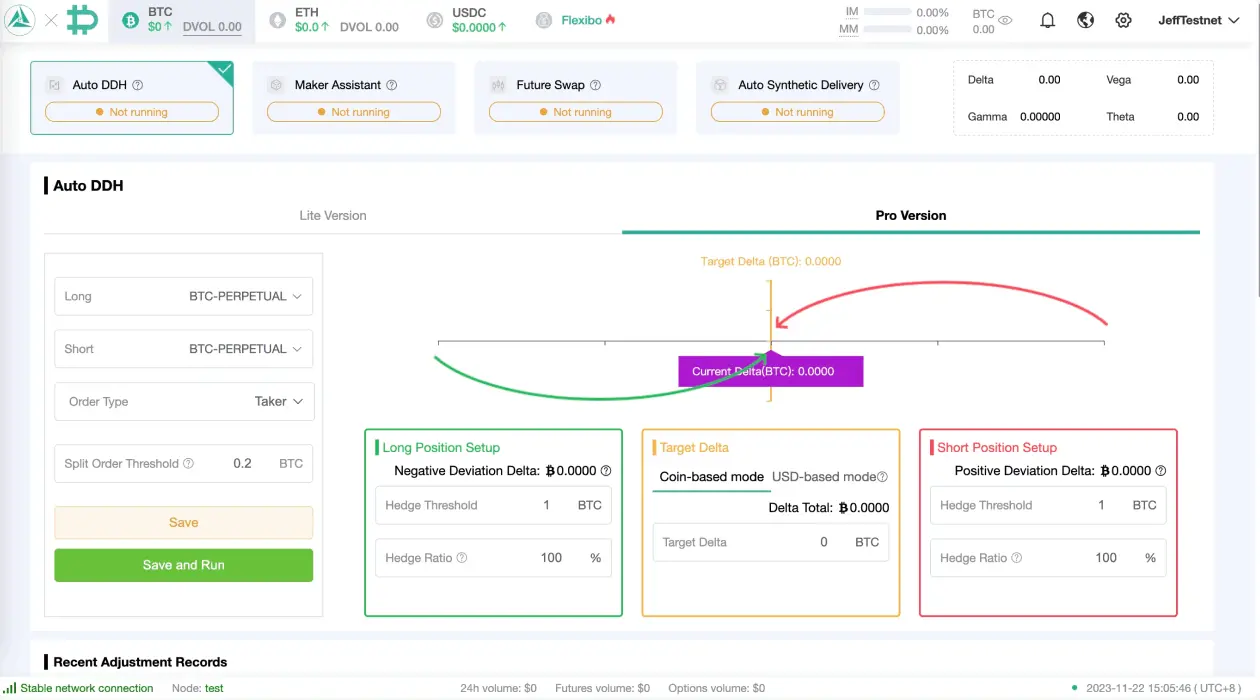
Advanced trading applications, such as Automated Delta Hedging (DDH) for options blocks, represent another layer of strategic defense. When executing large options positions, the associated delta risk requires continuous management. DDH systems automatically adjust underlying asset hedges in response to market movements, which can be amplified by HFT activity.
This automation ensures that the hedging process keeps pace with the market’s velocity, preventing significant risk accumulation. The integration of such sophisticated risk management tools directly contributes to the resilience of complex block trades in high-speed environments.

Information Flow Control and Adverse Selection
Controlling information flow is paramount for block trade success. Every interaction with the market carries the potential for information leakage, which high-frequency traders are adept at exploiting. Strategic approaches involve minimizing market messages, utilizing discreet order types, and employing algorithms designed to mask true order size. The goal involves making an order appear as “noise” rather than a significant market event, thereby reducing the likelihood of adverse selection where prices move against the institutional trader.
The challenge of adverse selection, where an institutional trader trades with an informed party at an unfavorable price, is amplified by HFT. Strategies to counteract this include the use of passive order placement, where orders rest on the book, waiting for natural contra-side liquidity. However, this exposes the order to potential “sniping” by HFTs.
Therefore, a balanced approach often involves dynamic order placement, alternating between passive and aggressive strategies based on real-time market signals. The effectiveness of these dynamic strategies hinges on the intelligence layer embedded within the trading system, providing real-time market flow data and predictive analytics.
| Strategic Element | Primary Objective | Mechanism | HFT Counteraction |
|---|---|---|---|
| RFQ Protocols | Discreet Price Discovery | Bilateral Quote Solicitation | Reduces public order book exposure |
| Dark Pool Utilization | Anonymity Preservation | Off-exchange Matching | Shields order intent from HFT algorithms |
| Smart Order Routing | Optimized Venue Selection | Algorithmic Fragmentation | Distributes orders to minimize footprint |
| Automated Delta Hedging | Dynamic Risk Management | Real-time Hedge Adjustments | Maintains risk neutrality against rapid price shifts |


Operationalizing High-Fidelity Execution
The execution phase for block trades, particularly within markets influenced by high-frequency trading, demands an exceptionally robust and intelligent operational framework. High-fidelity execution represents the ultimate goal, translating strategic objectives into tangible market outcomes. This requires a deep understanding of market microstructure, coupled with the precise application of advanced technological protocols and analytical insights. The focus shifts from theoretical frameworks to the granular mechanics of how orders interact with market dynamics at the most fundamental level.
Consider the intricate process of executing a Bitcoin Options Block. This requires navigating a fragmented liquidity landscape where both centralized exchanges and OTC desks operate. An institution seeking to transact such a block must employ sophisticated tools to aggregate liquidity, often through multi-dealer RFQ systems.
The operational playbook for this scenario begins with pre-trade analytics, assessing current market depth, volatility regimes, and the potential for information leakage across various venues. This initial assessment guides the choice of execution strategy and venue selection.

The Operational Playbook for Block Trade Execution
A structured approach to executing large, sensitive orders is indispensable in an HFT-dominated environment. The operational playbook outlines a series of precise, sequential steps designed to minimize market impact and preserve discretion. Each stage requires meticulous attention to detail and a robust technological backbone capable of real-time adaptation.
- Pre-Trade Analytics ▴ Initiate a comprehensive analysis of current market conditions, including order book depth, implied volatility surfaces, and historical slippage data for the specific instrument. Evaluate potential liquidity sources across both lit and dark venues, as well as OTC desks.
- Venue Selection Protocol ▴ Based on pre-trade analytics, determine the optimal blend of execution venues. This might involve prioritizing an OTC Options RFQ for the bulk of the order to maintain anonymity, while simultaneously exploring lit market depth for smaller, less sensitive components.
- Order Fragmentation and Disguise ▴ Employ sophisticated algorithms to fragment the block into smaller, “child” orders. These algorithms must dynamically adjust order size, timing, and price limits to avoid detection by HFT algorithms. Utilize synthetic order types or icebergs where appropriate.
- Real-Time Monitoring and Adaptation ▴ Continuously monitor market conditions, including order flow, price movements, and liquidity shifts. The execution algorithm must be capable of real-time adaptation, dynamically adjusting its strategy in response to changes in HFT activity or overall market sentiment.
- Post-Trade Transaction Cost Analysis (TCA) ▴ Conduct a thorough post-trade analysis to evaluate execution quality against benchmarks. This includes measuring slippage, market impact, and comparing realized prices to theoretical fair values. Feedback from TCA informs future execution strategies.
The effectiveness of these steps relies heavily on the intelligence layer of the trading system. Real-time intelligence feeds provide granular market flow data, allowing for immediate detection of HFT probing or liquidity shifts. Furthermore, expert human oversight from system specialists is crucial for managing complex execution scenarios that deviate from algorithmic expectations.

Quantitative Modeling and Data Analysis
Quantitative modeling underpins effective block trade execution in the presence of HFT. Models for market impact estimation are particularly critical, predicting how a given order size will affect price. These models must incorporate factors such as liquidity elasticity, order book dynamics, and the expected reaction of HFT participants. Analyzing historical tick data allows for the calibration of these models, providing insights into typical HFT behavior patterns.
Data analysis extends to the assessment of liquidity provision and consumption. Understanding the true cost of liquidity, including both explicit fees and implicit market impact, guides optimal execution strategies. Metrics such as effective spread, implementation shortfall, and participation rate are continuously monitored. These quantitative insights allow institutional traders to discern periods of genuine liquidity from those characterized by fleeting, HFT-driven depth.
| Metric | Description | HFT Influence | Mitigation Strategy |
|---|---|---|---|
| Slippage | Difference between expected and executed price | Increased by HFT anticipatory trading | Dark pools, smart order routing, RFQ |
| Market Impact | Price movement caused by an order | Amplified by HFT liquidity withdrawal | Order fragmentation, passive order types |
| Information Leakage | Market inference of order intent | Accelerated by HFT order book probing | Anonymous trading, private RFQ channels |
| Execution Speed | Time taken to complete an order | Faster HFT reaction necessitates rapid response | Low-latency infrastructure, advanced algorithms |
A particularly challenging aspect involves modeling the dynamic nature of liquidity. HFT algorithms contribute to a highly adaptive liquidity landscape, where available depth can change dramatically within milliseconds. Quantitative models must account for this fluidity, moving beyond static assumptions of market depth.
This involves incorporating predictive elements that forecast short-term liquidity availability based on order flow imbalance and volatility signals. The complexity here resides in accurately predicting the collective behavior of a multitude of independent, yet interconnected, HFT strategies.

Predictive Scenario Analysis
Imagine a portfolio manager needing to liquidate a significant ETH Options Block, representing 5,000 contracts of an out-of-the-money call option, with a notional value of $15 million, in a moderately volatile market. The market exhibits an average daily volume for this option of 10,000 contracts. Executing this block on a lit exchange without careful consideration would likely result in substantial market impact, potentially moving the price by several basis points against the institution. This is a scenario where HFT algorithms would quickly detect the large sell pressure, leading to rapid price adjustments and liquidity withdrawal.
The institutional trader initiates the process with pre-trade analytics, revealing that immediate execution on a lit venue could incur an estimated slippage of 0.08% of the notional value, equating to $12,000 in direct costs. Furthermore, the market impact could trigger a 0.5% price decline for the remaining portion of the block. Recognizing these risks, the trading desk opts for a multi-pronged approach, leveraging an RFQ protocol for the majority of the order. They solicit quotes from three prime brokers, all of whom employ their own HFT-driven market-making desks.
The RFQ process yields competitive bids, with the best price being 0.02% better than the prevailing mid-market price on the lit exchange for 3,000 contracts. This immediate saving amounts to $6,000. The remaining 2,000 contracts are then managed through a smart order routing algorithm, designed to drip feed small, randomized order sizes into a dark pool.
The algorithm is configured with a volume participation rate of 5% of the observed liquidity, ensuring it remains below the radar of most HFT detection thresholds. This drip-feeding occurs over a 30-minute window, with the algorithm dynamically adjusting its pace based on real-time market conditions.
During this 30-minute window, a sudden spike in implied volatility occurs, triggered by a macroeconomic news release. HFT algorithms on the lit exchanges react almost instantaneously, widening spreads and withdrawing passive liquidity. The smart order router, equipped with real-time intelligence feeds, detects this shift within milliseconds. It immediately pauses order submission to the dark pool and re-evaluates the market landscape.
The system identifies that one of the initial RFQ prime brokers, due to their robust internal risk management, is still willing to absorb a further 500 contracts at a slightly less favorable, but still acceptable, price. The system reroutes a portion of the remaining order to this counterparty.
The remaining 1,500 contracts are then carefully executed using a time-weighted average price (TWAP) algorithm, but with a critical enhancement ▴ an adaptive volatility overlay. This overlay instructs the TWAP to aggressively execute during periods of low volatility and to significantly reduce its participation during spikes, effectively navigating the HFT-induced liquidity fluctuations. The TWAP completes its execution over the next hour, with an average slippage of 0.04% for this segment.
The total realized slippage for the entire 5,000-contract block is 0.03%, a substantial improvement over the initial estimate of 0.08% for a purely lit market execution. This scenario highlights the critical role of adaptive algorithms, multi-venue strategies, and real-time intelligence in preserving block trade resilience against the structural forces of HFT.

System Integration and Technological Architecture
The technological architecture supporting high-fidelity block trade execution against HFT influence is a complex system of interconnected modules. At its core resides a low-latency order management system (OMS) and execution management system (EMS), designed for speed and reliability. These systems must be capable of processing vast amounts of market data and executing orders with sub-millisecond precision. The integration points are crucial, particularly with external liquidity providers and market data feeds.
Connectivity relies heavily on standardized protocols such as FIX (Financial Information eXchange). FIX protocol messages facilitate the communication between the institution’s EMS, prime brokers, and various trading venues. For block trades, specialized FIX message types are often used to convey large order intentions discreetly, or to manage RFQ workflows. The efficiency and security of these communication channels are paramount, as any latency or compromise could expose the block trade to adverse HFT interactions.
The data pipeline forms another critical architectural component. This pipeline ingests real-time market data, including tick-by-tick price updates, order book snapshots, and trade prints, from multiple sources. This raw data is then processed and normalized by an intelligence layer, which performs predictive analytics, market impact modeling, and liquidity assessments. The insights generated by this layer feed directly into the execution algorithms, enabling them to make informed decisions in real-time.
Moreover, robust pre-trade risk controls are integrated directly into the EMS. These controls enforce strict limits on order size, price deviation, and cumulative market exposure, preventing unintended market impact or accidental fat-finger errors. These systems are often configured with dynamic thresholds that adjust based on prevailing market volatility, providing an additional layer of protection against the rapid price movements characteristic of HFT environments. The entire architecture functions as a unified operating system, designed to optimize execution quality and manage risk with exceptional precision.

References
- Harris, Larry. “Trading and Exchanges ▴ Market Microstructure for Practitioners.” Oxford University Press, 2003.
- O’Hara, Maureen. “Market Microstructure Theory.” Blackwell Publishers, 1995.
- Lehalle, Charles-Albert. “Market Microstructure in Practice.” World Scientific Publishing, 2013.
- Foucault, Thierry, Pagano, Marco, and Roell, Ailsa. “Market Liquidity ▴ Theory, Evidence, and Policy.” Oxford University Press, 2013.
- Menkveld, Albert J. “High-Frequency Trading and the New Market Makers.” Journal of Financial Markets, vol. 16, no. 4, 2013, pp. 712-740.
- Hendershott, Terrence, and Riordan, Ryan. “High-Frequency Trading and the Market for Liquidity.” Journal of Financial Economics, vol. 121, no. 3, 2016, pp. 586-601.
- Chaboud, Alain P. Hjalmarsson, Erik, and Le Roux, Jean-Philippe. “The Impact of High-Frequency Trading on Market Quality ▴ Evidence from the Foreign Exchange Market.” IMF Working Paper, 2014.
- CME Group. “Understanding Block Trades in Derivatives Markets.” Market Education White Paper, 2020.

Architecting Market Mastery
The dynamic interplay between high-frequency trading and block trade resilience necessitates a continuous re-evaluation of one’s operational framework. The insights presented here represent components of a larger, integrated system of market intelligence. Reflect upon your current execution protocols ▴ are they merely reactive, or do they proactively leverage an intelligence layer to anticipate market shifts? The capacity to translate raw market data into actionable strategic advantages defines the modern institutional edge.
Consider how your firm’s technological architecture empowers discretion and minimizes adverse selection. The resilience of your block trades is a direct function of your system’s ability to adapt, fragment, and intelligently route orders across a complex liquidity landscape. Mastering these market systems provides a decisive operational edge, transforming potential vulnerabilities into opportunities for superior capital efficiency.

Glossary

Block Trade Resilience

High-Frequency Trading

Price Discovery

Market Impact

Block Trades

Information Leakage

Order Book

Market Conditions

Block Trade

Order Routing

These Systems

Smart Order Routing

Predictive Analytics

Market Microstructure

Transaction Cost Analysis

Block Trade Execution

Smart Order