

The Substrate of Capital Movement
Institutional participants navigating the complex currents of modern financial markets recognize that liquidity stands as a fundamental determinant of execution efficacy for substantial order blocks. Understanding the intrinsic characteristics of available liquidity, both explicit and latent, defines the capacity to move capital without undue market distortion. Block trades, by their inherent scale, introduce a distinct perturbation into the prevailing market microstructure, demanding a nuanced appreciation of how order flow, price formation, and information dynamics interact. This necessitates a deep understanding of the market’s systemic responses to large orders.
The distinction between explicit and latent liquidity forms a cornerstone of this understanding. Explicit liquidity manifests overtly within central limit order books (CLOBs), where visible bid and offer prices, along with their associated depths, provide a transparent snapshot of available interest. This readily observable interest facilitates immediate execution for smaller orders, yet for significant blocks, interacting solely with CLOBs can precipitate substantial price impact.
Conversely, latent liquidity resides in less transparent venues, such as dark pools and Request for Quote (RFQ) systems, where trading interest remains undisclosed until execution. Accessing these hidden reserves requires specialized protocols and strategic acumen.
Liquidity, whether visible or concealed, shapes the feasibility and cost of executing large institutional trades.

Understanding Liquidity’s Dual Nature
Explicit liquidity, characterized by its transparency and immediacy, provides a baseline for market activity. Market participants observe real-time bids and offers, gauging immediate supply and demand dynamics. This pre-trade transparency aids price discovery for smaller transactions, allowing for continuous matching of orders. However, the very transparency that benefits smaller trades becomes a vulnerability for block orders.
Revealing a large order in a CLOB signals significant interest, potentially attracting predatory algorithms or prompting adverse price movements from other participants. This dynamic underscores the challenge of relying solely on visible liquidity for substantial positions.
Latent liquidity, conversely, operates under a veil of discretion. Dark pools aggregate undisclosed orders, matching them at midpoint prices without impacting the public order book. RFQ protocols allow institutions to solicit competitive bids from multiple liquidity providers privately, preserving anonymity and mitigating information leakage.
These off-exchange mechanisms are particularly pertinent for derivatives and fixed income instruments, where order books are often less dense, and large trades are frequent. The strategic deployment of mechanisms designed to access latent liquidity offers a pathway to superior execution for institutional blocks.

Market Microstructure Dynamics for Large Orders
The execution of block trades inherently interacts with the intricate mechanics of market microstructure, particularly concerning price impact and information asymmetry. A large order, when improperly managed, can trigger a chain reaction of price movements, pushing the market away from the desired execution price. This phenomenon, known as market impact, directly erodes alpha and increases transaction costs. The temporary component of market impact reflects the immediate pressure on prices from the order’s execution, while the permanent component reflects the information conveyed to the market about the trade.
Information asymmetry plays a significant role in this context. The knowledge of an impending block trade, even if only partially leaked, can empower other market participants to front-run the order, demanding higher prices from a buyer or offering lower prices to a seller. This adverse selection directly penalizes the block trader.
Sophisticated trading desks therefore prioritize strategies and protocols that minimize information leakage, understanding that the value of a block trade is intrinsically linked to its discreet execution. The systemic challenge involves navigating these microstructural realities to achieve optimal outcomes.


Strategic Protocols for Sourcing Blocks
The effective management of block trade execution necessitates a strategic framework that transcends simplistic order placement, instead embracing sophisticated protocols designed to navigate the nuanced liquidity landscape. Institutions must employ a multi-pronged approach, integrating adaptive liquidity aggregation with advanced techniques for mitigating information asymmetry. The objective remains consistent ▴ to secure optimal pricing and minimal market impact for substantial positions, thereby preserving capital and enhancing overall portfolio performance.
Adaptive liquidity aggregation represents a cornerstone of this strategic approach. Relying on a single liquidity source for large orders is inherently suboptimal; a diversified strategy across multiple venues provides resilience and competitive pricing. This involves dynamically routing order flow to both explicit and latent pools, adjusting interaction based on real-time market conditions and the specific characteristics of the instrument. For instance, a liquid equity block might begin with a passive strategy on a CLOB, while an illiquid derivatives block would immediately seek out RFQ or dark pool liquidity.
Optimizing block execution involves a dynamic interplay between diverse liquidity sources and intelligent order routing.

Adaptive Liquidity Aggregation
The aggregation of liquidity from disparate sources requires a robust decision-making engine capable of assessing venue quality, implicit costs, and the likelihood of execution. Multi-dealer liquidity, accessed through RFQ platforms, allows for competitive price discovery from a curated group of counterparties, fostering a dynamic bidding environment. This approach is particularly effective for instruments where bilateral price discovery offers a distinct advantage over fragmented order books. By engaging multiple liquidity providers simultaneously, the initiator gains visibility into a broader spectrum of pricing, enhancing the probability of achieving a superior fill.
Strategic liquidity sourcing also involves the judicious use of smart order routing (SOR) algorithms. These algorithms continuously scan various execution venues ▴ lit exchanges, dark pools, and alternative trading systems ▴ to identify the best available price and liquidity. For block trades, SORs are configured to prioritize larger block-sized liquidity, even if it resides in less transparent venues, while simultaneously managing the risk of information leakage. The goal is to intelligently slice and route orders to maximize execution probability and minimize market impact across the entire order.

Information Asymmetry and Execution Design
Minimizing information leakage constitutes a paramount concern in block trade strategy. The premature revelation of a large order can attract adverse selection, where informed traders exploit the knowledge of the impending trade to their advantage. RFQ protocols, by their very design, address this challenge through discreet quotation requests.
The ability to anonymously solicit prices from a select group of liquidity providers ensures that the broader market remains unaware of the trading interest until the transaction is complete. This controlled exposure is vital for preserving the integrity of the execution.
Furthermore, the design of execution strategies must account for the information content of an order. A block trade might carry intrinsic information about a portfolio manager’s conviction, which, if exposed, could move the market against the trade. Strategies like iceberg orders, which reveal only a small portion of the total order size to the public order book, allow for gradual execution while keeping the full size concealed. Combining such order types with dark pool interactions or private bilateral negotiations offers a powerful defense against information asymmetry.

Algorithmic Liquidity Seeking
Algorithmic liquidity seeking strategies are instrumental in navigating fragmented markets and sourcing large blocks discreetly. These algorithms are specifically engineered to identify and interact with large, institutional-sized liquidity pockets, often at the midpoint of the bid-ask spread in dark venues. The core objective involves finding a natural counterparty for a substantial trade without openly advertising the interest, thereby minimizing market impact. This often entails casting a wide net across various dark pools and alternative trading systems, dynamically adjusting interaction parameters based on observed liquidity.
Sophisticated liquidity seeking algorithms (LSAs) also incorporate logic to ensure continuous, measured market interaction even when large block liquidity is not immediately available. This baseline interaction helps to avoid predictable trading patterns that could alert the market to the presence of a large order. LSAs leverage real-time market data, including bid-ask spreads, order book depth, and historical liquidity patterns, to optimize their search. Their adaptive nature allows them to respond to fleeting liquidity opportunities, thereby improving execution quality and reducing residual risk.
The table below illustrates a comparative analysis of strategic block execution venues, highlighting their characteristics relevant to liquidity and information management.
| Venue Type | Transparency | Information Leakage Risk | Typical Trade Size | Price Discovery Mechanism |
|---|---|---|---|---|
| Central Limit Order Book (CLOB) | High | High | Small to Medium | Continuous Matching |
| Dark Pool | Low (Pre-trade) | Low | Medium to Large | Midpoint Matching |
| Request for Quote (RFQ) | Controlled (Selective) | Low (Controlled) | Large | Bilateral Negotiation |
| Upstairs Market (Broker-facilitated) | Low (Private) | Moderate (Broker-dependent) | Very Large | Bilateral Negotiation |


Precision Execution Frameworks
Operationalizing block trade strategies demands an execution framework rooted in analytical rigor, technological sophistication, and an unwavering focus on quantitative performance. This involves a granular understanding of procedural mechanics, the deployment of advanced quantitative models for impact mitigation, and seamless systemic integration. The ultimate objective revolves around transforming strategic intent into tangible execution outcomes, thereby achieving superior capital efficiency and minimizing frictional costs.
The procedural orchestration of block trades, particularly within derivatives markets, represents a complex ballet of pre-trade analytics, real-time negotiation, and post-trade reconciliation. A meticulous approach to each stage ensures adherence to strategic objectives and regulatory mandates. This demands not merely a transactional perspective, but a holistic view of the execution lifecycle, where every decision point is informed by data and optimized for outcome.

Operationalizing RFQ Protocols
Executing a block trade through an RFQ protocol commences with a thorough pre-trade analysis. This critical step involves assessing the instrument’s liquidity profile, historical price impact characteristics, and the prevailing market volatility. A comprehensive pre-trade analysis informs the selection of appropriate liquidity providers, the desired execution price range, and the overall urgency of the trade. The system aggregates relevant market data, allowing the trader to set realistic expectations for execution quality.
Following pre-trade assessment, the system generates and transmits a discreet quotation request to a pre-selected group of liquidity providers. This solicitation often specifies parameters such as the instrument, quantity, desired side (buy or sell), and any specific conditions for execution. The responses received from liquidity providers represent firm, executable prices for the requested block size. The platform then presents these quotes in a clear, comparative format, enabling the trader to identify the optimal bid or offer.
High-fidelity execution for multi-leg spreads becomes paramount here, as the RFQ system must accurately price and execute complex strategies involving multiple options or futures contracts simultaneously. This capability ensures that the intended spread relationships are preserved during execution.
Post-trade, the system facilitates rapid allocation and confirmation. The chosen quote is executed, and the transaction details are disseminated to all relevant parties. Discreet protocols, such as private quotations, ensure that the transaction remains confidential throughout its lifecycle, mitigating any residual information leakage. The operational efficiency of these steps directly influences the overall execution quality and the ability to capture fleeting liquidity opportunities.
- Pre-Trade Analysis ▴ Evaluate instrument liquidity, historical price impact, and volatility.
- Liquidity Provider Selection ▴ Identify and select suitable counterparties based on expertise and historical performance.
- Quote Solicitation ▴ Generate and transmit discreet RFQ to selected liquidity providers.
- Quote Aggregation and Comparison ▴ Collect and present firm, executable prices from multiple providers.
- Optimal Quote Selection ▴ Choose the most favorable bid or offer, considering price, size, and counterparty.
- Trade Execution ▴ Transact the block order at the selected price.
- Post-Trade Allocation ▴ Distribute the executed block to relevant client accounts.
- Confirmation and Reconciliation ▴ Disseminate trade details and reconcile positions.

Quantitative Metrics for Impact Mitigation
Quantifying and mitigating market impact stands as a central tenet of precision execution. Market impact models provide a framework for estimating the cost of executing a block trade, considering factors such as order size, prevailing market liquidity, and volatility. A common approach involves power-law models, where market impact scales with a fractional power of the order size, typically around the square root. This implies that doubling the order size does not necessarily double the market impact, but the impact still increases at a decreasing rate.
Slippage, a direct measure of market impact, represents the difference between the expected price of a trade and its actual execution price. Minimizing slippage requires sophisticated algorithms that dynamically adjust order placement and routing strategies in real time. Price improvement, conversely, occurs when an order executes at a price more favorable than the prevailing best bid or offer.
Achieving consistent price improvement signifies effective liquidity sourcing and intelligent order interaction. The effective spread, which accounts for both explicit and implicit trading costs, provides a holistic measure of execution quality.
Consider the following hypothetical parameters for market impact estimation:
| Parameter | Description | Typical Range | Impact on Cost |
|---|---|---|---|
| Order Size (Shares/Contracts) | Total quantity of the block trade | 10,000 – 1,000,000+ | Directly proportional (concave) |
| Average Daily Volume (ADV) | Average number of shares/contracts traded daily | 100,000 – 100,000,000+ | Inversely proportional |
| Volatility (Annualized) | Measure of price fluctuation | 15% – 80%+ | Directly proportional |
| Time Horizon (Minutes) | Duration over which the trade is executed | 1 – 60+ | Inversely proportional |
| Information Leakage Factor | Probability of adverse selection | 0.0 – 1.0 | Directly proportional |
The application of Transaction Cost Analysis (TCA) tools post-execution allows for a retrospective evaluation of these metrics. TCA provides granular insights into various cost components, including commissions, fees, and, crucially, market impact. This feedback loop is indispensable for refining execution algorithms and optimizing future block trade strategies. A continuous cycle of measurement, analysis, and refinement ensures the persistent pursuit of best execution.
Quantitative analysis of market impact and execution costs drives continuous optimization of trading strategies.

Systemic Integration for Optimal Flow
Seamless system integration forms the technological backbone of optimized block trade execution. The Financial Information eXchange (FIX) protocol stands as the industry standard for electronic communication of trade-related messages between buy-side firms, sell-side firms, and trading venues. Implementing robust FIX API connectivity enables automated order routing, real-time status updates, and efficient post-trade processing. This standardization is crucial for interoperability across diverse market participants and execution platforms.
Order Management Systems (OMS) and Execution Management Systems (EMS) play a pivotal role in orchestrating block trades across multiple liquidity pools. An OMS manages the lifecycle of an order from inception to settlement, while an EMS focuses on optimizing execution by providing access to various algorithms, venues, and real-time market data. The integration of these systems allows for sophisticated routing logic, enabling traders to access both explicit and latent liquidity sources through a unified interface. This cohesive environment supports system-level resource management, ensuring that aggregated inquiries are handled efficiently and discreetly.
The complexity inherent in integrating disparate systems for optimal block trade execution often presents significant challenges. The nuanced mapping of trade types, such as “Block trade” (FIX tag 828, value 3), within the FIX protocol ensures accurate classification and processing of large transactions. This requires meticulous attention to technical specifications and ongoing validation to maintain data integrity and message flow. The continuous evolution of market structure and trading protocols necessitates a flexible and adaptable technological architecture, capable of rapid iteration and deployment of new functionalities.

Predictive Analytics and Dynamic Adjustment
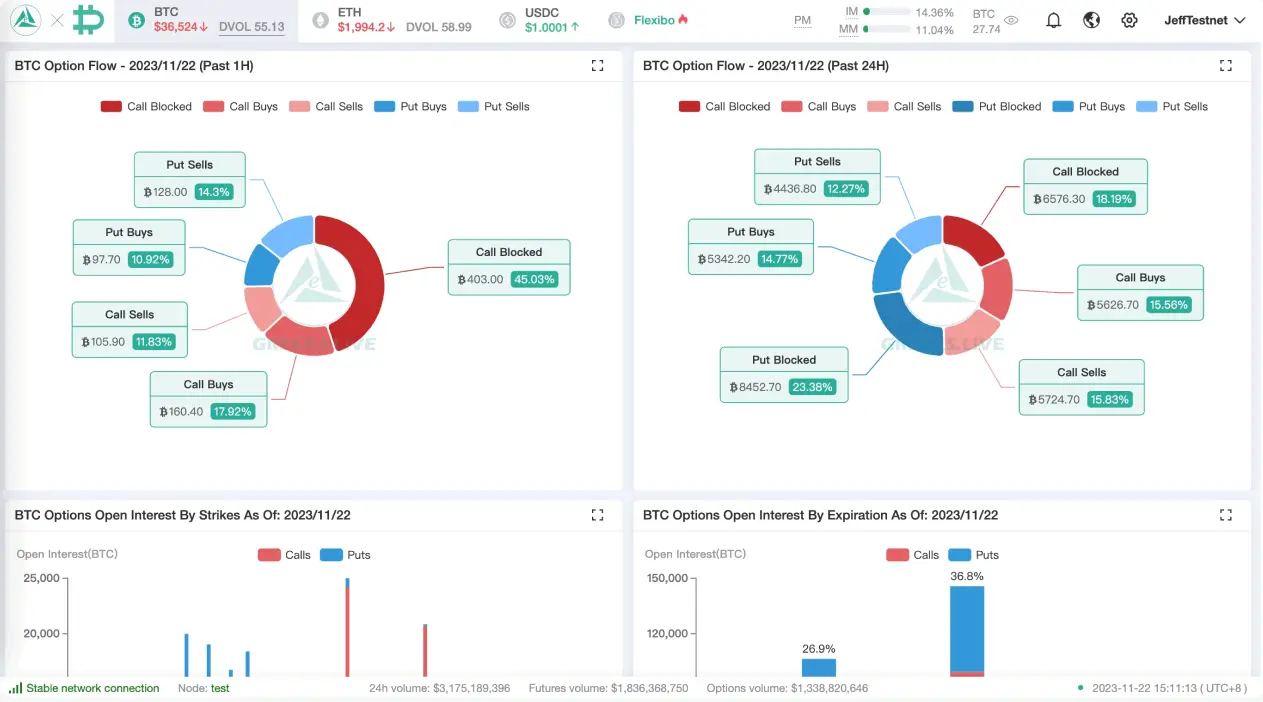
The pursuit of optimal block trade execution extends into the realm of predictive analytics and dynamic adjustment, where real-time intelligence informs adaptive decision-making. Real-time intelligence feeds, encompassing market flow data, order book dynamics, and sentiment indicators, provide critical insights into unfolding market conditions. These feeds enable execution algorithms to anticipate liquidity shifts, potential price movements, and the presence of predatory trading activity. The ability to react instantaneously to new information allows for dynamic adjustment of order parameters, such as price limits, execution speed, and venue selection.
Expert human oversight, often provided by “System Specialists,” complements algorithmic capabilities, particularly for complex or highly illiquid block trades. These specialists monitor algorithmic performance, intervene when anomalous market conditions arise, and apply discretionary judgment based on deep market experience. Their role involves fine-tuning algorithmic parameters, interpreting complex market signals, and managing exceptional situations that fall outside predefined algorithmic rules. This synergistic relationship between automated systems and human expertise forms a powerful defense against unforeseen market disruptions.
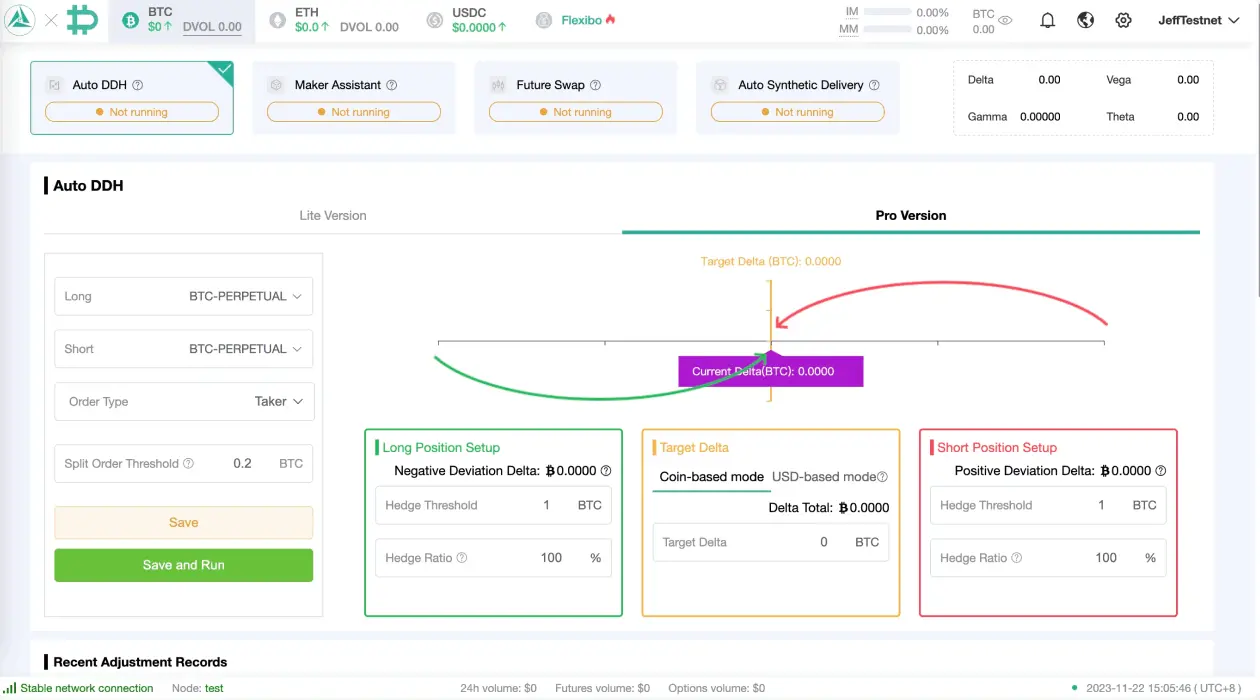
Advanced trading applications, such as automated delta hedging for options blocks, exemplify the integration of predictive analytics into execution. For a large options block, maintaining a neutral delta position is paramount to managing risk. An automated delta hedging system continuously monitors the delta of the options position and executes offsetting trades in the underlying asset as market prices fluctuate.
This minimizes exposure to price movements in the underlying, preserving the intended risk profile of the options trade. Similarly, other advanced order types leverage predictive models to anticipate future price trajectories, allowing for more intelligent entry and exit points for block orders.
| Metric | Description | Target Value | Impact on P&L |
|---|---|---|---|
| Slippage (bps) | Deviation from quoted price to executed price | < 5 bps | Negative |
| Price Improvement (%) | Percentage of trades executed better than NBBO | 10% | Positive |
| Effective Spread (bps) | Actual cost of a round-trip trade | < 10 bps | Negative |
| Market Impact Cost (bps) | Total cost due to order’s price influence | < 20 bps | Negative |
The convergence of robust data feeds, sophisticated analytical models, and adaptive execution logic creates a feedback loop that continuously refines the precision of block trade execution. This iterative process, where insights from past trades inform future strategies, represents a dynamic pursuit of optimal outcomes in an ever-evolving market landscape. The commitment to this continuous refinement defines a truly institutional-grade execution framework.

References
- Morpher. Market Microstructure ▴ The Hidden Dynamics Behind Order Execution. 2024.
- Sky Links Capital. Market Microstructure ▴ Trading Mechanics and Liquidity.
- Advanced Analytics and Algorithmic Trading. Market Microstructure.
- BrightFunded. Market Microstructure ▴ How to Identify Institutional Order Blocks. 2025.
- Trading Dude. Market Structure, Liquidity, and Strategy Differences Across Timeframes. 2025.
- EDMA Europe. The Value of RFQ.
- ISDA. The Present Value. 2020.
- Tradeweb. The Benefits of RFQ for Listed Options Trading. 2020.
- UC Berkeley Haas. The market impact of large trading orders ▴ Correlated order flow, asymmetric liquidity and efficient prices.
- Global Trading. Liquidity Seeking Algorithms ▴ How Can Alpha Expectations Influence Strategy Selection Optimisation? 2017.
- Medium. Building a New Institutional Trading Algorithm ▴ Aggressive Liquidity Seeker. 2023.
- The TRADE. Liquidnet launches new equities liquidity seeking algorithm. 2024.
- Meet the Berkeley-Haas Faculty. Algorithmic Trading and the Market for Liquidity.
- Blocktrade. FIX API. 2023.
- BJF Trading Group. How FIX protocol works ▴ Forex & Cryptocurrencies Arbitrage Software. 2022.
- OnixS. TrdType <828> field ▴ FIX 5.0 ▴ FIX Dictionary.

The Operational Horizon
The strategic deployment of capital through block trades demands an operational framework that transcends conventional approaches, demanding a constant recalibration of execution methodologies against the backdrop of evolving market dynamics. The insights articulated herein underscore a critical truth ▴ mastering the complexities of liquidity, market microstructure, and information flow provides a distinct operational edge. This knowledge, rather than being a static blueprint, represents a living system, requiring continuous refinement and adaptation.
Consider your current operational architecture ▴ how seamlessly does it integrate explicit and latent liquidity sources? What degree of granular control does it afford over information leakage, and how precisely does it quantify and mitigate market impact? The answers to these questions reveal the true efficacy of an institutional trading desk.
A superior operational framework empowers principals to navigate volatile markets with confidence, transforming the challenge of large order execution into a strategic advantage. The journey towards truly optimized block trading is an ongoing commitment to systemic intelligence and unwavering precision.

Glossary

Market Microstructure

Block Trades

Latent Liquidity

Dark Pools

Large Order

Liquidity Providers

Information Leakage

Information Asymmetry

Market Impact

Block Trade

Block Trade Execution

Multi-Dealer Liquidity

Order Book

Order Size

Algorithmic Liquidity Seeking

Liquidity Seeking

High-Fidelity Execution

Trade Execution

Transaction Cost Analysis

Execution Management Systems

Order Management Systems

Real-Time Intelligence Feeds

System Specialists